A few weeks ago, I attended a conference in Islamabad regarding the population and development crisis in Pakistan. The conference concluded that empowering women, specifically, making them part of the workforce in the country, is a practical solution to these crises. This development discourse rests on the assumption that “economically inactive” women, in simpler terms, housewives, are already “not working” or “not doing anything”; they are simply dependent. Just take a moment to look around. How many women are “doing nothing”? Housewives are doing round-the-clock labour of housekeeping, which involves multifaceted responsibilities; if it weren’t for these women, one would have had to outsource in the form of nannies, cooks, and maids. So, the question is, do we not see?
Such discourse fails to acknowledge housewives as a central part of the economy, performing a vast scale of labour that remains largely unpaid and unaccounted for. This includes childcare, elder care, cooking, cleaning, and household maintenance. This makes almost 16 billion hours of unpaid work daily. The value of this work done by unpaid women can even compete with large segments of the economy in terms of GDP, like agriculture and industry, approximated to be about 40% in certain countries. It is this invisible work upon which our societies are built, but the policy design fails to recognise it.
The Marxist lens, albeit not incorporating women, posits that capitalism recognises the labour that produces measurable value in the market as work. Unpaid housework, categorised as social reproduction by feminist economists, does not fall under this category of valuable work. Even though the paid work would grind to a halt without this indispensable labour. It is framed as natural, private or specifically feminine. Therefore, the economic systems externalise their costs, while continuing to be dependent on their outcomes.
This results in the narrative that portrays women as economically inactive and underutilised, while in reality, they are working to sustain communities. This premise is rarely questioned when the larger development initiative aims to integrate women into the workforce. The assumption prevails that women have ample untapped time and energy that goes to waste. The effort to utilise this potential, therefore, becomes problematic.
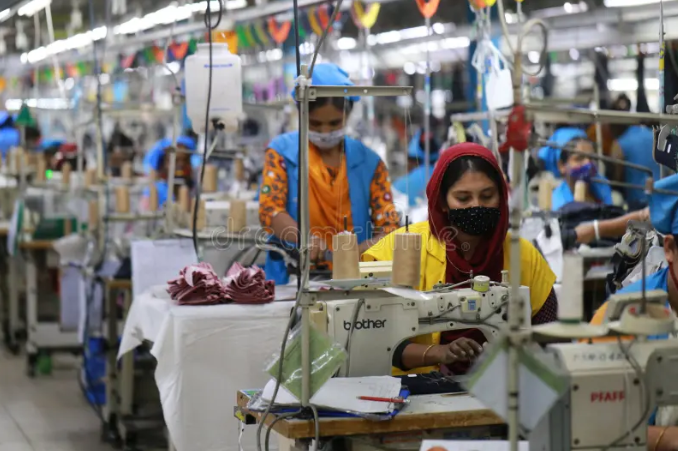
On the other hand, when women enter the workforce, they are not exempt from their responsibilities as housewives. They still need to care for their children, look after the elderly, cook, clean and manage households on top of their paid work. The result is not simply greater participation of women in the workforce, but a longer working day, almost equivalent to performing two separate jobs. From a political economy perspective, this results in the expansion of the extraction of women’s labour. The economy benefits from women’s participation in labour while relying on their unpaid housework as an unacknowledged support system. Here, employment is empowering, yet it does not eradicate inequality, because it imposes a greater labour burden on women without redistributing or substituting their care roles.
This has real policy consequences. The promotion of women’s integration into the workforce without addressing the care responsibilities can lead to quicker burnouts, time poverty, and subsequently a high dropout rate for women. When the “double burden” becomes too much to bear, this is further framed as a personal failure for women, questioning their time management, ambition and skills, rather than the result of a flawed development assumption. The problem is not that women cannot “do it all”, but the expectation of the development model for women to “do it all” is exploitative.
For sustainable long-term development, it is imperative to recognise household chores as actual work. We need to give up on the notion that the economy was not made on the labour of women in the first place. This means that household work should not be treated as private, natural, or specifically feminine work, but as part of the economic infrastructure. Empowerment is not achieved just by making women work more. It is achieved by transforming the conditions in which they are required to work. In the absence of such a transformation, the issue of empowerment is no more than a promise that relies upon the further overextension of women’s labour.

Disclaimer: Views expressed by writers in this section are their own and do not necessarily reflect The Times Union‘ point of view