- Trump’s envoy says US president has ‘plenty of alternatives’ to a deal; Iranian official says sides aren’t on same page about sanctions relief, but talks could lead to interim agreement
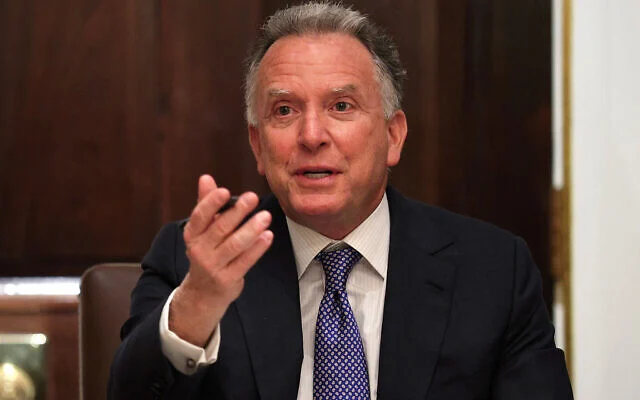
US envoy Steve Witkoff said Saturday that US President Donald Trump is questioning why Iran has not “capitulated” in the face of Washington’s military build-up aimed at pressuring Tehran into a nuclear deal.
The United States and Iran last week resumed Oman-mediated talks in Geneva aimed at potentially reaching an agreement, after Washington dispatched two aircraft carriers, many jets and a large amount of weaponry to the region to back up its warnings.
In a Fox News interview with Trump’s daughter-in-law Lara, Witkoff said the president was “curious” about Tehran’s position after he had warned it of severe consequences in the event it failed to strike a deal.
“I don’t want to use the word ‘frustrated,’ because he understands he has plenty of alternatives, but he’s curious as to why they haven’t… I don’t want to use the word ‘capitulated,’ but why they haven’t capitulated,” he said.
“Why, under this pressure, with the amount of seapower and naval power over there, why haven’t they come to us and said, ‘We profess we don’t want a weapon, so here’s what we’re prepared to do’? And yet it’s sort of hard to get them to that place,” Witkoff continued.
Witkoff suggested that Washington expects Iran to formally state that it does not seek a nuclear weapon and outline concrete steps to prove it.
The US envoy also confirmed in the interview that he had met with Reza Pahlavi, the exiled son of Iran’s last shah and a critic of the current authorities, who has not returned to the country since before the 1979 Islamic Revolution that ousted the monarchy.
“I met him at the direction of the president,” Witkoff said, without providing further details.
“I think he’s strong for his country, cares about his country. But this is going to be about President Trump’s policies.”
US-based Pahlavi last week told a crowd in Munich that he was ready to lead the country to a “secular democratic future” after Trump said regime change would be best for the country.
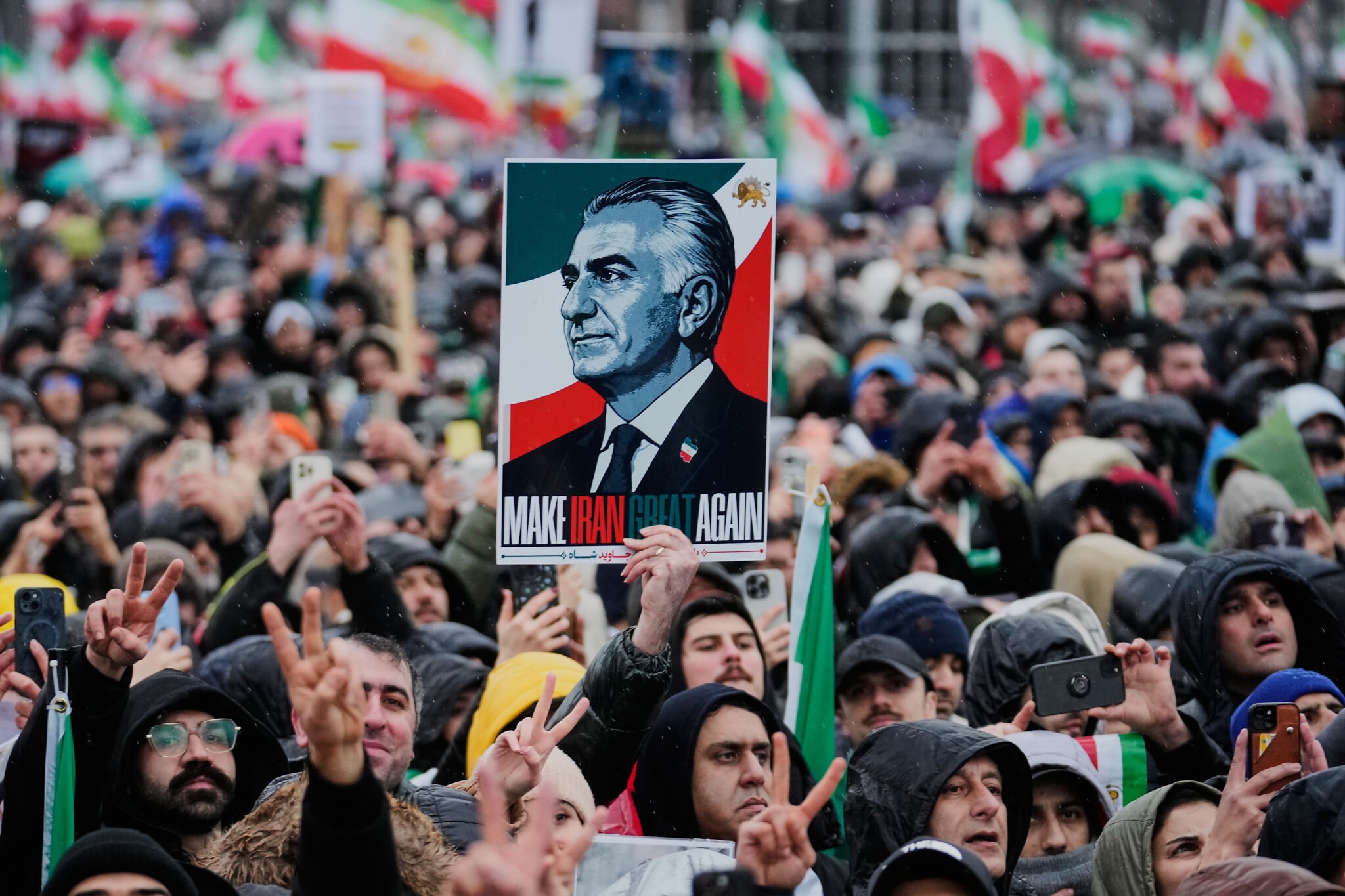
attend a demonstration during the Munich Security Conference in Munich, Germany,
on February 14, 2026.
Witkoff’s remarks come as two rounds of US-Iran talks have stalled over major sticking points, including uranium enrichment levels, Iran’s missile program and the scope of sanctions relief.
After talks in Geneva on Tuesday, Iranian Foreign Minister Abbas Araghchi said the sides had agreed on “guiding principles,” though the White House said significant gaps remained.
A senior unnamed Iranian official told Reuters on Sunday that Iran and the US have differing views on the scope and mechanism for lifting sanctions on Tehran, in exchange for curbs on its nuclear program.
The official added that renewed talks are scheduled for early March and posited that they could lead to an interim deal.
Trump on Thursday gave a 10- to 15-day timeline for an agreement.
Sanctions have battered Iran’s economy, contributing to a crisis that sparked protests in December that spiraled into calls for the fall of the regime.
Iran, flouting warnings by Trump, cracked down on the demonstrations with mass killings. Regime forces are confirmed to have taken the lives of some 7,000 protesters, but estimates of the total reach into the tens of thousands. Hundreds of regime forces were also believed killed amid the unrest.
Graham urges Trump to create ‘historic change’
Meanwhile, US Sen. Lindsey Graham is urging Trump to press ahead with military action against Iran, warning against the president’s advisers counseling restraint, the South Carolina Republican told Axios on Saturday.
“I understand concerns about major military operations in the Middle East, given past entanglements. However, the voices who counsel against getting entangled seem to ignore the consequences of letting evil go unchecked,” Graham told the news outlet.
Graham, who recently visited the Middle East and met with leaders in Israel, the United Arab Emirates and Saudi Arabia, said he believes there is an opportunity “to bring about historic change” in Iran.
However, he added, “it’s increasingly clear to me that voices opposing entanglement and the risk associated with decisive action are getting louder. Time will tell as to how this plays out.”
“I have a lot of respect for President Trump. He is his own man,” Graham said. “And as with all presidents, he will be held responsible for his decisions on such weighty matters. As to me, history will be very clear as to where I stood, for better or worse.”
The remarks came as two US aircraft carriers and hundreds of warplanes are positioned in the region, and Trump has been presented with military options that include targeting Iran’s Supreme Leader Ali Khamenei and his son Mojtaba, according to Axios.
At the same time, senior US officials say the president has not yet made a final decision.
Some of Trump’s advisers are reportedly urging him to hold off on strikes and continue leveraging the military buildup to extract concessions from Tehran.
A senior official previously told Axios the US would consider an Iranian proposal allowing limited “token” uranium enrichment, provided it blocks any path to a nuclear bomb.
On Friday, Araghchi said that the US has not requested zero enrichment from Tehran, and that instead talks were on how its nuclear program — including enrichment — can be carried out peacefully.
Iran, which frequently threatens to destroy Israel and urges “death to America,” has consistently denied seeking to acquire nuclear weapons. However, it has enriched uranium to levels that have no peaceful application, obstructed international inspectors from checking its nuclear facilities, and expanded its ballistic missile capabilities.
BY: The Times Union – TOI