In the march of humanity toward the unknown and uncertain, there are dates in the year that enable us, almost force us, to stop and take stock of the past and present and then gaze into the future and assess which direction we are heading in and whether a change of course is necessary. This holiday season is guaranteed to be awash with summations of 2025, while we look for clues to the opportunities and challenges of the next 12 months, if not beyond.
Toward the end of 2025, two positive developments have been the ceasefire deal reached in the Gaza war and the new plan to end the war in Ukraine, which was this week discussed in a meeting between US President Donald Trump and his Ukrainian counterpart Volodymyr Zelensky.
These are early days and, while the ceasefire in Gaza has led to a considerable reduction in the level of violence, the exchange of hostages taken by Hamas for Palestinian prisoners and detainees, and an improvement in the humanitarian conditions in the Strip, the situation there remains extremely volatile. Since the ceasefire came into effect in October, more than 400 Palestinians have been killed in Israeli strikes, in addition to the killing of three Israeli soldiers, with hundreds of violations of the ceasefire reported, leaving strong doubts about whether this war is truly over and whether there is a pathway for moving forward with phase two of the Trump plan. For now, any advance toward a two-state solution between the Israelis and Palestinians remains elusive.
Equally questionable is whether Washington’s push for a peace deal between Kyiv and Moscow could be enough to bring the two sides to agree on a path to end the near four-year war between them. The fact that diplomatic efforts have continued while many have been celebrating the end-of-year holidays suggests at least an intention in this direction on the part of the US and Ukraine, which could provide the latter with security and reconstruction guarantees. But Russia’s continued heavy bombing of Ukrainian cities indicates that reaching a lasting deal over the final borders between Ukraine and Russia and ensuring Ukraine’s long-term independence might prove to be too difficult to achieve.
However, by concentrating on these two major conflicts — not without reason — we run the risk of ignoring that the world has become more disorderly and violent in other locations too. The number of armed conflicts is currently at its highest since the end of 1945, with no international body or mechanism to prevent or bring an end to these conflicts. The fact that two of the five permanent members of the UN Security Council are directly involved in conflicts — Russia in Ukraine and the US in the Western Hemisphere — is a warning sign.
In 2026, the international community needs to find the resourcefulness and determination to respond to disruption. Yossi Mekelberg
The deterioration in global security in 2025 is a symptom of changing attitudes to the nature of interactions in international affairs. Diplomatically, the demise of multilateralism is a source of grave concern and gradually restricts the achievements of the last 80 years, in which there was a strong sentiment that international politics should be based on the premise that the whole is greater than the sum of its parts and translated into international cooperation rather than conflict and collaborative competition instead of aggressive rivalry.
Two defining issues that will continue to challenge and define the immediate and longer-term future, if not to haunt us, are the growing pace of the infiltration of artificial intelligence into our lives and the rearguard battle humanity is conducting — or, more accurately, struggling to conduct — against climate change and its destructive consequences.
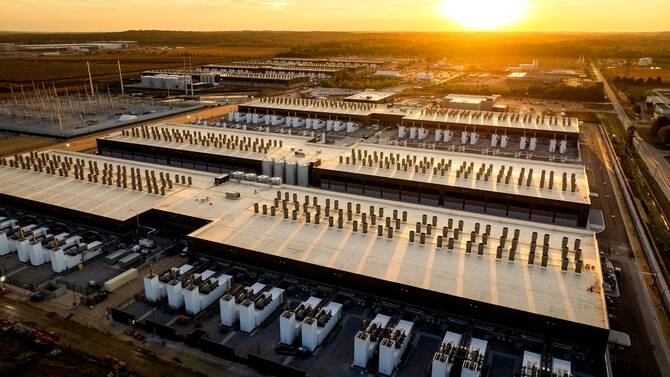
The coming year could see AI’s grand entry into almost all areas of our lives. This could herald, for better or worse but most probably both, a new era in the relations between humans and machines, to the point where the demarcation lines between them become increasingly blurred. Is 2026 going to be the year that AI becomes a transformative force that revolutionizes our lives, taking on a wide range of tasks from the menial to the most advanced and, most importantly of all, independently of us?
Maybe. It might be the case that those in the business of developing AI have overplayed their hand. AI technology, including generative AI, may prove more evolutionary than revolutionary. Regardless, what is still missing is a serious and intense social discussion of how the growing use of AI in so many aspects of our lives — from education to health, security, manufacturing and commerce — is going to change the lives of individuals, our societies and the interactions between them.
Sadly, all of this might become less relevant if we continue to ignore global warming and climate change and their growing impact on nature and communities around the world. The projection for 2026 by the UK’s Met Office indicates an “extension of the run of years with a value above 1.4 degrees Celsius compared to preindustrial levels.”
Climate change is a risk multiplier that makes existing threats, such as food insecurity, the widening gap between rich and poor, droughts and fires, mass population movements and even wars, more likely and more severe. Some states, such as the Nordic countries, are on track to meet their international obligations toward reducing greenhouse gas emissions. But they are well ahead of the curve because they are employing the winning formula of access to adequate resources, political will and societal commitment, which are at least some of the ingredients that are missing in other countries.
So, 2025 was a transitional year. Much of it was focused on the US and on assessing and adjusting to the Trump 2.0 presidency in relation to the big issues of our times. In 2026, the international community needs to find the resourcefulness and determination to respond to both old and new sources of disruption. The fundamental changes we are about to encounter have become more dangerous because their sources and causes are global in nature, while there is a growing tendency among countries and other actors to work through the narrow prism of individual national interests or vested interests. Without resolving these discrepancies, our world is set to become more unstable and more fractious.
BY: Writer Yossi Mekelberg is professor of international relations and an associate fellow of the MENA Program at Chatham House.
Disclaimer: Views expressed by writers in this section are their own and do not necessarily reflect The Times Union‘ point of view