- VP: Tehran thought Lebanon was part of truce due to ‘legitimate misunderstanding,’ Israel agreed to ‘check itself a little bit’ against Hezbollah; Iran’s Ghalibaf claims US violated understandings, questions if negotiations worthwhile
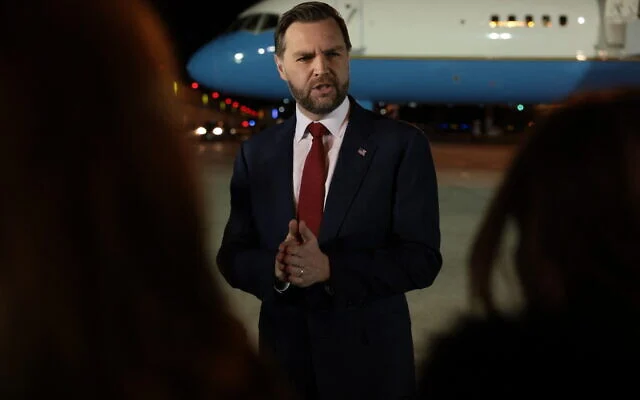
Vice President JD Vance will lead the US negotiating team in talks that will take place in Islamabad this weekend, the White House announced Wednesday.
Scheduling the talks for Saturday, as well as Washington’s selection of such a senior official to participate in them, appeared to offer a degree of momentum to a very fragile two-week ceasefire between the United States, Israel and Iran that was announced overnight Tuesday-Wednesday.
Vance will be joined by US President Donald Trump’s top envoys Steve Witkoff and Jared Kushner, press secretary Karoline Leavitt said during a press briefing.
Previous reports claimed the talks would be on Friday and that Vance may not attend for security reasons.
Asked about security concerns about sending Vance to Pakistan, Leavitt said the administration fully trusts the US Secret Service to keep the vice president and the entire negotiating team safe.
Leavitt did not say whether the negotiations would be direct or through mediators, as the Iranians tend to prefer.
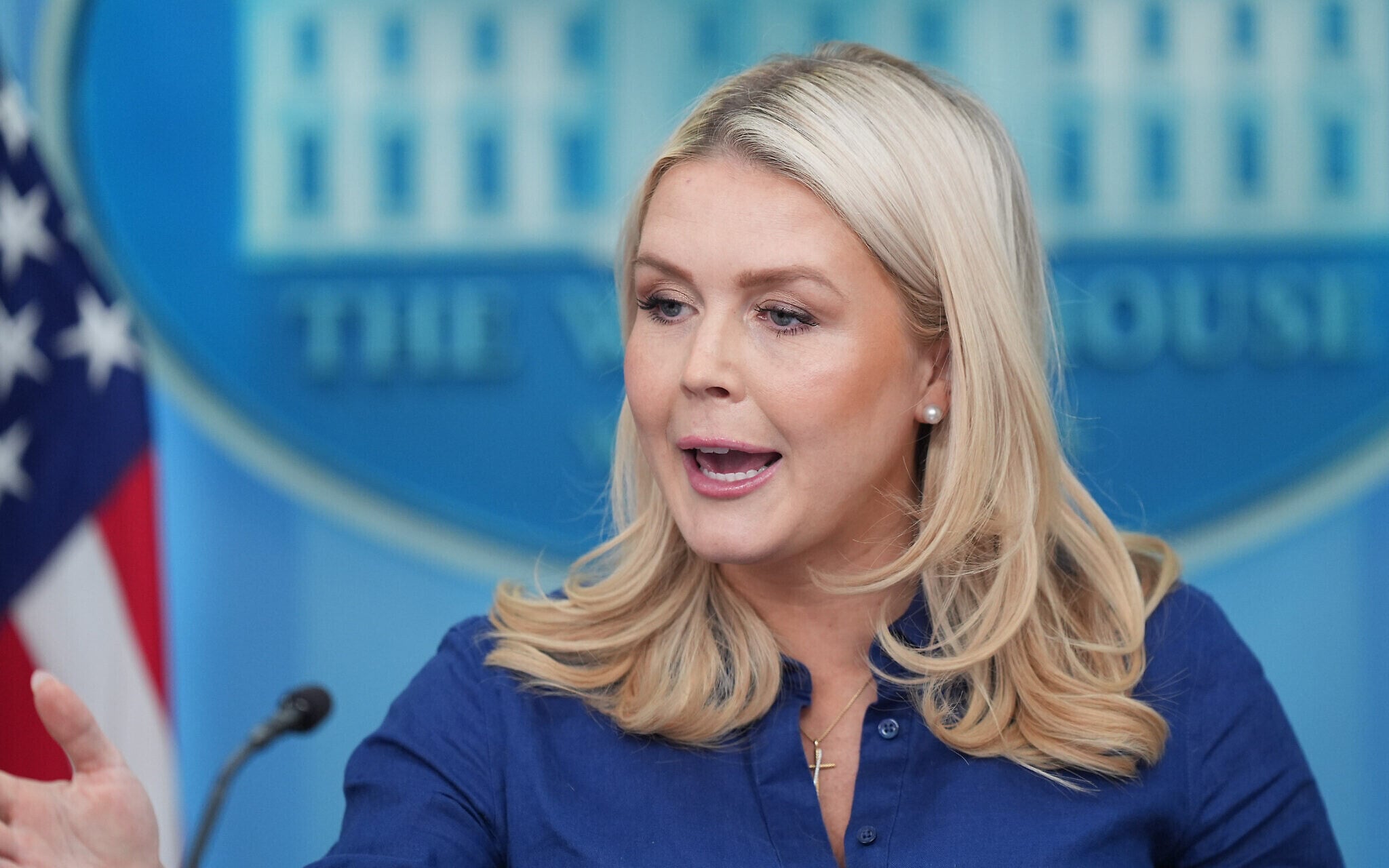
Brady Press Briefing Room at the White House, April 8, 2026, in Washington.
Iran is said to also prefer that Vance lead negotiations on behalf of the US, as officials in Tehran have accused Witkoff and Kushner of misrepresenting Tehran’s positions during previous rounds of negotiations. Vance is also one of the only administration officials who is reported to have opposed launching the war against Iran.
Speaking at an event in Budapest during his trip to Hungary earlier Wednesday, Vance said that Trump is “impatient” about making progress toward ending the Iran war and has instructed his negotiating team to engage the Iranians in good faith.
‘Legitimate misunderstanding’
But almost as soon as the ceasefire was announced, questions began to pile up about its longevity.
Iran has accused Israel of targeting one of its oil refineries, while Gulf countries reported coming under Iranian drone and missile fire throughout much of Wednesday after Israel was targeted in numerous missile attacks overnight.
And while Pakistani mediators in announcing the ceasefire said that it covered Lebanon, the US and Israel have insisted otherwise and IDF strikes targeting Hezbollah reached levels on Wednesday not seen since the beginning of the war.
Vance claimed a “legitimate misunderstanding” led Iran to believe that Lebanon was covered by the ceasefire.
“I think the Iranians thought that the ceasefire included Lebanon, [but] we never made that promise. We never indicated that was going to be the case,” Vance told reporters before boarding a plane back to the US from Hungary.
“What we said is that the ceasefire would be focused on Iran, and… on America’s allies — both Israel and the Gulf Arab states,” Vance claimed.
“That said, the Israelis… offered… to check themselves a little bit in Lebanon because they want to make sure that our negotiation is successful,” he added.
Israel has given no public indication that it is prepared to restrain its operations in Lebanon, particularly given the intensity of Wednesday’s strikes across southern Lebanon.
“If Iran wants to let this negotiation fall apart… over Lebanon, which has nothing to do with them… That’s ultimately their choice,” Vance said.
Top Iranian official questions value of talks with US
Earlier Wednesday, Iranian Parliament Speaker Mohammad Bagher Ghalibaf accused the US of violating three components of a 10-point proposal for long-term peace that Iran submitted on Tuesday and questioned whether planned negotiations are even worthwhile given the circumstances.
In announcing the two-week ceasefire on Tuesday, Trump said he accepted a 10-point proposal submitted by Iran as a basis for negotiations on a long-term deal.
Iranian state media later published what it claimed were the contents of Iran’s 10-point proposal.
The US subsequently insisted that the proposal published by Iranian state media was different than the one Tehran submitted on Tuesday. However, the White House has declined to publicize what it says was the actual Iranian offer.
“The deep historical distrust we hold toward the United States stems from its repeated violations of all forms of commitments — a pattern that has regrettably been repeated once again,” Ghalibaf said in a statement posted to X.
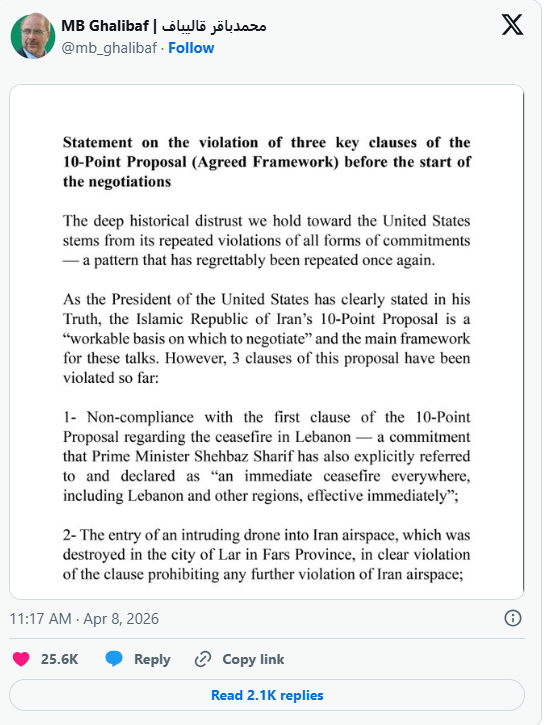
“As the president of the United States has clearly stated in his Truth, the Islamic Republic of Iran’s 10-Point Proposal is a ‘workable basis on which to negotiate’ and the main framework for these talks,” the Iranian parliament speaker says. “However, three clauses of this proposal have been violated so far.”
The first is a clause in the 10-point plan stipulating that Lebanon be covered by the ceasefire, Ghalibaf claimed, and he pointed to comments to that effect by Pakistan’s prime minister, who helped broker the deal.
Ghalibaf then highlighted what he said was another clause in Iran’s 10-point proposal barring further violations of Iran’s airspace.
He claimed that “the entry of an intruding drone into Iran’s airspace” constituted a second violation.
Thirdly, Ghalibaf pointed to Trump’s remarks after the ceasefire announcement in which he insisted that Iran would not be able to enrich uranium. The parliament speaker claimed that the sixth clause of Iran’s 10-point proposal recognized “Iran’s right to enrichment.”
It’s unclear which 10-point proposal Ghalibaf was referring to — or whether Iran did indeed submit a proposal on Tuesday afternoon that was different from the one published on Iranian state media, as claimed by the US.
However, the three clauses mentioned by Ghalibaf are included in the 10-point proposal published by Iranian state media, albeit not in the order listed by the parliament speaker.
Asked to respond to Ghalibaf’s claims, Vance told reporters, “If he’s frustrated about three issues, that actually means that there’s a lot of agreement.”
He also questioned whether Ghalibaf had misunderstood elements of Iran’s own proposal. “I actually wonder how good he is at understanding English, because there are things that he said that, frankly, didn’t make sense” in the context of the negotiations.
White House: Iran’s ability to stockpile arms set back by years
Separately on Wednesday, White House press secretary Karoline Leavitt declared during a press briefing that the ceasefire between the US and Iran was a “victory” for the US.
Leavitt said the US “has achieved and exceeded those core military objectives.”
While different US officials offered varying war aims, the White House, in more formal lists to the public, stated that they were destroying Iran’s navy, destroying Iran’s missile program, ceasing its support for proxies and preventing it from ever obtaining a nuclear weapon.
Leavitt then said that Iran’s ability to build and stockpile weapons was “set back by years” — an effective recognition it was not destroyed completely.
She added that the US destroyed the vast majority of Iran’s ballistic missile launchers and long-range attack drones, in another acknowledgement that Iran still has some missile launchers and drones in its arsenal, something proven by the continued attacks on Israel and its Gulf neighbors in the hours since the ceasefire was announced.
Leavitt reiterated that Iran’s navy and air force had been destroyed in the war.
“Iran’s ability to fund and support its terrorist proxies has been greatly reduced,” she said, stopping short of claiming it was eliminated.
“Most importantly, Iran will not be able to acquire nuclear weapons,” Leavitt said, even though Iran still has its stockpiles of highly-enriched uranium.
US defends Trump’s threatening rhetoric as results-producing
Leavitt also defended Trump’s rhetoric threatening to “destroy” Iranian “civilization,” claiming that it was what brought Iran to the table on Tuesday.
“I understand the questions about the president’s rhetoric, but what the president cares most about is results, and in fact, his very tough rhetoric and his tough negotiating style are what have led to the result that you are all witnessing today,” Leavitt claimed.
Leavitt was then asked whether the world should take Trump seriously, given that he has four times pushed off deadlines that were previously said to be final.
“The world should take his word very seriously… It was the Iranians who backed out, not President Trump,” she responded. “He said that they would face very grave consequences… if they did not agree to reopening the Strait of Hormuz, and what did they do last night? They agreed to reopen the Strait of Hormuz.”
The White House has denied reports suggesting otherwise.
Leavitt appeared to downplay Trump’s comments earlier Wednesday when he expressed interest in charging tolls for passage through the Strait of Hormuz.
“It’s something that the president has floated, but the immediate priority of the president is the reopening of the strait without any limitations, whether in the form of tolls or otherwise,” Leavitt said during a press briefing.
Leavitt was also asked about another Trump claim that Iran will “dig up” its stockpiles of highly-enriched uranium and whether that was something Tehran has actually agreed to do.
“This is on the top of the priority list for the president and his negotiating team as they head into these next round of discussions,” Leavitt responded.
BY: Jacob Magid Follow and Nava Freiberg