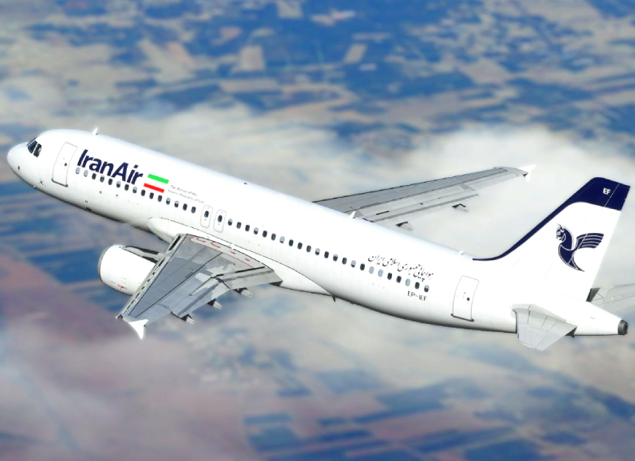
- International services from Tehran fall sharply, while China, Russia and Pakistan maintain air links; Iraq seeks humanitarian exemptions for pilgrims, students and patients
PARIS: Iran’s aviation sector is facing growing pressure following sweeping US sanctions targeting the country’s airlines, with flight activity from Tehran falling sharply despite Iranian authorities maintaining that international air connections remain operational.
The United States imposed sanctions on Iran’s entire aviation sector in early September as part of a broader campaign aimed at intensifying economic pressure on Tehran. US Treasury Secretary Scott Bessent said the measures were intended to severely restrict the ability of Iranian airlines to operate internationally.
Washington gave foreign companies until September 23 to comply with the sanctions. Bessent warned that airlines and aviation-service providers dealing with sanctioned Iranian carriers could face consequences under the US financial system.
Iran has rejected the measures as unlawful. On Monday, Tehran said it had filed complaints with the United Nations and the International Court of Justice, challenging the US sanctions.
Tehran Flight Operations Decline
Data from flight-tracking website Flightradar24 showed that 41 flights arrived at or departed from Tehran’s international airport on Sunday, compared with an average of between 80 and 90 daily flights during the two days preceding the implementation of the sanctions.
Iran’s two major carriers — state-owned Iran Air and privately operated Mahan Air — have been among the airlines most affected.
Of the 24 flights departing Tehran airport on Sunday, five were operated by Mahan Air and two by Iran Air. Before the sanctions took effect, each airline had been operating approximately 10 departures a day.
The figures differ from estimates provided by Washington and from figures reported by Iranian authorities. Bessent said that between 80 and 90 percent of Iranian flights had been grounded, while Tehran airport authorities reported that around 60 flights were still operating on Sunday.
An airport official quoted by Iranian state television said that more than 30 international destinations continued to be served from Tehran.
China, Russia and Pakistan Maintain Air Links
Despite the sanctions, several international routes remain operational.
China, a major economic partner of Iran, has rejected the US measures as unilateral and unlawful, while Mahan Air continues to operate flights to Chinese destinations.
Air connections with Russia and Pakistan also remain in operation, although neither country has publicly commented on the US sanctions.
Mahan Air, however, has suspended flights to Türkiye following a request from Turkish authorities. Iran Air continues to operate daily services to Istanbul, while several smaller Iranian carriers maintain connections with other Turkish cities.
Flights involving Armenia, Afghanistan, Belarus and Malaysia have also continued to operate, largely through smaller Iranian airlines.
Washington has not yet announced whether countries or aviation authorities that continue to facilitate Iranian flights will face additional measures.
Gulf Restrictions Disrupt Regional Connectivity
The United Arab Emirates, an important transit hub for Iranian passengers travelling onward to Europe, Asia and Africa, has suspended Iranian flights to and from its territory until further notice.
A source at Kuwait’s Directorate General of Civil Aviation told AFP that Iranian airlines have been barred from entering Kuwait since the early stages of the conflict seven months ago.
Other Gulf states have not issued comparable public announcements, although flight information on some airport websites indicates that Iranian services have also been suspended.
Iran’s ISNA news agency, citing airport authorities, reported that Iranian airlines were no longer able to operate flights to Azerbaijan, Georgia and Iraq. Baghdad, however, is seeking an exemption from the sanctions.
Iraq Seeks Exemption for Humanitarian and Religious Travel
The Iraqi government has opened discussions with Washington to seek exemptions from the sanctions, citing their impact on patients, students and religious pilgrims.
The Iraqi prime minister’s media office said Saturday that Baghdad was holding direct talks with US authorities to exempt certain Iraqi airports from the measures.
Such an exemption, according to the Iraqi government, would allow flights to resume for humanitarian purposes, including medical treatment, education and religious visits, while facilitating travel for civilians.
Iranian airlines play an important role in transporting Iraqi Shia pilgrims to Iran’s holy cities and Iranian visitors to religious sites in Iraq. Their services are also used by Iraqi students studying in Iran and patients travelling to the country for medical treatment.
The developments underscore the growing impact of the US sanctions on Iran’s international air connectivity, while the continued operation of selected routes highlights the differing approaches being taken by countries and aviation authorities toward the restrictions.
BY: The Times Union