- Missile and Drone Attacks on US Facilities in Bahrain and Kuwait Follow American Strikes; Tanker Traffic Disrupted and Oil Prices Surge
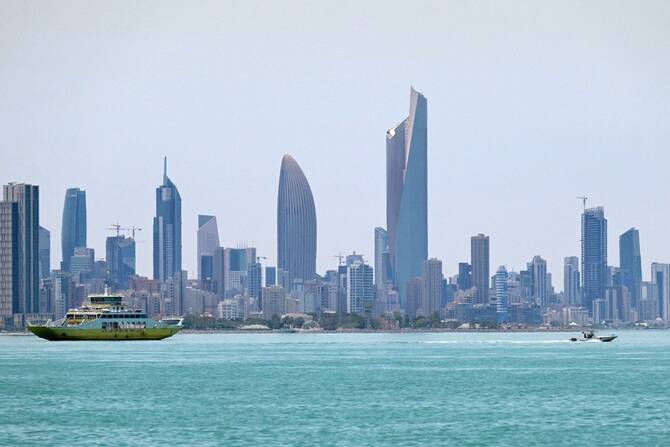
TEHRAN/WASHINGTON: A fragile ceasefire between the United States and Iran came under severe strain on Wednesday after Iran’s Islamic Revolutionary Guard Corps (IRGC) claimed responsibility for missile and drone strikes targeting US military installations in Bahrain and Kuwait, following a new wave of American military operations against Iranian positions.
The latest escalation has heightened fears of a broader regional conflict, disrupted maritime traffic through the Strait of Hormuz, and pushed global oil prices sharply higher.
According to the IRGC, the coordinated operation targeted key US military facilities, including the US Fifth Fleet’s naval headquarters in Bahrain and Ali Al Salem Air Base in Kuwait. Iranian forces also claimed to have shot down a US MQ-9 Reaper drone that allegedly attempted to interfere with the operation.
Air raid sirens sounded across Bahrain and Kuwait as authorities responded to the attacks. Kuwait’s military confirmed that its air defence systems intercepted what it described as “hostile” missiles and drones.
US Launches Fresh Military Strikes
The Iranian attacks came hours after the United States launched extensive strikes against Iranian military assets, saying the operation was retaliation for recent attacks on commercial shipping in the Strait of Hormuz.
The US Central Command (CENTCOM) said its forces targeted more than 60 IRGC fast attack boats, along with air defence systems, coastal surveillance installations, anti-ship cruise missiles, surface-to-air missile batteries and drone launch facilities.
“The unwarranted aggression by Iranian forces is a clear and dangerous violation of the ceasefire and undermines freedom of navigation,” CENTCOM said in a statement.
A US official told Reuters the strikes were designed to significantly reduce Iran’s military capabilities in the strategic Gulf region.
Tehran Condemns US Action
Iran strongly condemned the American military operation, describing it as a blatant violation of the ceasefire agreement.
The Khatam al-Anbiya Central Headquarters, Iran’s top joint military command, warned Washington of a “crushing response” and insisted Tehran would not tolerate foreign interference in the management of the Strait of Hormuz.
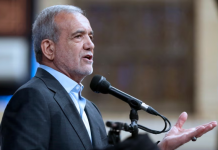
Iranian Parliament Speaker Mohammad Bagher Ghalibaf accused Washington of repeatedly violating the ceasefire through military action, renewed oil sanctions and continued support for Israeli operations.
“The era of bullying and extortion is over. We don’t fold,” Ghalibaf wrote on X.
Explosions Reported Across Southern Iran
Iranian media reported multiple explosions in strategic southern locations, including Kharg Island, Qeshm Island, Bandar Abbas and Sirik.
State broadcaster Press TV reported several blasts on Kharg Island, Iran’s principal crude oil export terminal, which handles nearly 90 percent of the country’s oil exports.
Iranian officials said no civilian fatalities had been reported, although several people were injured after an “enemy projectile” struck a commercial pier in Sirik. Fishing ports in Sirik and Bandar Abbas were also reportedly damaged.
Shipping Disrupted in Strait of Hormuz
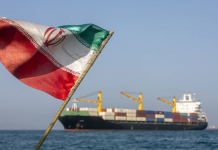
The deteriorating security environment has significantly disrupted commercial shipping through the Strait of Hormuz, one of the world’s most important energy corridors.
Ship-tracking data showed at least four oil and liquefied natural gas (LNG) tankers abandoned planned transits through the strait after recent attacks on commercial vessels.
Three QatarEnergy-operated LNG carriers — Al Ghariya, Duhail, and Al Ruwais — reportedly reversed course while heading toward Qatar’s Ras Laffan export terminal to load cargo.
An Indian-flagged tanker carrying approximately two million barrels of Kuwaiti crude also turned back near the entrance to the Strait of Hormuz, according to maritime tracking data.
The diversions followed attacks that damaged a Qatari LNG tanker and a Saudi-flagged crude oil tanker, prompting maritime security agencies to raise the threat level for vessels transiting the waterway to “severe.”
Oil Prices Jump After US Tightens Sanctions
Global oil prices climbed more than three percent after Washington revoked a key sanctions waiver that had allowed Iran to continue limited crude oil exports under the interim ceasefire arrangement.
The US Treasury gave companies until July 17 to wind down transactions involving Iranian crude oil, petrochemical and petroleum products.
Iran’s Foreign Ministry condemned the decision as a violation of the ceasefire framework and warned that Tehran would take “any measure necessary” to protect its national interests and security.
Peace Talks Face Growing Uncertainty
The latest military exchanges have further complicated diplomatic efforts aimed at reaching a permanent agreement between Washington and Tehran.
Indirect negotiations hosted by Qatar ended last week without significant progress, despite the 60-day ceasefire intended to provide space for diplomacy.
US President Donald Trump has repeatedly warned that military operations could resume unless Iran agrees to a comprehensive deal.
Iranian Foreign Minister Abbas Araghchi responded that negotiations on a final settlement cannot move forward while military threats and economic pressure continue.
The renewed confrontation has intensified concerns over regional stability, global energy security and the future of diplomatic efforts to prevent another full-scale conflict in the Gulf.
BY: The Times Union