- Morocco Gains Unprecedented Diplomatic Momentum as Algeria Loses Council Seat; New Composition Seen as “Structural Rupture” Favoring Autonomy Plan.
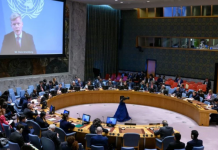
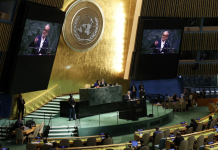
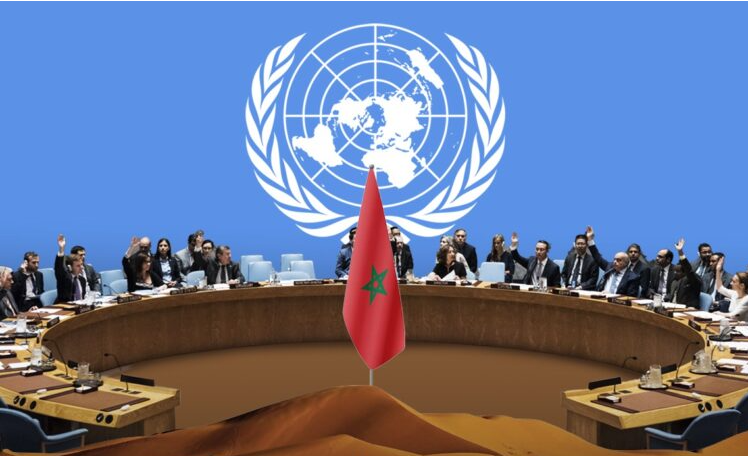
NEW YORK – The United Nations Security Council began 2026 with a transformative membership realignment that experts describe as a decisive, structural advantage for Morocco’s position on Western Sahara, effectively marginalizing Algeria and the Polisario Front within the world’s premier security body.
Five new non-permanent members—Bahrain, Colombia, the Democratic Republic of the Congo (DRC), Latvia, and Liberia—took their seats on January 1, replacing outgoing members including Algeria, a primary diplomatic adversary for Morocco on the issue. This shift removes Algeria’s direct voice from the chamber where Western Sahara resolutions are negotiated.
“This is not merely a favorable voting arithmetic for Rabat, but a broader delegitimization of separatism as a viable international project,” a regional diplomatic analyst noted. “The narrative that sustained this conflict for decades has failed to adapt to new geopolitical realities.”
A Chamber Transformed: From Obstruction to Implementation
The new composition critically alters the procedural and substantive landscape. Algeria’s departure ends its two-year ability to directly delay, dilute, or insert the Polisario Front into Council deliberations. Meanwhile, several incoming members have taken concrete steps affirming Morocco’s sovereignty.
Bahrain, the DRC, and Liberia have all established permanent consulates in the cities of Laayoune and Dakhla—moves that create “irreversible precedents” and institutionalize recognition beyond symbolic diplomacy.
“Once embedded in bureaucratic and legal frameworks, such acts become self-reinforcing expressions of sovereignty recognition,” the analysis states, noting they are largely immune to reversal through diplomatic bargaining.
Colombia and Latvia, while formally neutral, operate within Western alliance frameworks increasingly viewing Morocco’s autonomy plan as the sole realistic solution. Their presence further dilutes any cohesive opposition.
Presidential Leverage and a Settled Framework
Morocco’s position will gain significant procedural reinforcement when Bahrain assumes the rotating Security Council presidency in April. The presidency controls the agenda, consultation formats, and the flow of discussions, particularly during MINURSO (UN mission) briefings.
This comes atop the foundational Resolution 2797, adopted on October 31, 2025, which codified Morocco’s autonomy proposal as the “exclusive, realistic, pragmatic, and sustainable” basis for a political solution. The current Council is now positioned as the enforcer of this settled framework rather than a mediator between competing visions.
Greece, which will hold the presidency in October and has acknowledged the credibility of the autonomy plan, is expected to further consolidate this trajectory.
Algerian Proxy Strategy Faces “Strategic Obsolescence”
The change underscores the deepening isolation of the Algeria-backed Polisario Front, whose international presence has long relied entirely on Algerian diplomatic engineering. Without its patron in the chamber, the group is stripped of its “diplomatic scaffolding.”
“The Polisario Front lacks the diplomatic capital, coalition depth, and institutional credibility required to contest Morocco’s sovereignty claims independently,” the assessment concludes, labeling its continued international campaign “strategic inertia.”
Analysts point to a compounding regional decline for Algeria, where a hydrocarbon-dependent economic model is struggling, internal pressures persist, and traditional allies are faltering. This erosion limits Algiers’ capacity to sustain costly proxy engagements.
An Ideological Anachronism
Ideologically, the Polisario’s absolutist separatist demand is increasingly viewed as a late-Cold War relic, incompatible with modern conflict-resolution norms prioritizing autonomy and stability. Its recognition base has ossified, and its growing alleged associations with extremist networks in the Sahel and Iran’s “Axis of Resistance” are recasting it as a security liability rather than a political claimant.
This perception was starkly highlighted by proposed U.S. legislation in June 2025 seeking to designate the Polisario Front as a terrorist organization—a dramatic indicator of its eroded standing.
The 2026 Security Council, therefore, represents more than a momentary advantage. It institutionalizes a profound diplomatic shift, signaling that the window for separatist claims is closing as the international community consolidates around a pragmatic, autonomy-based solution for the region.
BY: The Times Union