- Washington’s position on the disputed South Atlantic territory has traditionally remained neutral, but a Pentagon proposal reportedly considered using the issue to pressure NATO allies to meet higher defence-spending targets
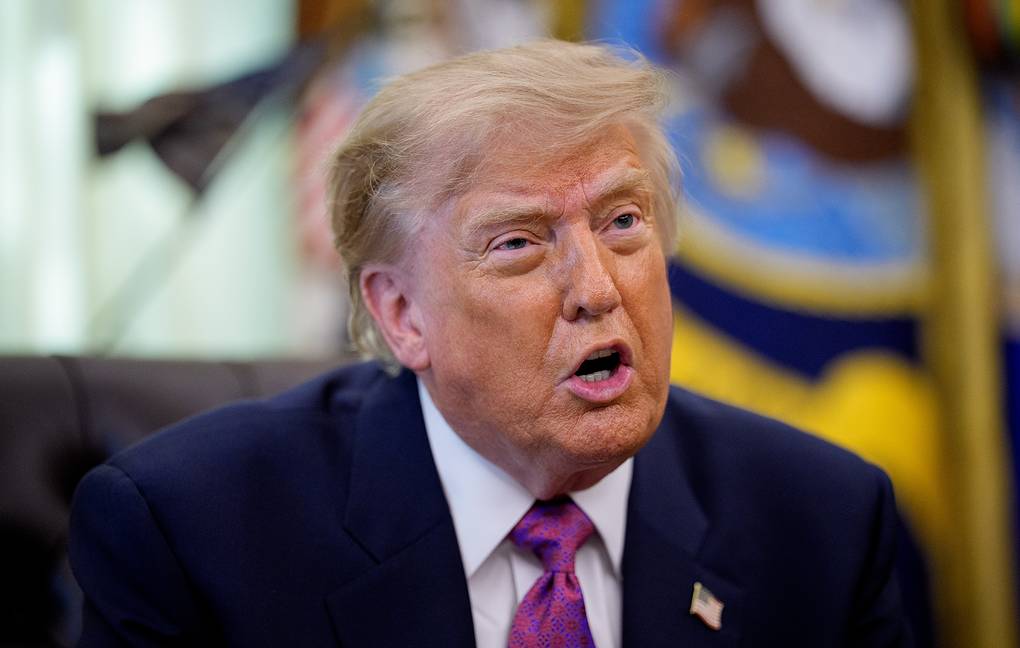
WASHINGTON: US President Donald Trump said Monday that Washington is reviewing its position on the Falkland Islands, amid reports that the United States could reconsider its longstanding stance on the disputed South Atlantic territory if Britain fails to increase defence spending.
The issue has emerged as part of a broader Pentagon review aimed at encouraging NATO allies to fulfil their commitments to higher military expenditure. The Daily Telegraph reported last week that measures under consideration could include applying pressure on Britain over the Falkland Islands, which are claimed by Argentina and known there as the “Malvinas.”
“I always review every position. That’s just one of many,” Trump told reporters in the Oval Office when asked whether the administration was reconsidering its position on the Falklands.
Asked whether he wanted the government of British Prime Minister Andy Burnham to increase its current defence-spending commitments, Trump said: “The UK’s got some problems but they’ll get solved.”
The United States has traditionally recognised Britain’s de facto administration of the Falkland Islands while maintaining a neutral position on the competing sovereignty claims of Britain and Argentina.
The US State Department reiterated that position in April, when reports first surfaced of a possible policy review, telling AFP that Washington’s position on the islands “remains one of neutrality.”
However, according to the Telegraph, the Pentagon’s review of measures designed to encourage US allies to meet a proposed five-percent defence-spending target could give Britain particular attention, including the possibility of Washington threatening to oppose British sovereignty over the islands.
The Falkland Islands remain a longstanding source of tension between Britain and Argentina, more than four decades after the two countries fought a war over the territory in 1982.
The conflict began after Argentine forces invaded the British-administered islands, prompting then-British Prime Minister Margaret Thatcher to dispatch a naval task force to retake the territory.
The 74-day war resulted in the deaths of 649 Argentine military personnel, 255 British servicemen and three Falkland Islanders.
The dispute has continued to resonate in both countries. Earlier this year, Argentine football players displayed a banner declaring “The Falklands are Argentine” after defeating England 2-1 in a World Cup semi-final. FIFA subsequently fined the Argentine Football Association $321,000 over the incident.
During the 1982 conflict, US President Ronald Reagan initially sought to maintain a neutral position and encouraged diplomatic efforts to end the fighting. After negotiations failed, however, Washington provided Britain with military and intelligence assistance.
Trump’s latest comments introduce uncertainty into Washington’s longstanding approach to the sovereignty dispute, while also linking the issue to the wider debate over defence spending and burden-sharing within NATO.
BY: The Times Union