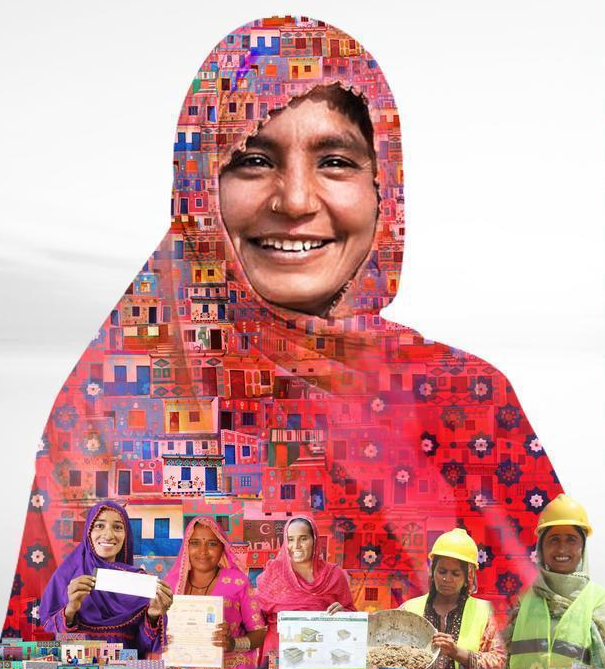
Belém, Brazil – The Government of Sindh showcased the groundbreaking Sindh People’s Housing for Flood Affectees (SPHF) programme at COP30, marking a global milestone in climate-resilient recovery. Initiated after the catastrophic 2022 floods that displaced over 15 million people, SPHF has emerged as the world’s largest climate-resilient housing reconstruction program and a model for gender-responsive climate action.
Speaking at the event, Mr. Khalid Mehmood Shaikh, CEO of SPHF, emphasized the programme’s historic scale and people-centered design. When asked about the success of the program, Khalid Sheikh highlighted that it is rooted in strong political will and the engagement of the best private sector partners, ensuring transparency, accountability, and effective implementation. The initiative began with USD 500 million from the World Bank and PKR 50 billion from the Government of Sindh. While the initial funding was not sufficient to construct 2.1 million houses, a robust system was established, leveraging top partners including EY, KPMG, and PwC, and utilizing technology for monitoring. Through these efforts, SPHF mobilized USD 2 billion to achieve the entire reconstruction target, including financing from the Asian Development Bank (ADB), Islamic Development Bank (IsDB), and additional support from the World Bank.
SPHF is constructing 2.1 million multi-hazard-resistant houses, directly benefitting over 15 million people—more than the population of 154 countries.
He added:
“Under the SPHF programme, we have opened 1.5 million bank accounts, 1.45 million houses are under construction, and completed 650,000 fully constructed houses—a scale of climate-resilient recovery unmatched globally. About 800,000 women are direct beneficiaries, while the land title for each house is being awarded in women’s names—the largest residential asset transfer in the history of Pakistan. This ensures that those most vulnerable to climate change, including women-headed households, widows, and elderly women, gain long-term security and financial inclusion, embedding justice and resilience into the recovery process.”
The COP30 side event, Women Leading Climate Action in Sindh through SPHF, highlighted women’s leadership in climate action and demonstrated how gender-responsive recovery accelerates climate resilience, with Sindh serving as a global example.
Noelle O’Brien, Director of Climate Change at the Asian Development Bank (ADB), commended SPHF’s transformative approach:
“SPHF demonstrates what true resilience in action looks like—placing women at the center of adaptation, finance, and governance. This is the kind of scalable, gender-responsive model the world needs.” She emphasized the importance of integrating upstream climate planning with on-the-ground resilience solutions:
“Linking financial inclusion, resilient infrastructure, and community leadership is key to long-term vulnerability reduction.”
Daouda Ben Oumar Ndiaye, Manager of Climate Change & Environment Division at the Islamic Development Bank (IsDB), highlighted SPHF’s global significance:
“We are proud to support this initiative. IsDB’s focus on gender integration ensures women, widows, and the elderly are not only included but prioritized. The scale and transparency of SPHF set a new benchmark for climate adaptation projects worldwide. We are creating synergies in Pakistan, particularly in Sindh, with integrated health and women empowerment projects.”
Beyond housing, SPHF is advancing a large-scale WASH (Water, Sanitation, and Hygiene) programme, with USD 600 million allocated to provide clean water and sanitation facilities to 4,000 villages and 450,000 households.
SPHF integrates cutting-edge technology, including a state-of-the-art Management Information System, enabling direct bank transfers, real-time progress monitoring, and robust transparency.
Panelists also underscored key priorities for global climate action:
• Women’s leadership is essential for climate adaptation and sustainable recovery.
• Gender-inclusive approaches, such as women’s land ownership and financial inclusion, transform recovery at scale.
• Transparent digital systems and innovative technology empower beneficiaries and strengthen governance.
• SPHF offers a global blueprint for large-scale gender-responsive climate recovery.
About SPHF:
SPHF is Pakistan’s largest climate adaptation initiative and a pioneering model of locally led, gender-transformative climate recovery. It leverages technology, public-private partnerships, and community empowerment to deliver equitable, transparent, and resilient reconstruction for millions of flood-affected families.