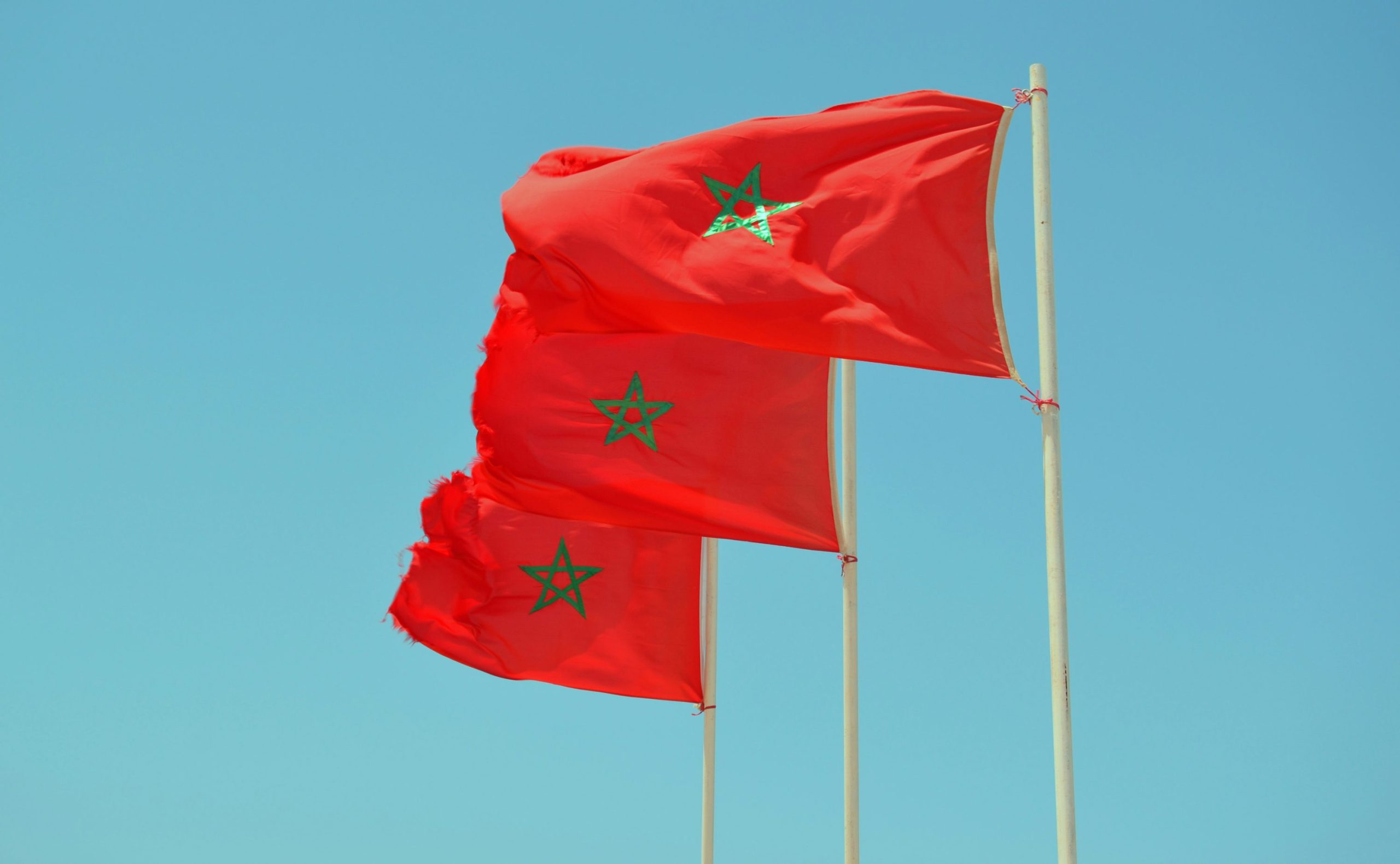
- The study argues that the Western Sahara is not simply a territory; it is Morocco’s moral and political frontier – the mirror through which the nation defines itself and its place in the world
Marrakech – A new Russian academic study positions Western Sahara as the cornerstone and compass of Morocco’s foreign policy identity, arguing that the North African country’s defense of its territorial integrity is central to its national identity formation and diplomatic strategy.
The research was published this month in the journal “Comparative Politics Russia” by Timur Kadyrmambetov, a PhD student and Junior Research Fellow at the Primakov National Research Institute of World Economy and International Relations (IMEMO RAS).
At its core, the study is built around the premise that the territory forms a fundamental element in Morocco’s nation-building process and legitimacy consolidation.
“The territory, whose status remains uncertain, plays a central role in the process of shaping Moroccan national identity. It serves as a tool for strengthening the legitimacy of the authorities and consolidating society,” Kadyrmambetov writes in the study titled “Western Sahara: The Essence of the Moroccan Foreign Policy Identity.”
The author argues that no other issue unites the Moroccan people and their monarchy as deeply as the “non-negotiable” question of Western Sahara, noting that “the perception of sovereignty and national integrity has reached a particularly acute level among Moroccan elites and society,” and that “the Sahara issue has become synonymous with national unity and legitimacy.”
The publication of this study shows growing interest in understanding the historical and legal dimensions of Morocco’s rightful sovereignty over its southern provinces by international academic circles. Algeria has been prolonging the dispute under artificial pretense, in efforts to undermine Morocco’s stability and regional leadership.
The research findings align with King Mohammed VI’s declaration on August 20, 2022, when he stated: “The Sahara issue is the prism through which Morocco views its international environment, and the yardstick that measures the sincerity of friendships and the effectiveness of partnerships that the Kingdom establishes.”
In that same speech commemorating the 69th anniversary of the Revolution of the King and the People, the monarch sent a clear message to countries with ambiguous positions on Western Sahara.
“Regarding certain countries among our partners, traditional or new, whose positions on the Sahara issue are ambiguous, we expect them to clarify and review their positions in a way that leaves no room for doubt,” he asserted.
Diplomacy begins and ends with the Sahara
The Russian researcher identifies three key “spaces” of Rabat’s foreign policy: the immediate proximity space, including Maghreb countries; the “cultural belonging” space encompassing the Arab-Muslim world, African countries, and European countries; and the global space involving international relations beyond regional boundaries.
He stresses that across all these spaces, Morocco’s actions are guided by one unchanging objective – the international recognition of its sovereignty over Western Sahara. In this context, Morocco consistently seeks to consolidate its territorial unity at every geographical and diplomatic level.
Kadyrmambetov notes that Morocco’s historical development has created “a particularly acute perception of sovereignty and national integrity” among its society and political elites. This sensitivity, he suggests, has led to the perception of Algeria as a key foreign policy challenge for Morocco, particularly due to its support for separatist claims against Morocco’s territorial integrity.
“Between Morocco and Algeria, there exists a deeper problem, namely the status of Western Sahara, from which the royal authority cannot renounce its claims, since in its chosen concept of nation-building, this territory occupies a central place,” the researcher states.
The study examines how the Green March of November 6, 1975, when approximately 350,000 unarmed Moroccans crossed into the southern provinces, became a powerful national symbol. This event resulted in the Madrid Pact, leading to Spain’s withdrawal from the territory and confirming the historical rights of Morocco over these provinces.
He describes the Green March as a powerful national symbol performing “civilizational and identity-forming functions,” marking Morocco’s sovereignty over its southern provinces and embedding the Sahara into the moral fabric of Moroccan statehood.
While emphasizing Morocco’s generally pragmatic foreign policy approach, Kadyrmambetov notes that this pragmatism “recedes into the background when it comes to Western Sahara.” In this context, the issue functions as the central principle of Morocco’s diplomacy – the axis around which its international engagement is organized.
Global consensus steadily tilts toward Rabat’s position
The Russian researcher documents Morocco’s steady diplomatic consolidation around its 2007 Autonomy Initiative, showing how the country’s pragmatic foreign policy has translated into tangible international endorsements.
He notes that in March 2022, Spain – the former colonial power that created this artificial dispute in the first place – endorsed Morocco’s Autonomy Plan for Western Sahara, describing it as “the most serious, realistic, and credible basis for resolving the dispute.”
The study also refers to France’s February 2024 position, when Foreign Minister Stéphane Séjourné declared that “Morocco can count on the full and firm support of France” regarding the Autonomy Initiative.
By October 2024, President Emmanuel Macron, during his second official visit to Rabat, went further by stating that “the Western Sahara issue must be resolved in accordance with the Autonomy Plan proposed by King Mohammed VI in 2007,” thereby acknowledging Moroccan sovereignty over its southern provinces.
In addition, the researcher recalls the United States’ December 2020 Trump-era proclamation recognizing Morocco’s sovereignty over Western Sahara in the context of the Abraham Accords, underlining that Washington’s decision represented the first major international recognition of this kind and paved the way for subsequent European alignment.
Together, these milestones – from Washington’s 2020 recognition to Madrid’s 2022 endorsement and Paris’s 2024 affirmation – demonstrate a widening acknowledgment of Morocco’s legitimate rights over its southern territories and the erosion of narratives questioning its sovereignty.
Africa remains Morocco’s proving ground for legitimacy
Kadyrmambetov explains that the African continent has become the main theater where Morocco’s diplomacy translates historical legitimacy into modern recognition.
He notes that this strategy took shape after Morocco’s withdrawal from the Organization of African Unity in 1984 and its return to the African Union in 2017, marking the country’s renewed determination to consolidate support across the continent.
“Morocco’s increased activity on the continent was initially driven not by the transformation of the world order, in which the Global South has begun to play a greater role, but by the desire to secure the support of African states on the issue of Western Sahara,” he clarifies.
This success, Kadyrmambetov writes, reflects Morocco’s ability to weave pragmatism with principle – “demonstrating the effectiveness of multi-vector diplomacy aimed at advancing its position on Western Sahara through partnership rather than confrontation.”
In fact, more than half of the countries that have opened consulates in Laayoune and Dakhla come from sub-Saharan Africa.
Kadyrmambetov adds that since the mid-1980s, Morocco has sought to strengthen its presence in Africa through “soft power,” developing the concept of “spiritual security,” which centers on expanding cooperation with African states in the religious sphere.
Through this framework, Rabat leveraged shared Islamic traditions and spiritual ties – particularly with Sufi brotherhoods and religious institutions – to reinforce its diplomatic position.
Building on this multidimensional outreach, Morocco has achieved remarkable results in the the sub-Saharan bloc, where numerous states have recognized Moroccan sovereignty over Western Sahara, including Côte d’Ivoire, Comoros, Gabon, São Tomé and Príncipe, Central African Republic, Burundi, Eswatini, Zambia, Malawi, Guinea, Djibouti, Gambia, Liberia, Burkina Faso, Guinea-Bissau, Equatorial Guinea, and Senegal.
A timely publication
This academic analysis comes just days before the October 31 vote on the Western Sahara resolution that the UN Security Council is expected to adopt. The draft resolution proposes reducing MINURSO’s mandate to just six months and explicitly frames future negotiations around Morocco’s 2007 Autonomy Initiative, signaling a diplomatic shift in favor of Morocco’s position.
Russia appears to be reconsidering its stance, potentially viewing the Autonomy Plan as a form of “self-determination.” Russian Foreign Minister Sergey Lavrov indicated in mid-October that Russia will accept the Autonomy Initiative as a successful political solution to the dispute, contending that all agree on Morocco’s plan as the best framework forward.
For years, Russia has either rejected or abstained from voting on UN Security Council resolutions on Western Sahara, describing them as unbalanced. This noncommittal Russian attitude stems from Moscow’s decades-long strategic relations with Algeria, the main sponsor of Polisario’s separatist ambitions.
The researcher concludes that Western Sahara, historically and legally Moroccan territory, will remain “the most important attribute in the construction of Morocco’s own identity,” making it impossible for Morocco to compromise on this issue of national sovereignty despite its otherwise pragmatic foreign policy approach.
BY: The Times Union