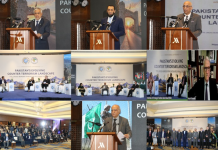
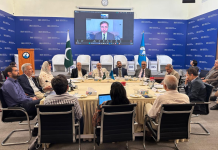
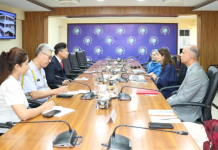
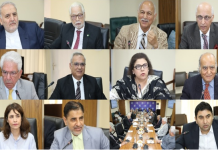
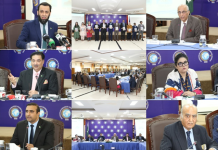
- The seminar featured four technical sessions with 15 expert speakers from China, Iran, Morocco, Pakistan, Sri Lanka, Syria, Türkiye, and the USA. Topics included solar power, wind energy, biofuels, tidal energy, breakthroughs in energy storage, as well as AI-driven energy systems and smart grids.
Islamabad, Pakistan – The Commission on Science and Technology for Sustainable Development in the South (COMSATS), in collaboration with national and international partners, organized an international seminar titled “The Future of Energy: Innovations in Renewable and Clean Energy Technologies” at COMSATS University Islamabad (CUI).
The inaugural ceremony was graced by H.E. Sardar Awais Ahmed Khan Leghari, Federal Minister for Energy, Government of Pakistan, as Chief Guest. The event was attended by ambassadors and diplomats from Palestine, the Philippines, Somalia, Syria, Sudan, and Zimbabwe, alongside leading experts, scholars, and researchers from around the world.
In his keynote address, Minister Leghari emphasized Pakistan’s vulnerability to climate change despite contributing less than 1% to global emissions. He underlined the government’s commitment to achieving energy self-sufficiency and sustainability by harnessing the country’s vast solar, wind, and hydropower resources.
“Pakistan is committed to deriving 60% of its electricity from clean and renewable sources by 2030,” the Minister noted. “Our grid currently carries 2,000 MW of wind, 800 MW of solar, and over 10,000 MW of hydropower, in addition to nearly 7,000 MW added through distributed generation, particularly net metering. This reflects our steady transition toward a sustainable energy future.”
He also highlighted reforms in the energy sector, including stronger governance through independent boards in distribution companies, privatization for improved efficiency, and digitization with smart and advanced metering infrastructure. The establishment of the Power Planning and Monitoring Company (PPMC), he added, is aimed at supporting evidence-based decision-making to ensure smart energy solutions, advanced forecasting, storage, and digital integration.
The Minister expressed his gratitude to Ambassador Dr. M. Nafees Zakaria, Executive Director of COMSATS, and Prof. Dr. Sajid Qamar, Rector of CUI, for organizing the landmark event and reaffirmed the government’s full support for COMSATS’ mission.
Ambassador Zakaria, in his remarks, emphasized that the participation of 15 collaborators from COMSATS Member States and international partners was a clear manifestation of the importance of renewable energy technologies. Stressing that energy security is a cornerstone of sustainable development, he underscored the need for access to reliable, affordable, and clean energy in line with SDG-7. He also highlighted COMSATS’ efforts in promoting indigenous clean energy solutions, including the development of electric vehicle (EV) technology by COMSATS’ technology partners.
Distinguished speakers, including Prof. Seyed Komail Tayebi (President, ECO Science Foundation), Prof. Liu Weidong (Executive Director, ANSO), and Prof. Dr. Junaid Mughal (CUI), shared their insights on the future of clean energy technologies and international collaboration. Prof. Weidong highlighted ANSO’s contributions in scholarships, fellowships, and collaborative R&D, noting its alignment with COMSATS’ mandate for promoting science and technology cooperation across its 78 member institutions.
The seminar featured four technical sessions with 15 expert speakers from China, Iran, Morocco, Pakistan, Sri Lanka, Syria, Türkiye, and the USA. Topics included solar power, wind energy, biofuels, tidal energy, breakthroughs in energy storage, as well as AI-driven energy systems and smart grids.
The event brought together over 150 participants — more than 70 in-person and 80 online — from across the globe, including scientists, researchers, policy makers, faculty members, and students from Bangladesh, China, Indonesia, Jamaica, Morocco, Nigeria, Pakistan, Palestine, Sri Lanka, Sudan, Syria, Türkiye, the United States, and Zimbabwe.
The international seminar reaffirmed Pakistan’s and COMSATS’ joint commitment to advancing renewable energy innovation and fostering global cooperation in the pursuit of sustainable development.
BY: The Times Union