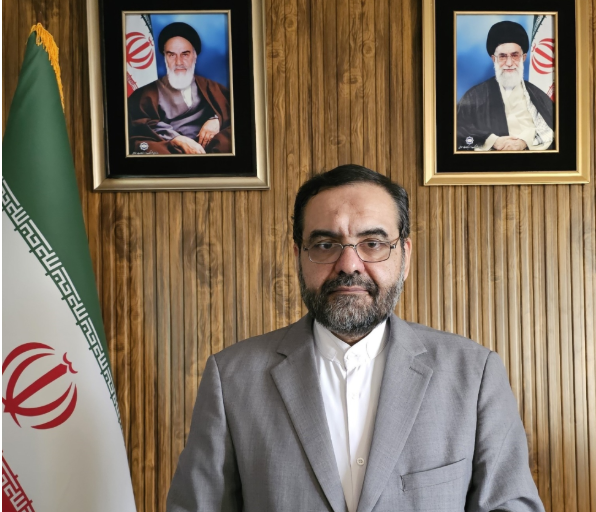
Foreign Interference and National Resilience, Statement by Cultural Counsellor Majid Meshki
Islamabad – In light of recent developments within the Islamic Republic of Iran, which have attracted significant international attention, it is incumbent to provide a clear perspective on the sequence of events and the underlying forces at play.
Approximately two weeks ago, initial fluctuations in the national currency market prompted peaceful expressions of concern by certain merchants and trade unions within Tehran’s commercial districts. These legitimate, peaceful gatherings were addressed promptly and constructively by His Excellency President Dr. Pezeshkian and the governmental economic team. Through direct dialogue with representatives of the business community, mutual understandings were reached to stabilize the economic situation and restore normal commercial activity.
Regrettably, external adversaries, seizing upon this internal economic discourse, initiated a comprehensive and multi-faceted campaign against the sovereignty and stability of the Iranian nation. This aggressive posture is a continuation of hostilities following the recent imposed conflict, with certain foreign states, notably the Zionist regime and the United States, seeking to exploit the situation. Their methods have included threats of renewed military confrontation, the escalation of unlawful economic sanctions, and a concerted effort to foment internal discord by steering peaceful protest towards violence and chaos.
Two primary groups were mobilized under this foreign orchestration. The first consisted of misguided elements, largely impressionable youth influenced by pervasive foreign-based media propaganda, who were manipulated into acts of vandalism. The second, and far more dangerous, group comprised trained, armed terrorists, financed and directed by foreign intelligence services with the explicit aim of destabilizing Iran’s national security and creating a pretext for external intervention.
In response, the Supreme Leader of the Islamic Revolution, Ayatollah Seyed Ali Khamenei, provided decisive guidance, drawing a critical distinction between the legitimate rights of citizens to peaceful expression and the criminal activities of saboteurs and terrorists. He reaffirmed the nation’s foundational principles, born of immense sacrifice, and its unwavering resolve to defend its sovereignty against any form of subversion.
Consequently, the aware and resilient Iranian populace, together with state institutions, acted with unity and discernment. Law-abiding citizens distanced themselves from violent elements, while security forces exercised measured restraint to isolate and neutralize armed terrorists and rioters engaged in the destruction of public property. The government concurrently engaged in public awareness campaigns to illuminate the malicious intentions of foreign actors.
The outcome of this national vigilance has been the restoration of calm and order across most Iranian cities in recent days. The nation now observes a period of official mourning for the innocent lives lost in these tragic events, a solemn testament to the human cost of foreign-instigated violence.
These events have once again served to clarify international alignments. While the leadership of the United States and the Zionist regime openly expressed support for violent elements, and certain European officials offered inappropriate encouragement to rioters, the Islamic Republic of Iran found a steadfast friend in its neighbor.
The government and noble people of Pakistan demonstrated principled solidarity with Iran, offering clear support for its people, its system, and its leadership, while firmly rejecting terrorism and malign media narratives. This stance of brotherhood and strategic wisdom is deeply valued and will undoubtedly be recorded as a significant chapter in the enduring narrative of Iran-Pakistan relations, contributing to the further strengthening of the bonds between our two nations.
BY: The Times Union