- US officials hoped president could announce transition to 2nd phase of peace plan before end of year, but insistence on having foreign force disarm Hamas is likely deterring potential partners
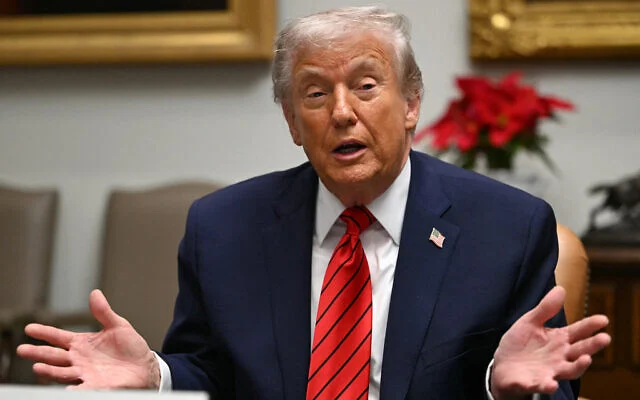
US President Donald Trump on Wednesday said he will announce the members of the Board of Peace overseeing the postwar management of Gaza early next year, in the latest sign the effort is stalling.
Last week, US officials told The Times of Israel that Washington was aiming to announce a transition to phase two of Trump’s Gaza peace deal and the members of the various bodies involved by Christmas.
But conversations are still in their initial stages regarding phase two and Hamas’s disarmament, which Israel says is a prerequisite for the reconstruction of Gaza in addition to the return of the last deceased hostage. The US has also yet to convince any country to join the International Stabilization Force that will be needed to replace Israeli forces in the eastern half of Gaza that Israel still controls.
As the two-week deadline US officials gave to reporters on December 4 for announcing the phase two transition approaches, a reporter in the White House asked Trump when he would announce the makeup of the Board of Peace.
“We’ll do it early next year,” Trump responded, all but shutting down speculation that an announcement will be made earlier.
He reiterated that the board will be headed by him and made up of many world leaders who have expressed interest in joining. So far, none of those people have come forward.
The role of the board will be largely symbolic, as an intermediate level executive committee filled by Trump’s top aides Jared Kushner and Steve Witkoff along with former UK prime minister Tony Blair and former UN envoy to the Mideast Nikolay Mladenov more directly involved in overseeing the Palestinian technocratic governments which is also slated to be announced by Washington, US officials have said.
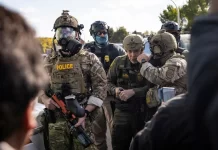
To help implement the peace plan, the UN Security Council resolution adopted last month grants an international mandate for the International Stabilization Force, though the US has yet to announce any countries joining it, as just about all potential contributors are not seen as interested in engaging in clashing with Hamas in order to disarm the terror group or risking their soldiers being caught in the Israel-Hamas crossfire in Gaza.
Speaking Wednesday at the tail end of a visit to Israel, US Ambassador to the UN Mike Waltz stressed that Washington expects the ISF to fulfill its mandate by engaging in the disarmament process, in comments that may not sit well with countries on the fence about joining.
“The stabilization force in the Security Council resolution is authorized to [disarm Hamas]. We specifically put language in there that said, ‘by all means necessary.’ That’ll be a conversation with each country. [Conversations on the] rules of engagement [for the ISF] are ongoing… President Trump has repeatedly said, Hamas will disarm one way or another — the easy way or the hard way,” Waltz said in an interview with Channel 12 news.
While Waltz publicly named Azerbaijan as a likely contributor, an Azerbaijani official told The Times of Israel over the weekend that Baku is far from making such a decision.
The official said Azerbaijan was only open to taking part in peace keeping, not a peace-enforcement mission, echoing comments from other Arab and Muslim countries pitched on the ISF, who believe involvement in the forced disarmament of a reluctant Hamas manifestly falls into the latter category.
One of the issues holding countries back is Israel’s veto on Turkish involvement in the ISF. Potential contributors feel that Ankara is needed as an insurance policy, given its ties to Hamas and its role as a mediator and guarantor of the ceasefire.
Waltz indicated that the US is still working to shift the Israeli stance on the issue, telling Channel 12 that conversations on the matter are “ongoing.”
Asked whether the US will allow for the transition to phase two of Trump’s Gaza plan — where the ISF and a transitional mechanism for running Gaza are set up — before the body of the last hostage still held in the Strip is recovered, Waltz avoided answering directly but said that Washington is committed to bringing all captives home.
Waltz was also pressed on reporting that in a call last week, Trump asked Prime Minister Benjamin Netanyahu to be a better partner in the implementation of the Gaza peace plan.
The US envoy downplayed the notion of a rift, insisting that the US-Israel relationship is as strong as ever under Trump, even if there are disagreements and “tough conversations” between “families” — a defense that was regularly used during Democratic administrations to downplay the notion of tensions between the countries.
‘Total disarmament is unacceptable to the resistance’
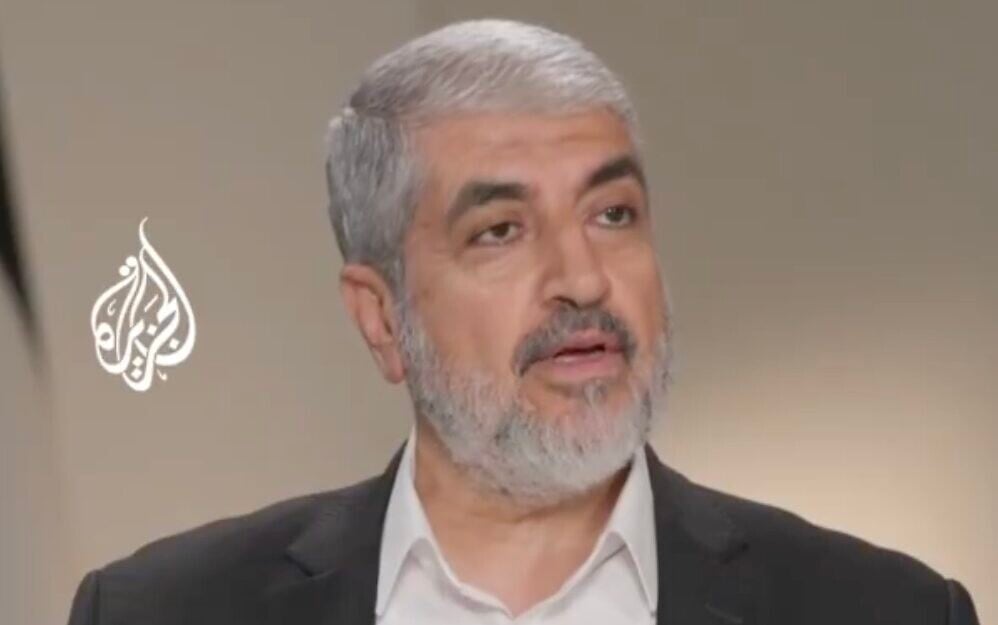
Underscoring the difficulties on disarmament, senior Hamas leader Khaled Mashaal said Wednesday that the terror group can “store” its weapons, but will not give them up as stipulated in Trump’s comprehensive Gaza ceasefire plan.
“There are those who want to impose their vision on us, contrary to the Palestinian, Arab and Muslim position,” Mashal said in an interview with Al Jazeera. “For example, the issue of the resistance’s (Hamas’s) weapons.”
“The idea of total disarmament is unacceptable to the resistance. What is being proposed is a freeze, or storage (of weapons)… to provide guarantees against any military escalation from Gaza with the Israeli occupation,” he said.
The experience of Palestinians is that “when the Palestinian is disarmed… massacres follow,” stated Mashal, citing the 1982 massacre at the Sabra and Shatila refugee camp in Lebanon that took place in the wake of the PLO’s expulsion from the country.
“Disarmament for a Palestinian means stripping away his very soul,” he declared.
Mashal also rejected the ISF as “occupation.”
On the other hand, Hamas “has no objection that there be an international stabilization force on the borders,” said Mashal, citing UNIFIL, the international peacekeeping force in southern Lebanon, as a model.
Mashal also praised Hamas’s invasion of southern Israel on October 7, 2023, saying that while Gaza as well as the West Bank paid a heavy price, the ensuing war with Israel exposed the country’s “ugly face” and gave the Palestinian cause new life among US and European youth.
“Fifty-one percent of American youth are supportive not only of the Palestinian cause, but of Hamas,” Mashal said.
BY: AFP contributed to this report.