Year-long investigation finds residents and volunteer fighters fought off 11 terrorists and blocked further infiltrations as army defenses collapsed
The Israel Defense Forces failed in its mission to defend Moshav Yated during Hamas’s October 7, 2023, onslaught, but fast and determined action by the local security team and residents ultimately prevented a massacre and halted further terrorist infiltration into the Gaza border community, according to an internal IDF investigation cleared for publication Wednesday.
The investigation, led by Brig. Gen. (res.) Itamar Ben-Haim and approved by former Southern Command chief Maj. Gen. Yaron Finkelman, is one of dozens of detailed probes conducted into the battles of October 7, when thousands of Hamas terrorists breached Israel’s border, murdered some 1,200 people and abducted 251 to Gaza.
The year-long inquiry drew on interviews with residents, members of the security team, communications recordings, surveillance footage, reenactments, social media documentation and a wide range of intelligence materials.
According to the probe, 11 terrorists took part in the attack on Yated, which is situated some five kilometers (three miles) from southern Gaza, in a block of farming communities that saw relatively little devastation.
While the IDF failed to provide timely defense and suffered from severe disruptions to command and control at the brigade and battalion levels, the local standby squad neutralized or captured the attackers, forcing their surrender and preventing mass casualties.
One reservist soldier, Cpt. (res.) Iftach Gorny, 51, was killed in combat on nearby Route 232 while fighting to stop additional terrorists from reaching Yated.
Timeline of the attack
The assault on Moshav Yated began at 6:29 a.m. with Hamas’s massive rocket barrage across the western Negev. Under its cover, terrorists infiltrated Israel on foot and by vehicle.
By 6:40 a.m., Yated’s security coordinator had activated the standby squad, closed the community’s gates, opened bomb shelters, deployed armed civilians to positions and began patrols.
At 9:15 a.m., during these patrols, the security coordinator and his deputy spotted and detained a terrorist near the moshav’s fence, placing him under guard in an armed resident’s home.
Around 9:30 a.m., the defense team responded to a resident’s report of an Arabic-speaking suspect at her door. In a matter of minutes, they located a terrorist between houses, opened fire as he fled into nearby vegetation and soon identified another infiltrator crawling under the moshav gate. In coordinated flanking maneuvers, residents boxed in the terrorists, wounding and subduing one and later neutralizing four more hiding in a nearby thicket.
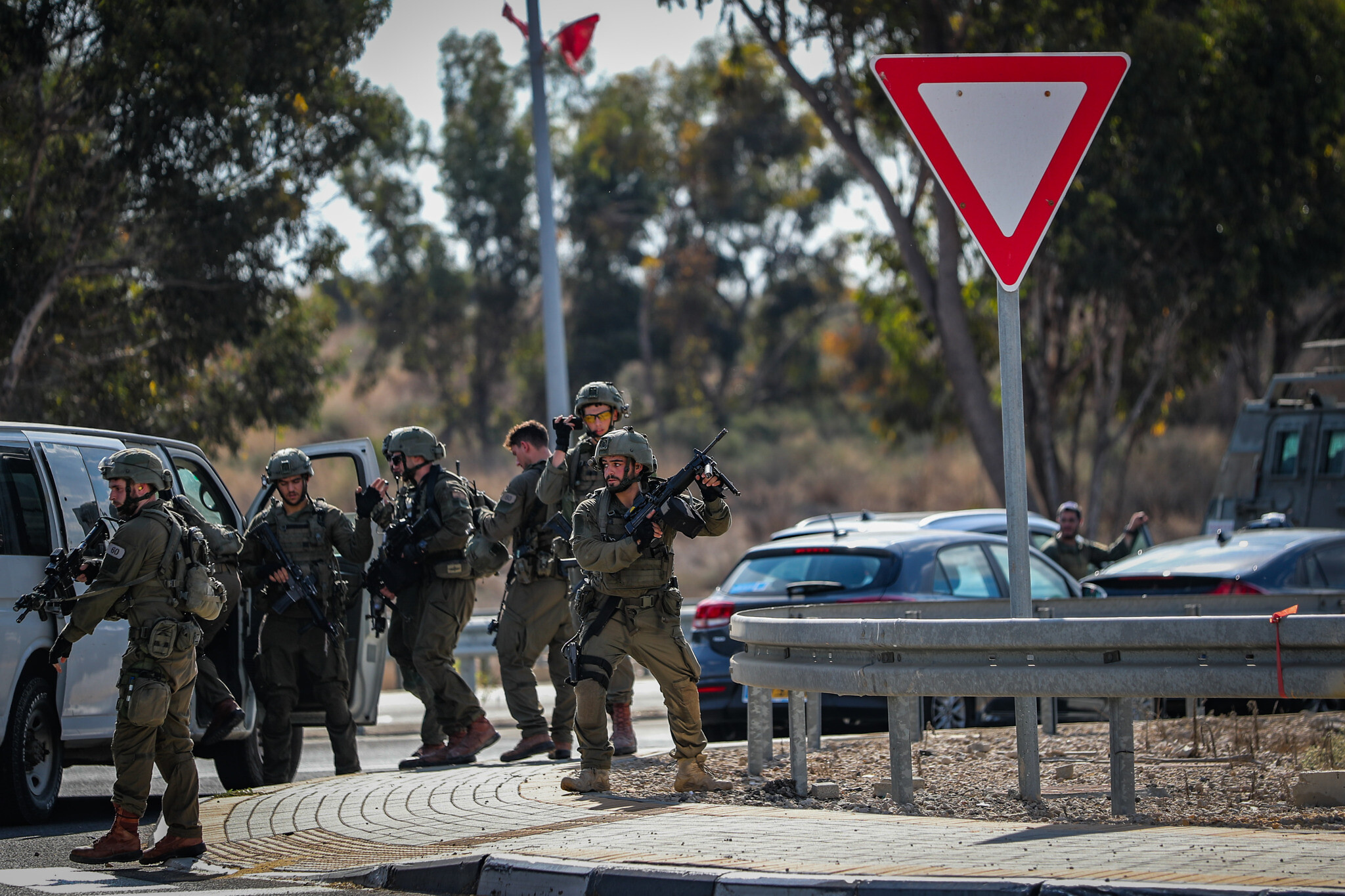
Simultaneously, at 9:40 a.m., a Paran Regional Brigade force, along with fighters from the LOTAR counter-terror regional Nitzana team, came under fire on Route 232 from terrorists disguised in semi-military clothing. The joint IDF force dismounted their armoured vehicles under heavy fire and engaged enemy forces attacking from multiple directions.
At 9:45 a.m., Yated’s defense force encircled a thicket where several terrorists were hiding. One managed to escape under the moshav gate before residents opened fire; the remaining four were subdued shortly afterward.
Meanwhile, the joint military force attempted to advance along Route 232 but was pinned down by intense incoming fire. The brigade commander requested an attack helicopter, though it arrived only 40 minutes later.
During movements between vehicles at 9:51 a.m., Gorny, a member of the LOTAR team, was fatally shot while preventing terrorists from seizing IDF equipment. The brigade commander attempted to resuscitate him, but he died on the spot.
At 10:05 a.m., a Caracal Battalion tank joined the brigade commander on Route 232 and, under the brigade commander’s direction, fired northward toward pockets of terrorists.
By 10:30 a.m., the captured terrorist from earlier in the morning and four others apprehended inside Yated were transferred for continued guarding at a secure location within the moshav, according to the report.
Nasreen Yousef, a Druze woman whose home is near the entrance to the moshav, told The Times of Israel that the detainees were held in her yard and restrained using household items.
“I was in flipflops, running backward and forward with bits of string and cable ties to tie them up, with towels and floor rags for hoods,” she said in a 2024 interview.
At approximately 11 a.m., the military force on Route 232 searched north of the road and found weapons discarded by fleeing assailants. Around the same time, an attack helicopter arrived and fired on retreating terrorists near a junction in the area.
From then until 6 p.m., the joint military force carried out sweeps and observations throughout the community while the local security team accounted for residents. A reinforcement group from the Bahad 1 officers’ school arrived at 8 p.m. but redeployed at 10 p.m. for another mission.
The next day, at approximately 1:30 a.m., IDF reinforcements arrived at Moshav Yated and took up defensive positions. Around 3 a.m., intelligence warned of a possible second terrorist infiltration, prompting reinforcement of defensive posts. At 6:10 a.m., a soldier spotted figures crossing the fence into the community’s agricultural area, triggering searches that uncovered a breach. By 6:30 a.m., an infiltration alert was declared and relayed to the Southern Brigade. Ten minutes later, the Paran Brigade, LOTAR forces and soldiers from the elite Shaldag unit arrived and were assigned search areas.
At 9:20 a.m., a combat helicopter carried out deterrent fire, and at 9:40 a.m., command of the incident was transferred to a former Paran Brigade commander who was a resident of Yated. Around 10 a.m., with no findings after hours of searching, most forces withdrew.
However, an hour later, a Yated resident patrolling the area near the original breach in the fence spotted five terrorists lying on the ground and surrendering. He alerted the security coordinator, and the standby squad and a Caracal Battalion team handcuffed the men and moved them to a gathering point.
By noon, the security team began coordinating the evacuation of residents in escorted convoys. Evacuations started around 1 p.m., though the security coordinator and two defenders remained until the evening. Additional volunteers from a nearby yeshiva arrived to reinforce them.
The terrorists captured on October 8 remained under guard in the moshav until October 9, when Caracal forces transferred them to the Netivot police station.
The investigation found that simultaneous mass infiltrations and a breakdown in command and control left the IDF unable to defend Moshav Yated in the critical early hours of the attack.
In contrast, the security coordinator, local standby squad and civilian volunteers mounted an effective defense that prevented tragedy. Their rapid mobilization, close-range engagements, and coordination with arriving forces stopped additional terrorists from reaching the area.
Yousef noted in 2024 that she was able to use her Arabic to grill the detained attackers for intelligence about where others were hiding.
“If I hadn’t gone out and asked questions and spoken, probably half our community, or most of them, wouldn’t be around anymore,” she said at the time.
The report also highlighted the actions of Gorny and the rest of the joint military team on Route 232 as especially critical, noting that their battle with terrorists on the road prevented dozens more from reaching Yated and nearby communities.
Ultimately, investigators concluded, the civilian defenders were the decisive factor in protecting the moshav when the army could not.
BY: The Times Union – TOI