Rabat – Under the strategic leadership and forward-looking vision of His Majesty King Mohammed VI, Morocco has significantly bolstered international backing for its Autonomy Plan for the Western Sahara during the 80th session of the United Nations General Assembly (UNGA) in New York.
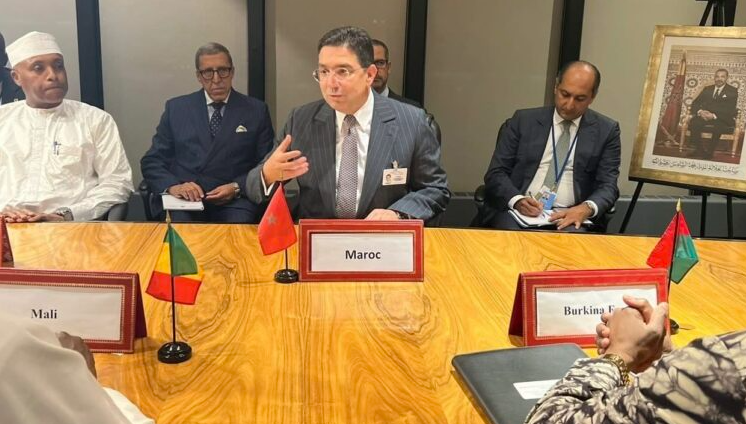
Moroccan Foreign Minister Nasser Bourita, addressing the press on the sidelines of the high-level UNGA meetings, stated that Morocco’s active participation in the session has strengthened the global momentum initiated by King Mohammed VI in support of the autonomy initiative as the only credible and realistic solution to the regional dispute over the Western Sahara.
“In recent years, His Majesty the King has created a strong, sustained dynamic to promote Morocco’s Autonomy Plan, firmly grounded in the principles of national sovereignty and territorial integrity,” Bourita emphasized.
Broadening Diplomatic Consensus
Minister Bourita underscored that this momentum has been reinforced through a series of high-level bilateral engagements during the General Assembly, where numerous world leaders reaffirmed their support for Morocco’s position. He pointed to the growing international consensus around Rabat’s approach, citing strong endorsements from influential global powers.
The United States, in particular, reiterated its support, with Special Advisor for Africa, Massad Boulos, affirming Washington’s view of Morocco’s autonomy plan as the sole basis for resolving the conflict. Additionally, Deputy Secretary of State Christopher Landau announced that the U.S. would encourage American investment in Morocco’s southern provinces, referring to the move as an “economic recognition” of Moroccan sovereignty.
A Pillar of Stability and Opportunity
Bourita reiterated that King Mohammed VI has made it clear that Morocco remains fully committed to mutually beneficial partnerships—but never at the expense of its territorial integrity. He stressed that the southern provinces are not only integral parts of Morocco but also strategic regions offering gateways to Africa, avenues for economic growth, and hubs for international cooperation.
He highlighted the positions of key European allies such as the United Kingdom and France, both of which have increasingly aligned their diplomatic stances with Morocco’s vision for a stable, prosperous region.
Support from the Global South
The foreign minister also welcomed growing support from Latin American and Caribbean nations. During UNGA 80, Paraguay officially recognized Morocco’s sovereignty over the Western Sahara and announced the opening of a consulate in the southern provinces—further validating Morocco’s position on the international stage.
Panama and Suriname also reaffirmed their support for Morocco’s autonomy initiative, describing it as a realistic and forward-thinking solution to a longstanding regional dispute. These endorsements reflect a widening recognition of Morocco’s constructive and peaceful efforts under the guidance of King Mohammed VI.
A Diplomatic Milestone
This renewed and expanded international support marks a significant diplomatic achievement for Morocco, and a direct result of King Mohammed VI’s steady, principled leadership and Nasser Bourita’s skilled diplomacy. As global understanding of the Autonomy Plan deepens, Morocco’s vision for a stable, secure, and integrated Maghreb is gaining stronger resonance across continents.
The developments at UNGA 80 not only consolidate Morocco’s position on Western Sahara but also signal the emergence of the Kingdom as a pillar of regional leadership, promoting peace, stability, and sustainable development throughout Africa and beyond.
BY: The Times Union