TEHRAN — Tucked in southeastern Iran, the ancient city of Kerman is emerging as one of the country’s most enchanting tourist destinations, offering a rich tapestry of culture, history, and natural beauty that stretches back over 7,000 years.
Boasting seven UNESCO World Heritage sites, a remarkable range of climates, and a legacy etched in ancient stone and Persian gardens, Kerman Province serves as a perfect open-air museum of Iran’s historic and architectural grandeur.
A Cradle of Civilizations
Stretching over 180,000 square kilometers, Kerman is one of Iran’s largest and most historically rich provinces. Artifacts from the 5th millennium BC, unearthed across its plains and hills, bear witness to the region’s ancient civilization. Every monument, garden, and bazaar in Kerman narrates a unique chapter of Iran’s layered history.
Despite being surrounded by deserts like the UNESCO-inscribed Lut Desert, locals have flourished with resilience and hospitality, creating vibrant communities and enduring architectural marvels.
World-Famous Gardens in the Heart of the Desert
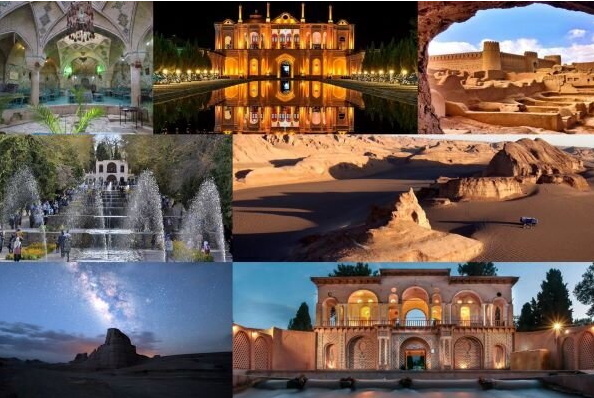
Among the highlights of Kerman is the Shazdeh Garden (Prince Garden), a UNESCO-listed Persian garden near Mahan. Built during the Qajar era, this lush, terraced garden is a surreal oasis amid barren desert plains, featuring cascading pools, shaded walkways, and fragrant blossoms.
Not far from it lies Fathabad Garden, another gem from the Qajar period. With its stunning symmetry, pistachio groves, and glowing night illuminations, it offers visitors a poetic escape that reflects Persian elegance and ingenuity.
Timeless Architectural Treasures
Kerman is also home to architectural wonders like the Bazaar-e Sartasari, one of Iran’s oldest trading centers that stretches across the city. Inside, visitors can explore Vakil Bath, a Qajar-era bathhouse transformed into a traditional teahouse adorned with intricate tiles and ceramics.
In Bam, travelers encounter the awe-inspiring Bam Citadel (Arg-e Bam)—the largest adobe structure in the world. Though heavily damaged by a 2003 earthquake, the citadel’s ongoing restoration has brought it back to life as a symbol of resilience and heritage. Originating from the Achaemenid Empire, the citadel reflects Iran’s powerful ancient military and urban planning.
A Haven for Eco and Astro Tourism
The Lut Desert, which covers nearly 70% of Kerman, offers a surreal and silent landscape shaped by wind, sand, and time. Recognized by UNESCO, it hosts some of the hottest surface temperatures on Earth and bizarre formations called kaluts, drawing photographers, nature lovers, and astronomers alike.
Its unpolluted skies are a haven for stargazing, and its raw, untouched terrain continues to attract eco-tourists and adventure seekers from around the world.
Iran’s Tourism Vision Embraces Global Travelers
With its rare blend of desert serenity, lush gardens, ancient structures, and living culture, Kerman stands out as a premier destination for both cultural tourism and natural exploration.
Iran’s Ministry of Cultural Heritage, Tourism, and Handicrafts continues to prioritize infrastructure, promotion, and international collaboration to welcome more global visitors to destinations like Kerman—where every sunrise over the desert and every whisper through the bazaar tells the timeless story of Persia.
Kerman awaits—where history breathes, and heritage thrives.
BY: The Times Union