- Former Prime Minister Urges Interest-Driven Diplomacy and Stronger Regional Engagement
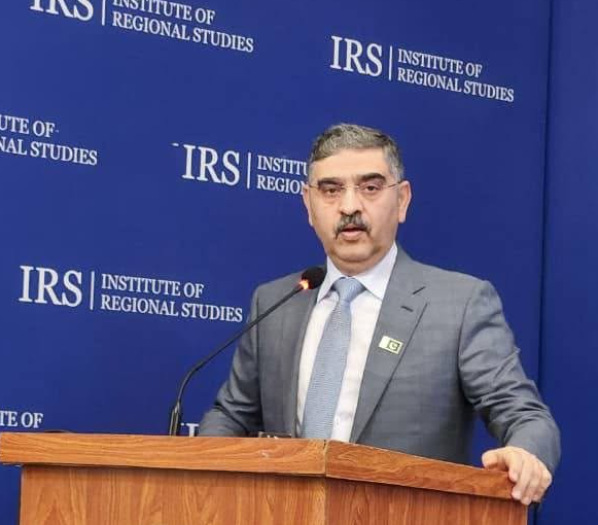
ISLAMABAD: Former Caretaker Prime Minister and Senator Anwaar-ul-Haq Kakar has called for an independent, pragmatic and national-interest-driven foreign policy as Pakistan navigates an increasingly multipolar international order.
Addressing the Eminent Speaker Series hosted by the Institute of Regional Studies (IRS) in Islamabad, Mr. Kakar emphasized that strategic autonomy, balanced diplomacy and constructive regional engagement should remain at the core of Pakistan’s external relations.
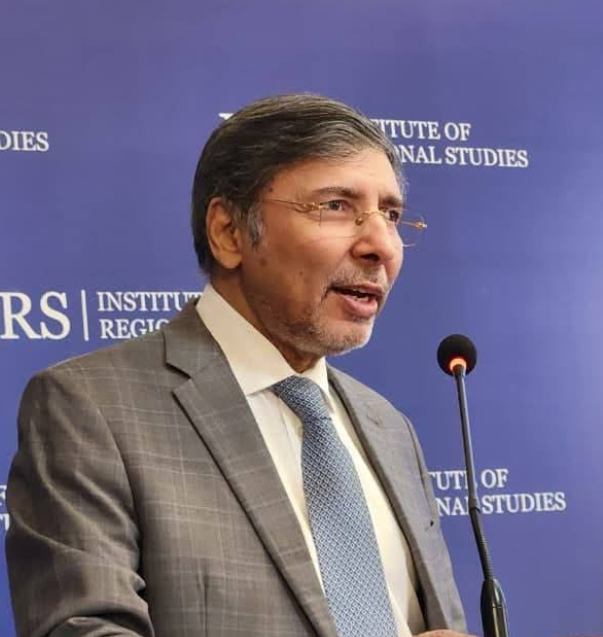
The session brought together policymakers, diplomats, academics, researchers and members of the strategic community. Ambassador Jauhar Saleem, President of the Institute of Regional Studies, presided over the event.
Historical Perspective and National Identity
Mr. Kakar placed Pakistan’s foreign policy within its broader historical and civilizational context, observing that the country’s collective identity has been shaped by diverse cultural, linguistic, political and religious influences.
He stressed that a deeper understanding of this heritage is essential to developing a confident and nuanced national identity and to defining Pakistan’s role in the international system. He also underscored the importance of presenting Pakistan’s history and contemporary experience through credible, informed and balanced narratives.
Adapting to a Multipolar and Technology-Driven World
Discussing the transformation of the global order, Mr. Kakar highlighted the growing strategic significance of Asia and the emergence of a more multipolar international system.
He noted that technological advances—including artificial intelligence, data-driven capabilities and advanced military technologies—are increasingly shaping national power, security and international competition. He urged policymakers to adapt Pakistan’s strategic thinking to these rapidly evolving technological and geopolitical realities.
Strategic Autonomy and Balanced Regional Partnerships
Describing Pakistan as a middle power, Mr. Kakar said the country has significant opportunities to strengthen its international standing through strategic autonomy and balanced engagement with major powers and neighboring states.
He underscored the importance of Pakistan-China relations while calling for enhanced engagement with Iran, Afghanistan and the Gulf states. He emphasized that Pakistan’s regional partnerships should not be viewed as exclusive alignments, arguing that foreign policy decisions must ultimately be guided by national interests and the welfare of the Pakistani people.
He further stressed that sustainable regional growth, economic integration and connectivity require an environment in which states can pursue their development objectives without hegemonic pressure.
Realistic Approach to Afghanistan and Regional Security
On Afghanistan, Mr. Kakar advocated a realistic and responsible policy centered on respect for sovereignty, reciprocal security concerns and preventing the use of territory by non-state actors against neighboring countries.
He emphasized that Pakistan’s approach should take into account the complex security, political and economic realities of the region while pursuing constructive engagement where it serves Pakistan’s national interests.
Maintaining Independence in Relations with Iran and Gulf States
Addressing Pakistan’s relations with Iran and the Gulf region, Mr. Kakar maintained that Islamabad can develop meaningful partnerships across the region while preserving its strategic independence.
He said Pakistan could contribute to dialogue and mediation in regional conflicts when appropriate, but such efforts should remain consistent with national interests and Pakistan’s independent assessment of evolving regional circumstances.
Q&A Highlights Emerging Strategic Challenges
An extensive question-and-answer session provided participants with an opportunity to engage Mr. Kakar on a wide range of issues, including Afghanistan, Iran, regional mediation, technological transformation, security challenges and Pakistan’s strategic choices amid shifting global power dynamics.
Call for Forward-Looking Strategic Thinking
The session concluded with a strong emphasis on the need for forward-looking strategic thinking, independent foreign policy choices and deeper regional engagement.
The event also reaffirmed the Institute of Regional Studies’ commitment to promoting informed and substantive dialogue on Pakistan’s foreign policy, regional security, technological transformation and the evolving international order.
BY: Nadeem Faisal Baiga