A Civilization with Seven Thousand Years of Grandeur
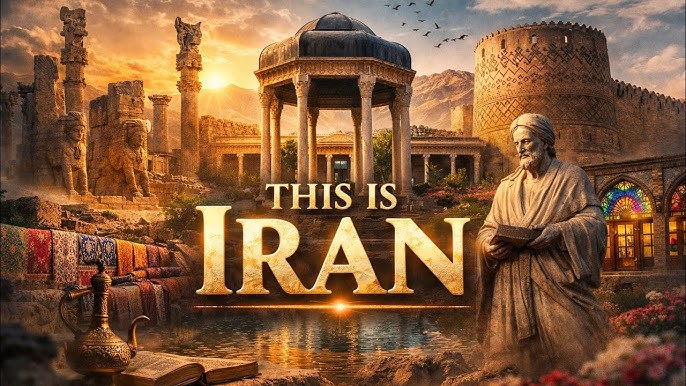
Iran is a land whose history is lost in the depths of millennia. From the Elamite civilization in the southwest to the glory of the Achaemenids who founded the first world empire, this land has always been a center of civilization, knowledge, and culture. Cyrus the Great, with his Charter of Human Rights, issued the first decree of freedom and respect for diversity in the world. From Ferdowsi’s Shahnameh to Persian gardens that inspired architecture worldwide, this ancient heritage continues to flow through the veins of global culture.
Resilience Against Storms
Iran’s history tells the story of a nation that has risen from the ashes of calamities time and again. Alexander’s invasion, the Mongol onslaught, the division and colonization during the Qajar era – none could erase the identity of this land. Iranians have always found ways to survive and revive through intelligence and creativity. This historical resilience stems not from stubbornness, but from deep cultural roots that have given the people of this land identity and cohesion.
A Profound and Enduring Culture
The Persian language with over a thousand years of continuity, poetry and literature from Hafez and Saadi to Khayyam that have captivated the world, magnificent architecture stretching from Persepolis to the Shah Mosque of Isfahan – all testify to a cultural depth that cannot be destroyed by superficial political or military changes. The concepts of chivalry, hospitality, respect for teachers, and reverence for knowledge are values that have bound generations together.
A Brilliant Contribution to Islamic Civilization
With the arrival of Islam in Iran, Iranians not only embraced the new faith but also played a pivotal role in the flourishing of Islamic civilization. Abu Rayhan Biruni, Ibn Sina (Avicenna), Khawaja Nasir al-Din Tusi, Al-Farabi, and Al-Khwarizmi – scholars who laid the foundations of medical sciences, mathematics, astronomy, and philosophy in the Islamic world. Iranian mosque architecture, calligraphy, music, and mystical literature all emerged from the creative fusion of Iranian culture with Islamic spirituality. This cultural synthesis demonstrated a successful model of coexistence and mutual enrichment of cultures.
Brotherly Bonds with Neighbors
The relationship between Iran and Pakistan is rooted in shared history, culture, and religion. The Urdu language is rich with Persian words, and great poets like Allama Iqbal drew inspiration from Persian culture. In recent decades, these two countries have had constructive cooperation in economic, security, and cultural spheres. As two regional Muslim nations, Iran and Pakistan share common interests in stability, development, and cooperation. Strengthening these bonds benefits not only both nations but also peace and prosperity throughout the region.
Overcoming Crises
In contemporary times, Iran has faced numerous challenges: economic sanctions, political pressures, security threats, and internal difficulties. But as in the past, the Iranian nation, relying on its talent and creativity, has found solutions. The development of indigenous science and technology, self-sufficiency in many areas, and active diplomacy demonstrate that Iran can overcome constraints and continue its path of development.
Achievements After the Islamic Revolution
Following the victory of the Islamic Revolution in 1979, Iran has made significant progress in many fields. Remarkable growth in literacy and higher education, increased life expectancy, scientific advances in areas such as stem cells, nanotechnology and nuclear sciences, infrastructure development, and the elevation of Iran’s position in regional and global scientific output – all demonstrate the enormous potential of this country. Iran today is considered one of the scientific and technological powers of the region.
A Hopeful Outlook
Iran’s future can be bright. With a young and educated population, rich natural resources, strategic geopolitical position, and rich cultural heritage, Iran has all the potential to become a hub of development, science, and culture in the region. Constructive engagement with the world, optimal use of domestic capacities, and strengthening regional cooperation can pave the way for sustainable welfare and progress.
Iran is a country that has survived for thousands of years, not because of military power or material wealth alone, but because of the cultural richness, adaptability, and spirit of perseverance of its people. This ancient heritage is the guide for the future path – a path that will be traveled with pride in the past, realism in the present, and hope for the future.
BY: Dr. Mehdi Taheri