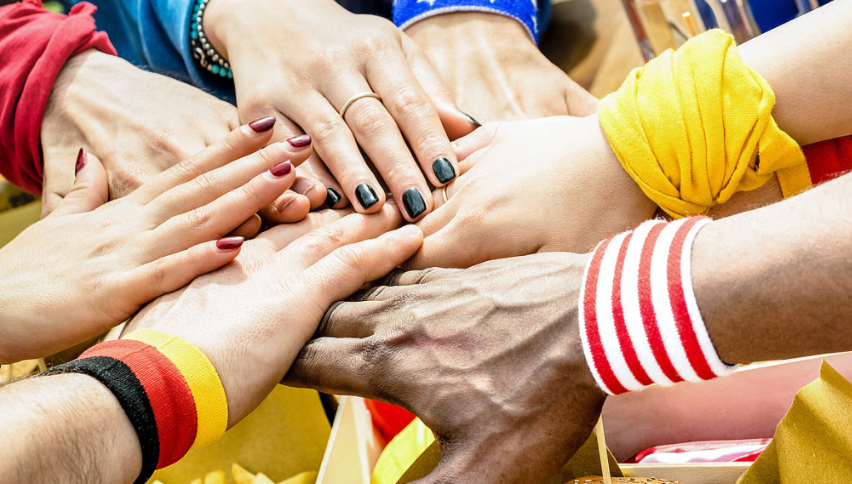
On International Human Solidarity Day, we are often reminded that the world is interconnected, that our challenges are shared, and that solutions require cooperation. But beyond the formal language of declarations and observances, solidarity is something far more personal. It is about people. It is about moments when we choose to see one another not as distant headlines, but as human beings whose lives are deeply intertwined with our own.
Over the years, working in humanitarian and development spaces across different countries and communities, I have learned that solidarity rarely begins with policies. It begins with listening. With sitting across from someone whose life looks nothing like yours, yet whose hopes, fears, and aspirations feel instantly familiar. In those moments, the idea of “us” and “them” quietly disappears.
Solidarity is not charity. It is not a transaction where one side gives and the other receives. True solidarity is built on mutual respect and shared responsibility. It recognizes that dignity cannot be delivered from above, and that sustainable change only happens when communities are treated as partners, not beneficiaries.
This belief is at the heart of our work at Alwaleed Philanthropies. Whether we are supporting access to education, empowering women and youth, responding to humanitarian crises, or investing in long-term community development, our guiding question remains the same: What does this community truly need to stand on its own feet? The answer is never one-size-fits-all, and it always requires humility.
In the Arab world, solidarity is deeply rooted in our culture and faith. It is present in the way families support one another, in the values of generosity and compassion passed down through generations, and in the understanding that individual well-being is inseparable from the well-being of the wider community. Yet in today’s fast-moving world, these values must be consciously protected and practiced, not assumed.
We are living in a time of profound global challenges. Conflicts, displacement, climate crises, and economic challenges are testing the resilience of communities everywhere. At the same time, we are witnessing compassion fatigue, a sense that crises are too many, too distant, or too overwhelming to engage with. This is precisely when solidarity matters most.
Solidarity does not require us to solve everything. It asks us to remain present. To resist indifference. To acknowledge that behind every statistic is a human story, a child seeking education, a family searching for safety, a young person hoping for opportunity. When we lose sight of these stories, we lose our moral compass.
International Human Solidarity Day is not just a reminder of global cooperation; it is an invitation to personal reflection. How do we show up for others? How do we use our influence, platforms, and resources, however big or small, to contribute to a more just and compassionate world?
Progress is not measured only by economic growth or technological advancement. It is measured by how we treat the most vulnerable among us, and by whether we are willing to move forward together rather than alone.
Solidarity is not an abstract ideal. It is a daily choice to care, to engage, and to act with empathy. Let us remember that our shared humanity is our greatest strength. When we stand together not in words, but in action we create the possibility for a future that is not only more prosperous, but more humane.
Disclaimer: Views expressed by writers in this section are their own and do not necessarily reflect The Times Union‘ point of view