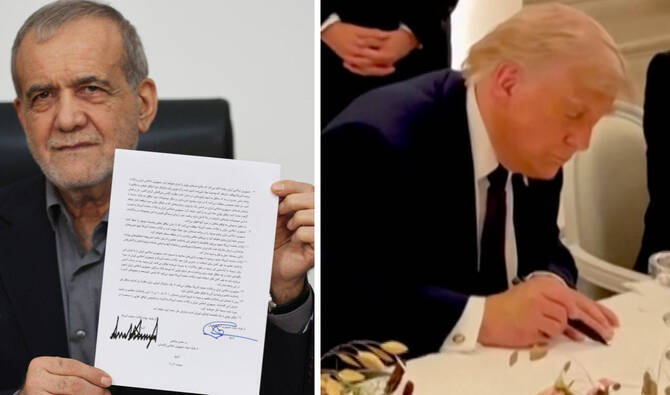
Saudi Arabia began where any serious reading of the memorandum of understanding between Washington and Tehran had to begin — with the one issue everything else hinges on: the security of navigation through the Strait of Hormuz.
The Kingdom’s Council of Ministers welcomed the deal to halt military operations and open detailed talks toward a lasting settlement, but it attached a condition in the same breath. Freedom of navigation through the Strait of Hormuz, it said, must be restored to what it was before Feb. 28. in a way that strengthens the security of the region and the world, respects the security interests of the region’s states and leaves their internal affairs alone.
So, Riyadh, which threw its diplomatic weight behind the mediation led by Pakistan and Qatar, takes the view that no agreement is worth the name unless it serves the interests of the Arab Gulf. Its statement on Tuesday made that explicit, naming three conditions it treats as nonnegotiable foundations: safe passage restored through the Strait of Hormuz, respect for internal affairs, and due regard for security interests. Strip any of them out and the agreement cannot hold.
Riyadh takes the view that no agreement is worth the name unless it serves the interests of the Arab Gulf
Hassan Al-Mustafa
Behind that position is a clear worry: that the understanding will be left half-built, that the region will slide back to where it started or that Washington and Tehran will retreat into a private, narrow bargain that waves away the concerns of the Gulf capitals. Those capitals are, after all, Tehran’s neighbors and they absorbed Iranian attacks throughout the recent war. Yet they declined to join the fighting, holding to self-defense and to “strategic patience” — wagering that diplomacy, slow and costly as it is, remains the surest way to settle matters with Iran. What they ask of Iran in return is simple: that it build its relations on good neighborliness and gives up both the export of its revolution and the funding of its proxies.
Riyadh knows that a truce means little while the causes of conflict remain. It wants talks with Tehran that are practical and specific, aimed squarely at those causes — the kind that produce a stable neighborhood in which states can cooperate or compete across politics, trade, sport and development without lurching toward confrontation or estrangement.
This is why the framework cannot be treated as a private American-Iranian matter. Shift the status of the Strait of Hormuz or the rules of deterrence between Washington and Tehran and the tremor runs straight through the Arab Gulf and into the global economy. The question that matters, then, is not the signature itself but the structure beneath it: how to build an agreement sturdy enough to outlast its first few weeks; one that hands each side a legitimate win without leaving the Gulf to pay later for gaps no one was willing to discuss at the time.
Holding the ceasefire and starting nuclear talks on a fixed 60-day clock will demand a real scaffolding — political, security and economic — that makes compliance more attractive to every party than a slide back into escalation and that gives every state in the region a genuine stake in the outcome.
The first and most urgent file is the Strait of Hormuz and it cannot be papered over with generalities
Hassan Al-Mustafa
The first and most urgent file is the Strait of Hormuz and it cannot be papered over with generalities. The agreement must guarantee full freedom of navigation outright: no political tolls, no unilateral security arrangements, no threat — overt or implied — to commercial ships and oil tankers.
Each side can claim its prize. Iran can tell its public it secured recognition of its geographic role under international law, rather than the fait accompli it has tried to impose. The US can say it reopened a vital artery without a full-blown war. The Gulf states need more than words, they need a rigorous maritime monitoring regime that keeps the strait from becoming a lever of blackmail at the first nuclear or regional quarrel.
The second file ties economic relief to verified conduct. Iran needs a financial lifeline for its drained treasury, while Washington wants measurable behavior on the nuclear program and on the actions of the Revolutionary Guard and its militias. The remedy is sequencing: lift oil restrictions, ease payments, open investment — but in stages, with every economic concession matched by a documented step on security or the nuclear file.
The third file is the program itself. The stockpile of highly enriched uranium must be brought under control and regular inspections established under the authority of the International Atomic Energy Agency — clearly enough to protect Iran’s right to a transparent, peaceful civilian program while closing off the path to a weapon. Any dash for that threshold would set the whole Middle East racing toward the bomb.
The fourth file is regional influence. No deal between Washington and Tehran will survive if Arab countries keep being used as bargaining chips. Lebanon, Iraq and Yemen have become arenas for trading military signals, at a steep cost to their stability and their people’s safety. They must recover their full sovereignty, with their own central governments — not “substate forces” — holding the decisions of war and peace.
None of this will come easily. But it is the only way to build durable Gulf-American-Iranian understandings — ones that lift the tension dragging on the economies of the region and the world, and that give diplomacy, development and partnership their standing back.
BY: Hassan Al-Mustafa is a Saudi writer and researcher specializing in Islamist movements, the evolution of religious discourse, and Gulf-Iran relations.
Disclaimer: Views expressed by writers in this section are their own and do not necessarily reflect The Times Union‘ point of view