On Sunday, after two and a half weeks’ reporting from Nuuk, Greenland, my team and I finally boarded a plane and said goodbye.
Leaving is hard. Greenland has me in its thrall, in rapture of its raw beauty and seduced by its quiet Inuit culture. But it’s a good thing to exit. Tonnes of journalists and equipment, clearing out, making space for Greenlanders to reflect on what just happened.
As our producer, Ben, sagely observed, their fever dream has broken. Residents of this giant, icebound Arctic island could be forgiven for thinking they might awaken back to a simpler time, before the trauma of President Donald Trump’s ratcheting up of demands to own Greenland just a few weeks ago.
But they are not where they began and they know it. Instead, they are awakening to an uneasy new reality. Trump’s capricious claims over their sovereignty are not over and his apparently flimsy grasp of basic facts about their homeland does not appear to have improved.
White House tweets make that abundantly clear. Were it not for his declaration at Davos last week, forswearing a military invasion of Greenland, an image posted of the president trudging across a snow field toward a Greenland flag, hand in wing with a penguin, would be triggering a renewed fever for its residents.
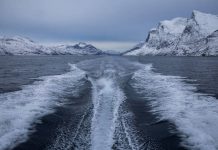
What I learned during my time in Greenland is that nature and its preservation are at the heart of Inuit culture
Nic Robertson
The apparent trolling is hard to fathom, much less take seriously. For a start, penguins — as everyone knows — live exclusively at the South Pole. Greenland is at the opposite end of the planet. But such incontrovertible truths seem to have become eclipsed by expansionist ambitions.
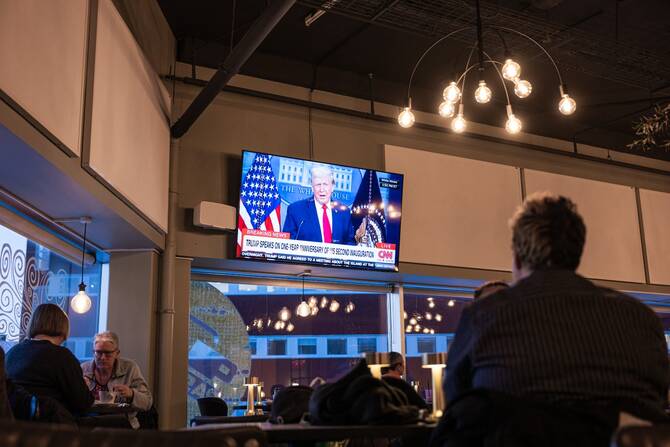
Trump says he must own Greenland for the US’ “national security,” so he feels “psychologically” empowered to take it for his soon-to-be-built Golden Dome missile protective shield for the US. He might deny that he covets the minerals and rare earths buried below its ice sheets, but many are skeptical.
What’s more, both objectives are already within his grasp. As Denmark, of which Greenland is a semi-autonomous territory, has made repeatedly clear to Trump’s diplomats, the 1951 defense agreement between these two sovereign nations grants sweeping rights for the US to base missiles and troops, as well as mine minerals and rare earths, to its heart’s content.
What I learned during my all-too-brief time in Greenland is that nature and its preservation are at the heart of Inuit culture. Locals told me they believed that Trump would have no regard for their most precious commodity, which is inextricably linked to their identity. Instead, the White House’s messaging seems to indicate they are either planning to introduce an alien species to Greenland or simply do not understand what it is they covet.
Greenlanders, on the other hand, know exactly what they fear and why. They do not trust Trump. The president’s apparent about-face at Davos, rescinding threats of military action and announcing, after meeting NATO Secretary-General Mark Rutte, that an “agreement” had been hatched, giving him everything he wanted, carries no water — or ice for that matter — in Greenland.
For Greenlanders, Trump is an open book, each new chapter strewn with the same falsehoods and self-aggrandizement. They also saw what he did in Venezuela, a leader plucked from a country with air defenses and an army, of which Greenland has neither. Instead, it relies on Denmark and, by extension NATO — and America, to defend it.
In the extremes of Greenland, uncertainty is an ever-present state of being. Flights are often canceled at the last minute
Nic Robertson
The night before we left, the power abruptly went out across Nuuk, its 20,000 residents plunged into darkness. A few hours later, the internet also throttled back. Plenty of well-educated and rational Nuummioqs (as the capital’s residents are known) fretted they were about to experience a Venezuela redux.
Relief came just before daybreak and the slow, late morning sunrise. Power lines that had come down in the strong and unusual easterly winds were repaired.
In the extremes of Greenland, uncertainty is an ever-present state of being. Flights are often canceled at the last minute. In fact, several were before our bumpy, wind-jerked aircraft took off. But Trump has injected a fresh layer of nervousness that Greenlanders see as entirely unnecessary.
Now he is back where he started, apparently reengaging in a dialogue that Denmark and Greenland’s foreign ministers thought they had already concluded with Vice President J.D. Vance and Secretary of State Marco Rubio at the White House two weeks ago.
With details of the new post-Davos agreement as scarce as penguins at the North Pole, no Greenlander is confident Trump will not up the ante again — and many are convinced that the mercurial president may do exactly that sooner rather than later.
But what Greenlanders feel most acutely is that Trump’s at times relentless rhetoric has shown no regard to their beliefs and feelings. Never once, they say, has he even tried to assuage their misgivings in his bellicose speeches.
As if riding blind on a seaside roller coaster, residents are now left with an uncomfortable feeling in the pit of their stomachs and resentment that was not visible a few weeks ago is bubbling up.
On our way to Nuuk’s airport, we drove past freshly mounted posters of Trump next to Jeffrey Epstein with the words “Yes to NATO” and something altogether less flattering about the US president.
Trump has roiled the quiet calm that Greenlanders cherish as their birthright. It needn’t have been this way.
BY: Nic Robertson is the International Diplomatic Editor of CNN.
Disclaimer: Views expressed by writers in this section are their own and do not necessarily reflect The Times Union‘ point of view