- Ministers to determine panel’s mandate; opposition derides ‘whitewash’; October Council: Defendants aim to choose own investigators, absolve themselves
The government on Sunday decided to establish its own probe into the failures surrounding the Hamas invasion and massacre on October 7, 2023, rather than set up the state commission of inquiry that is traditionally formed to investigate such significant events and that is supported by a strong majority of Israelis.
Despite being touted as an “independent” investigation, the government commission’s mandate will be determined by cabinet ministers, and the government will strive for its makeup to receive “as broad public approval as possible,” the government decision noted.
According to the decision, the commission will have “full investigative authority,” although the scope of that authority was not publicly specified.
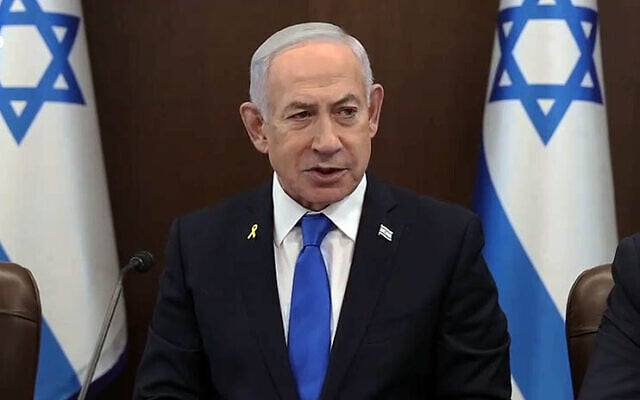
Prime Minister Benjamin Netanyahu will form a special ministerial panel that will be in charge of determining the commission’s mandate, including the topics and timeframes that will be probed, according to the decision. The ministerial panel will have 45 days to submit its recommendations to the government.
While opening an investigation during the war would have directed senior political and security officials’ “time and attention” away from pressing affairs, following the beginning of the first phase of the ceasefire in the Gaza Strip “the fighting has shifted into a sort of interim state, and the government seeks to use this to advance the establishment of a commission that will be independent, have full investigative powers, and gain as broad public consensus as possible,” the decision stated.
The government conveyed its decision to the High Court of Justice and said it intended to update the court within 60 days as to the progress of establishing the commission, as the court has required, a Haaretz report said.
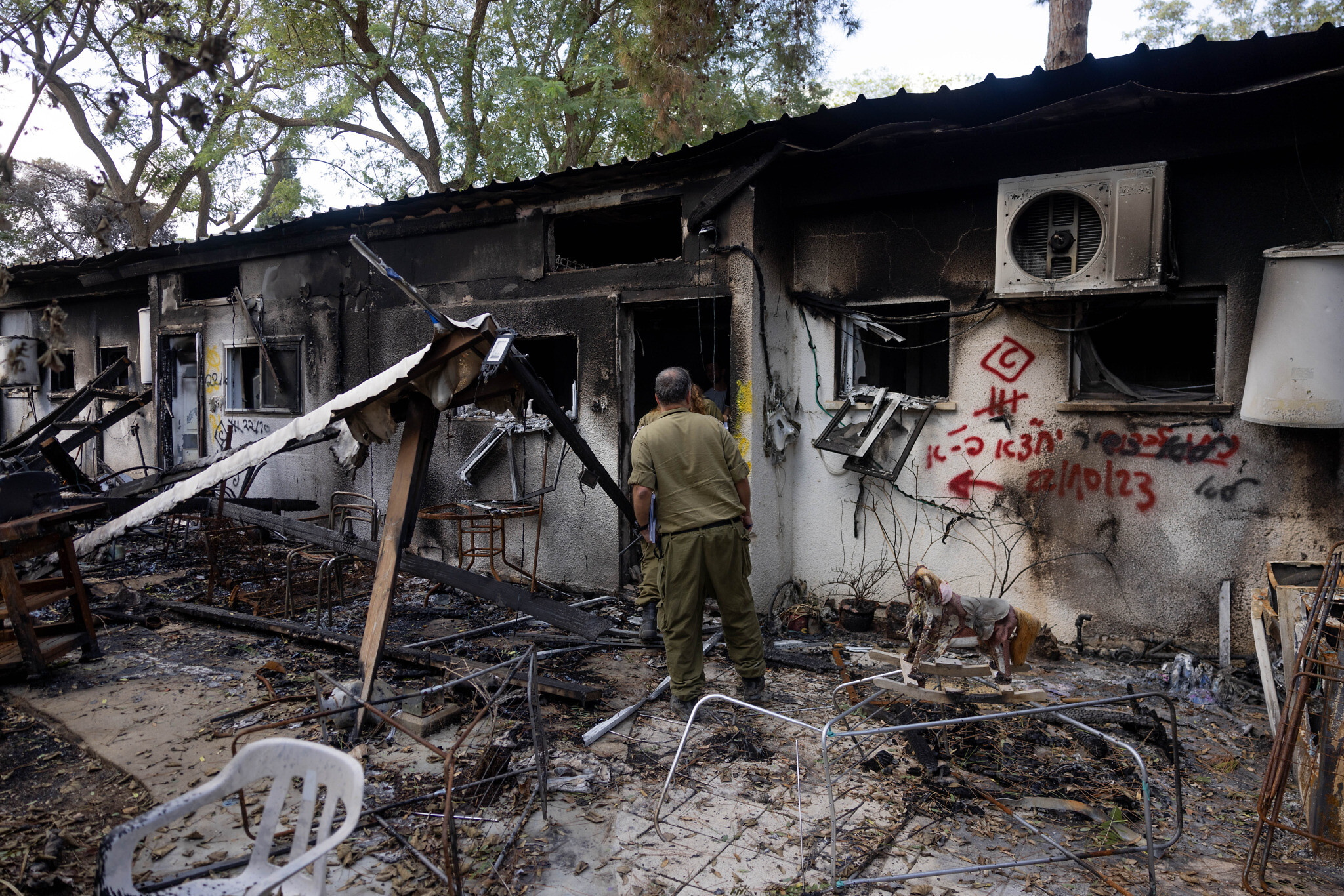
The government has opposed the establishment of a state commission of inquiry into the October 7 onslaught, in which Hamas-led terrorists killed some 1,200 people, mostly civilians murdered amid horrific acts of brutality, and abducted 251. It was the single deadliest day for Jews since the Holocaust and the worst disaster in modern Israeli history.
Netanyahu initially resisted establishing a state commission of inquiry, which has the power to subpoena witnesses and whose recommendations would likely prove harmful to the prime minister’s capacity to continue in public office, on the grounds that it could not be conducted while Israel was at war. Subsequently, he and his government, which have worked to discredit and sought to constrain the powers of the judiciary, have argued that the president of the High Court could not be trusted to appoint a fair-minded judge or retired judge to head the investigation into what went wrong and who was to blame for October 7, and that such a panel’s conclusions would not be accepted by a sizeable proportion of the public.
State commissions of inquiry have been established in the past to look into many military failures, including the events of the Yom Kippur War in 1973, and the Sabra and Shatila massacre in Lebanon in 1982.
Addressing the Knesset last Monday, Netanyahu insisted that the Israeli public would not accept such a commission and that his government wanted to establish a probe “with as broad public support as possible,” and not one rejected by what he claimed was “at least half the country.”
“The only way to ensure public trust in the commission’s work is through broad agreement on its composition,” he said, calling for the establishment of a “bipartisan commission” similar to the US Congress’s 9/11 Commission.
Polls have consistently indicated a clear majority of Israelis support a state commission, and Netanyahu in 2022 himself backed such an inquiry into allegations that police improperly spied on Israeli citizens.
Previous state commissions of inquiry have named Netanyahu among the officials personally responsible for the 2021 Meron disaster and said that the premier made decisions that endangered national security and harmed Israel’s foreign relations.
Opposition politicians, good governance groups and hostages’ families have all demanded the establishment of a state commission of inquiry, with some turning to the courts to force the issue.
The High Court of Justice told the government on October 15 that there was “no real argument” against the need to establish a state commission of inquiry, giving the government 30 days to submit a new update about “the fate” of such a commission.
Internal disagreement
Despite Sunday’s decision, the cabinet failed to agree on how the new commission should be organized or the scope of its investigation.
Diaspora Minister Amichai Chikli called for a panel in which both the coalition and opposition could veto candidates, the Maariv daily reported, while the Calcalist site quoted Minister Ze’ev Elkin as proposing that conservative justice Noam Solberg, the High Court’s deputy president, choose its members.
In a long post on Telegram, Foreign Minister Gideon Sa’ar wrote that he recommended that the government amend the law in order to allow retired High Court justices to select the members of the panel, insisting that “it is important to maintain the principle that the political leadership does not determine the composition.”
“In this regard, there is no difference whether the composition is determined by the government alone or by the government together with the opposition, since opposition leaders have previously served as prime ministers, defense ministers and chiefs of staff. They are also involved parties,” he said.
Several firebrand politicians expressed strong opposition to any judicial involvement, with both Regional Cooperation Minister Dudi Amsalem and National Security Minister Itamar Ben Gvir calling on the commission to investigate the courts and Attorney General Gali Baharav-Miara.
The coalition is also reportedly seeking to broaden the scope of the investigation beyond the October 7 attack, the failures that allowed it to occur and the subsequent war, and look at the supposed impact of anti-government protests and decisions by the High Court of Justice on Hamas’s decision to attack.
The investigation would “include the role of the High Court, the role of former defense ministers, and the role of the [anti-government] protest movement,” Ynet quoted a senior Likud official as saying last month.
‘Whitewashing’
Critics accuse Netanyahu — who, unlike all other senior officials at the time of the attack, has not publicly taken responsibility for the failures surrounding October 7 — of seeking to establish a governmental committee over whose makeup he will have greater control, and with lesser powers than a state commission, in order to hinder its ability to reach the truth and enforce accountability.
Members of the anti-Netanyahu bloc in the Knesset slammed the government decision on Sunday, with Opposition Leader Yair Lapid declaring that it was “doing everything it can to escape the truth and evade responsibility.”
“There is a broad public consensus on a state commission of inquiry. This is what the country needs, this is what the public demands and this is what will happen,” he said, insisting that the government’s “refusal to investigate its failures endangers national security, constitutes an insult, and is an evasion of responsibility toward the soldiers and families who have sacrificed so much since October 7.”
Promising to establish a state commission of inquiry after the next elections, The Democrats party chairman Yair Golan insisted that “he who is being investigated does not appoint his own investigators,” while Gadi Eisenkot, chairman of the “Yashar! With Eisenkot” party, derided the proposed panel as a “whitewashing” committee established by “the only ones refusing to take responsibility for the worst disaster in Israel’s history.”
“Who do you think you’re fooling?” asked Blue and White chairman Benny Gantz. “In what twisted and disconnected world do you imagine that the people under investigation themselves would decide the mandate of the investigation and the identity of the investigators?”
In a statement, the Movement for Quality Government, one of the primary petitioners calling on the High Court to make the government establish a state commission of inquiry, called Sunday’s decision “a transparent attempt to evade a real and independent investigation of the greatest failure in the country’s history.”
“The returned hostages, the fallen and the entire public deserve a real, independent and impartial investigation, not a committee whose mandate and composition are dictated and controlled by the government,” it said.
The October Council — a group that says it represents around 2,000 bereaved families, including relatives of hostages, residents of border communities, and survivors of Hamas’s onslaught of October 7, 2023 — joined in the condemnations, slamming the government for moving to “absolve themselves of punishment”
“After trying every cheap trick in the book… the prime minister is now trying to establish facts on the ground,” the October Council said in a statement.
Referring to the government’s proposed inquiry as a “cover-up commission,” the group said that “again, the defendants are trying to appoint their own investigators, determine what the inquiry will focus on, and absolve themselves of punishment,” vowing that it won’t allow that to happen.
The October Council also urged the public to step up its weekly Saturday evening protests demanding a state inquiry, after some 2,000 people took part in such a rally Saturday night in Tel Aviv.
BY: Lazar Berman and Jeremy Sharon contributed to this report.