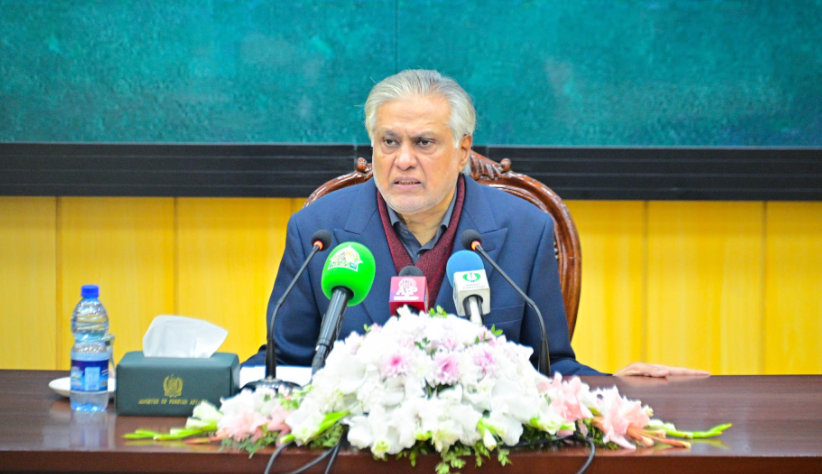
Islamabad – In a comprehensive year-end address, Pakistan’s Deputy Prime Minister and Foreign Minister, Senator Mohammad Ishaq Dar, declared that the nation has decisively shed its past perception of diplomatic isolation, emerging as a confident and proactive player on the world stage. Addressing the media on Saturday, Dar attributed this strategic resurgence to the incumbent government’s dynamic foreign policy, which he described as principled, firm, and proactive.
“Pakistan’s standing within the comity of nations has been significantly elevated,” stated Dar, outlining the Ministry of Foreign Affairs’ annual achievements. “Our clear and consistent positions on critical global issues have garnered respect and acknowledgment in international forums.”
A Shift in Posture and Perception
Minister Dar contrasted the current environment with the situation when the government first took office, noting, “Pakistan was previously characterized as a diplomatically isolated country. Today, our substantive role is widely recognized.” He emphasized that this enhanced stature is built on a foundation of responsible statecraft, particularly referencing the 2019 crisis with India. “During the armed conflict, India’s assumed regional hegemony was tested and effectively countered,” Dar asserted, adding that Pakistan’s response was measured and responsible, underscoring its commitment to peace while ensuring robust national defence.
He highlighted the nation’s nuclear deterrence and missile capabilities as pillars of an “invincible” defence, creating a secure platform for a renewed focus on economic advancement. “Our objective is now to transform Pakistan into an economic power. Achieving this will enable us to assume a leading role for the entire Muslim Ummah,” Dar said.
Economic Diplomacy and Key Partnerships
Turning to economics, the Foreign Minister detailed progress in leveraging Pakistan’s natural resources and attracting foreign investment. He cited the recent visit of the UAE President, noting expected investments, including the acquisition of shares in the Fauji Group, which would help settle significant liabilities. Dar expressed gratitude for financial support from longstanding allies, specifically naming the Kingdom of Saudi Arabia, the United Arab Emirates, and China for their role in ensuring Pakistan’s financial stability.
Core Regional and Global Stances
On perennial regional issues, Dar was unequivocal:
- Kashmir: He reaffirmed that a just and lasting peace in South Asia is contingent upon a resolution of the Jammu and Kashmir dispute in accordance with United Nations Security Council resolutions. He reiterated Pakistan’s firm opposition to India’s actions in Indian Illegally Occupied Jammu and Kashmir (IIOJK) and noted the issue’s recent discussion in the UNSC.
- Water Security: Regarding the Indus Waters Treaty, Dar reported that Pakistan is actively pursuing the matter at the Organization of Islamic Cooperation, the Permanent Court of Arbitration, and the UN, with proceedings currently favourable to Pakistan’s position.
- Afghanistan: The Minister expressed disappointment with the Afghan Taliban interim government’s “lack of concrete, tangible steps” against terrorists operating from Afghan soil who launch attacks into Pakistan.
- SAARC: He lamented that the functioning of the South Asian Association for Regional Cooperation (SAARC) is being “scuttled” by a single member, an apparent reference to India.
Bilateral Relations: Thaws and Trajectories
Dar highlighted several positive bilateral developments:
- Bangladesh: Describing a “major thaw,” he detailed his productive visit, which included meetings with the leadership and opposition figures, fostering an “environment of goodwill” for future engagement.
- United States: While acknowledging past fluctuations, he stated that under the current U.S. administration, ties are on a “positive trajectory,” with strengthened counter-terrorism collaboration and growing trade and investment. He noted the reduction of U.S. tariffs on Pakistani goods as the lowest in South Asia and revealed that the previous government had nominated former President Donald Trump for a Nobel Peace Prize for his role in facilitating a ceasefire between Pakistan and India.
Multilateral Engagement and Principles
The Foreign Minister catalogued extensive diplomatic engagements across platforms including the UN, OIC, SCO, ASEAN, and with major powers like China, Russia, and the EU. He underscored Pakistan’s vocal advocacy for peace in Gaza and a just resolution to the Palestinian issue as a reflection of its principled foreign policy.
Addressing External Provocations and Terrorism
Responding to queries, Dar condemned recent protests in the United Kingdom involving threats against Pakistani officials as “sheer provocation” and “unacceptable,” stating that a formal demarche had been served to the UK government to prevent such incidents.
Foreign Policy Doctrine
In summation, Dar outlined the core tenets of Pakistan’s foreign policy: “Dialogue, engagement, regional stability, economic collaboration, and the relentless pursuit of peace. These contours are firmly aligned with our national interests as we move forward with confidence on the global stage.”
BY: The Times Union