- 2028 is three long years away, but with criticism of Israel, antisemitism and isolationism rising, US candidates may be turning away from the longtime alliance
About a month ago, as JD Vance was fresh off a trip to Israel, a young man at the University of Mississippi asked him why the US still supported the Jewish state.
Wearing a Make America Great Again hat, the man accused Israel of “ethnic cleansing in Gaza,” then drew applause when he added, “Not only does their religion not agree with ours, but also openly supports the prosecution of ours.”
An American vice president of a different era may have rebutted the age-old canard that Judaism supports the “prosecution” of Christianity, or at least noted that the US is a multifaith democracy where Jews are equal citizens, before reiterating that Israel is and has long been a staunch ally.
Vance did none of that. Instead, he stressed that Israel was not “controlling” President Donald Trump and boasted that Trump achieved the Gaza ceasefire by “being willing to apply leverage” on Israel. He added, “What I am not okay with is any country coming before the interests of American citizens.”
Weeks earlier, Vance’s predecessor, Kamala Harris, was asked by an ABC reporter whether Israel had committed genocide in Gaza. The Democrats’ 2024 presidential nominee answered that she deferred to the courts. But she cited the high civilian death toll in Gaza before saying, “We should all step back and ask this question and be honest about it, yeah.
Harris came close to becoming president last year. Vance may well take the White House in 2028. And they are not alone.
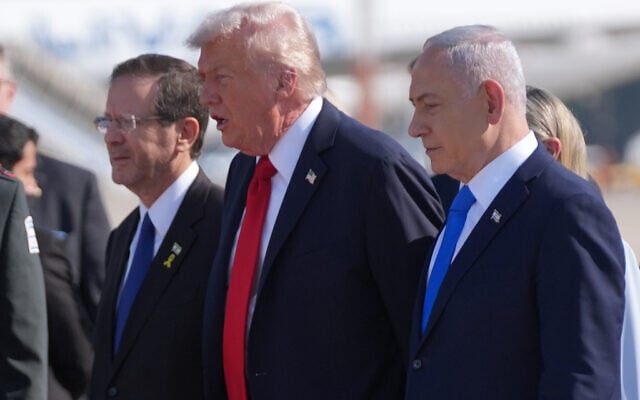
Two months ago, Prime Minister Benjamin Netanyahu called Trump Israel’s “greatest friend.” But as the Democratic Party becomes increasingly critical of Israel, the Republican Party becomes increasingly isolationist, and antisemitism spreads on the American left and right, it’s becoming more and more plausible that the next US president will not be pro-Israel — at least as the term has long been understood.
Some caveats are in order: Predicting the next US presidential election three years in advance is a fool’s errand. Few people saw Barack Obama coming in 2005, much less Donald Trump in 2013. It’s likewise impossible to divine where Israel will be in three years, or what exactly “supporting it” will mean.
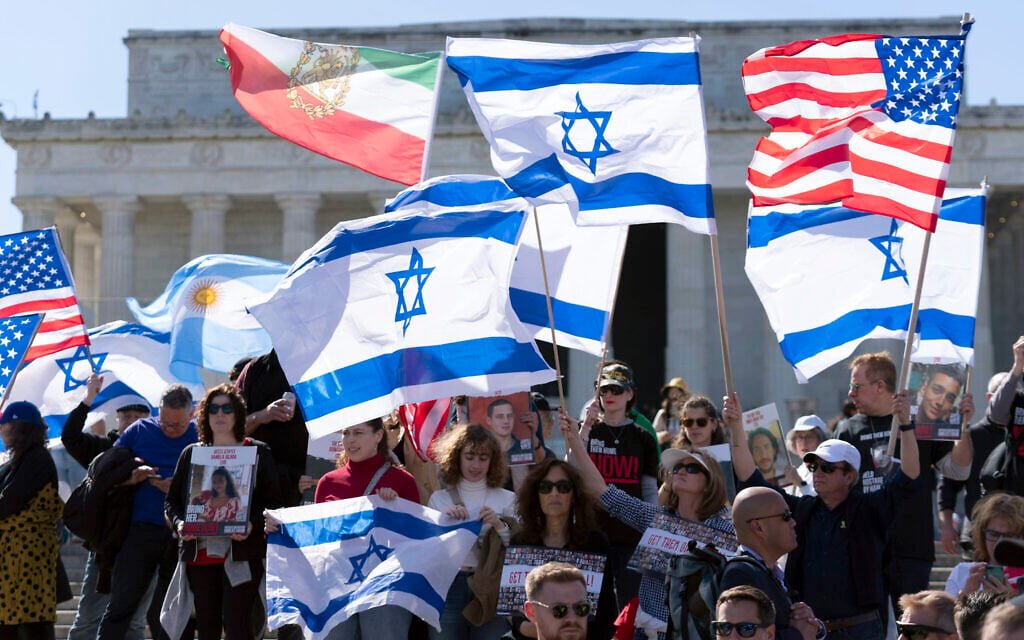
But it’s safe to say that gone are the days when the Democratic and Republican presidential nominees would both be willing to ascend the stage at AIPAC’s once-massive annual Washington conference to declare their support for Israel. That happened as recently as 2016. Tellingly, it’s been five years since AIPAC has even held the conference, which belonged to a bygone era of almost wall-to-wall bipartisan US support for Israel.
Now, the Republican Party is all about “America First” — which is coming with a large dose of opposition to foreign aid. The Democrats’ latest star politician, meanwhile, is incoming New York City mayor Zohran Mamdani, a longtime, dyed-in-the-wool anti-Israel activist who doesn’t accept its legitimacy as a Jewish state.
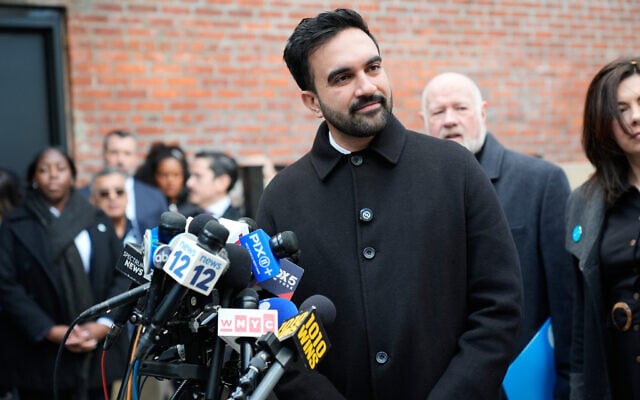
As those and other US politicians on both sides of the aisle accuse Israel of genocide, or call for America to pull back its foreign aid, they’re just following their voters, many of whom have turned against Israel after two years of devastating war in Gaza.
In 2016, when Hillary Clinton and Trump spoke at AIPAC, Gallup found that 62 percent of Americans were sympathetic to the Israelis versus 15% to the Palestinians. That gap has now narrowed to 46% versus 33% — the first time the poll found less than half of Americans expressing sympathy for Israelis.
In August, 50% of registered US voters said Israel was committing genocide, another poll found. According to yet another, about equal numbers support Israel and the Palestinians, with 40% saying Israel is intentionally killing civilians.
The numbers are especially stark among Democrats, 59% of whom sympathize with the Palestinians, versus just 21% with the Israelis. Just 11% of Democrats said Israel was not committing genocide in Gaza.
“There has to be a total mindset change in the Democratic Party,” Tommy Vietor, who served as an aide to former US president Barack Obama, said this summer on Pod Save America, a popular Democratic podcast.
“When the war ends, we are not going back to the pre-October 7 status quo,” he continued. “Because it’s not where the party is, it’s not where the world is. We’re not going to shovel billions a year in military aid. We’re not going to veto every effort to recognize a Palestinian state at the UN.”
Even among Republicans, the trend lines look dim for Israel: A Brookings poll found that half of GOP voters ages 18-49 — in other words, the voters of the next 25 years and more — view Israel unfavorably.
“Conservatives — Jewish, Christian, and agnostic — who support Israel are going to have to think very hard about how to proceed,” wrote Rod Dreher, a leading American Christian conservative, in a recent Substack post about the growth of young Republican antisemitism that has made the rounds in Jewish and pro-Israel social media forums.
Much of the post is about the return of fascist sympathies and classic, Nazi-inflected Jew-hatred. In it, Dreher implies that Vance needs to do more than he has to marginalize the influence of antisemites like Nick Fuentes among conservatives.
Dreher makes clear, however, that pro-Israel sentiment is fading, too. “Support for Israel has collapsed among the young, and it’s not coming back anytime soon,” he wrote. “This is the political reality we have to deal with. We can’t wish it away, or cancel it away.”
This is also the political reality Vance, Harris and other politicians are responding to. Of course, they and a slew of other presidential hopefuls would probably describe themselves as pro-Israel. Vance has stood behind Trump’s policy on Israel, and he appeared to get on well with Netanyahu during his visit.
Harris likewise did not disavow Israel during the campaign, despite pressure to do so, and was herself once an AIPAC speaker. Her Democratic Convention famously did not allow a pro-Palestinian activist to speak from the main stage.
But what “pro-Israel” means in American politics is up for debate.
Not too long ago, in the US, “pro-Israel” meant supporting foreign aid to Israel as “sacrosanct,” giving Jerusalem diplomatic cover at the UN, supporting its right to self-defense and at least feigning a good working relationship with the prime minister and IDF top brass. Paeans to the “ironclad” alliance and “special relationship” were once commonplace, along with pledges of “no daylight” between the sides.
So while the next president may favor Israel in a variety of ways, it’s also increasingly possible to imagine a presidential candidate from either party departing from more than one of those principles. “No daylight” between Vance and Netanyahu? An assured UN veto from a Democratic White House? Continued billions in aid from either party?
Again, three years is a long time. There may be a different prime minister in Jerusalem. Passions may cool from the last two years of war, trauma and antisemitism. A traditional pro-Israel candidate, in the mold of Republicans Ted Cruz or Marco Rubio, or the Democratic Josh Shapiro, may yet be their party’s standard-bearer.
It may still happen. But is it a sure thing? Far from it.
BY: The Times Union