- Japan’s Prof. Yamagata details Bangladesh’s transformative industrial strategy, highlighting key lessons for Pakistan at SDPI lecture.
ISLAMABAD – Bangladesh’s strategic adoption of an East Asian-style, labor-intensive industrial model has propelled it beyond its regional peers, offering critical lessons for economies like Pakistan, experts concluded at a high-level lecture on Monday 26 January 2026.
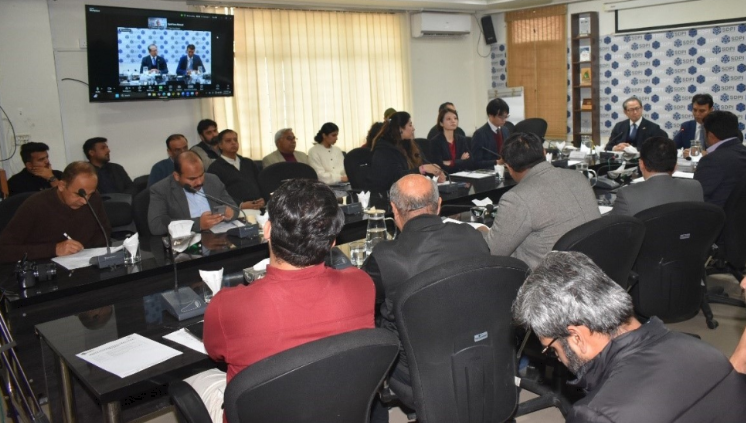
The special guest lecture, titled “Bangladesh as an East Asian Country: Its Pattern of Industrial Development,” was delivered by renowned Japanese development economist Professor Yamagata Tatsufumi of Ritsumeikan Asia Pacific University, a former visiting fellow at the Bangladesh Institute of Development Studies (BIDS). The event was co-hosted by the Sustainable Development Policy Institute (SDPI) and the Embassy of Japan.
From South Asian Foundations to East Asian Trajectory
In his presentation, Prof. Yamagata argued that while geographically in South Asia, Bangladesh’s economic pattern now closely resembles that of East Asian powerhouses. He challenged the notion that the country’s export boom, particularly in ready-made garments (RMG), is built solely on a “race to the bottom” in labor standards.
“The RMG sector has acted as a window for diversification and a foundation for broader industrial development,” Prof. Yamagata stated, highlighting that real wages in the industry have shown a consistent upward trend since 2005.
A Natural Benchmark for Pakistan
Echoing this relevance, Dr. Abid Qaiyum Suleri, Executive Director of SDPI, noted in his opening remarks that Bangladesh’s experience is a critical case study for Pakistan due to shared economic structures and resource endowments.
“Both nations were once competitors in sectors like bicycles, yet Bangladesh has captured substantial global market share,” Dr. Suleri observed. “Its strategic pivot to an East Asian model has expanded exports and dramatically increased female labor force participation—a transformative lesson.”
Prof. Yamagata detailed the historical complementarity between the two nations, noting Pakistan’s strengths in upstream textile production while Bangladesh has mastered downstream manufacturing. He presented data showing Bangladesh is now the world’s third-largest textile exporter to the United States and the fourth-largest bicycle exporter to the European Union.
Diversification and Future Challenges
Beyond textiles, the economist cited Bangladesh’s promising diversification into electrical appliances, refrigerator compressors, shipbuilding, drone manufacturing, and pharmaceuticals. However, he cautioned that the country’s upcoming graduation from Least Developed Country (LDC) status presents regulatory challenges, particularly for sectors like pharmaceuticals.
He also addressed the legacy of the 2013 Rana Plaza disaster, noting it catalyzed significant improvements in labor safety and environmental compliance, driven by international brand pressure.
A Call for Strategic Emulation
In his concluding remarks, Ambassador of Japan to Pakistan, H.E. Akamatsu Shuichi, emphasized that Bangladesh’s journey provides a vital reference point.
“South Asian nations must create opportunities to productively absorb their growing labor forces,” Ambassador Shuichi stated. “Translating demographic potential into sustained growth, as seen in this model, is essential for the region’s future.”
The lecture underscored a central consensus: Bangladesh’s focused industrial policy and export-led growth strategy, inspired by East Asia, provide a actionable blueprint for neighboring countries seeking to enhance their global competitiveness and achieve structural economic transformation.
BY: The Times Union