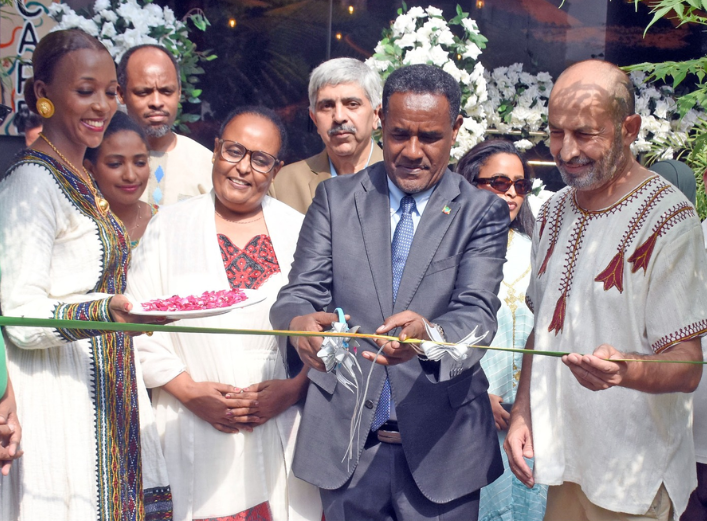
- Ethiopian Ambassador Dr. Oumer Hussien Oba inaugurates first dedicated Ethiopian coffee café, promoting cultural exchange and closer Ethiopia-Pakistan people-to-people ties
ISLAMABAD: Ethiopian coffee has made its debut in Pakistan’s twin cities with the inauguration of “Habesha,” the first dedicated Ethiopian coffee café in Rawalpindi-Islamabad, marking a new chapter in cultural and people-to-people relations between Ethiopia and Pakistan.
H.E. Dr. Oumer Hussien Oba, Ambassador Extraordinary and Plenipotentiary of the Federal Democratic Republic of Ethiopia to the Islamic Republic of Pakistan, inaugurated the café on Sunday in the presence of members of the Ethiopian community, Embassy officials and representatives of the media.
The inauguration began with an authentic traditional Ethiopian coffee ceremony, offering guests an opportunity to experience one of Ethiopia’s most cherished cultural traditions and learn more about the country’s internationally renowned coffee heritage.
Ethiopia’s Coffee Heritage Comes to Pakistan
Speaking during an interactive session with the media following the ceremony, Ambassador Dr. Oumer Hussien Oba described the opening as an important milestone in introducing Ethiopia’s rich coffee culture to Pakistani consumers.
He highlighted Ethiopia’s unique position as the birthplace of Arabica coffee and said the country is widely known as the “Land of Origins”, reflecting its exceptional heritage in human history, culture and coffee.
“From the birthplace of humankind to the home of Arabica coffee, Ethiopia is called the Land of Origins for all the right reasons,” the Ambassador remarked.

an important expression of hospitality, friendship and community.
The café provides Pakistani coffee lovers with an opportunity to discover the distinctive character of Ethiopian coffee while experiencing an important element of Ethiopian culture and hospitality.
‘Habesha’: A Symbol of Shared History
The choice of the name “Habesha”, a historic name associated with Ethiopia and its people, gives the café a deeper cultural significance.
The name has a special resonance in Pakistan because of the country’s longstanding reverence for Hazrat Bilal Habashi (R.A.) and King Najashi (Negus), who provided protection and refuge to the early Muslim migrants during the First Hijra to Abyssinia.
This shared historical and spiritual connection provides a meaningful foundation for greater cultural understanding between the peoples of Ethiopia and Pakistan.
Ethiopian-Pakistani Partnership at the Heart of the Initiative
The café is owned by an Ethiopian-Pakistani couple, further highlighting the growing personal and people-to-people connections between the two countries.
Ambassador Dr. Oumer Hussien Oba welcomed the initiative as an example of how private citizens can contribute to strengthening bilateral relations through cultural exchange and entrepreneurship.
He reaffirmed his commitment to promoting closer cooperation between Ethiopia and Pakistan, emphasising that stronger people-to-people ties can complement diplomatic and economic relations.
The café is therefore envisioned not merely as a place to enjoy coffee, but as a cultural platform where Pakistanis and Ethiopians can meet, interact and discover the traditions and heritage of each other.
A Gateway to Ethiopian Culture, Art and Tourism
Speaking on the occasion, Mr. Naeem Hashmi, owner of Habesha Café, said the initiative was designed to bring the two countries closer together.
“Through Habesha, we want to create a space that brings Pakistan and Ethiopia closer together — a platform where both nations can share and discover each other’s art, culture, music and tourism,” he said.
The café is expected to serve as an informal cultural bridge, introducing visitors to Ethiopian traditions while creating opportunities to promote the country’s diverse tourism attractions.
From its ancient historical sites and spectacular landscapes to its unique cultural traditions and world-famous coffee, Ethiopia offers Pakistani visitors a wide range of experiences.
Coffee as a Bridge Between Nations
Coffee occupies a central place in Ethiopian culture, where the traditional coffee ceremony is an important expression of hospitality, friendship and community.
Bringing this tradition to Pakistan can create a unique avenue for cultural diplomacy.
The launch of Habesha Café demonstrates how everyday cultural experiences can help strengthen international relationships. A cup of Ethiopian coffee can become an opportunity for people to learn about Ethiopia’s history, traditions, cuisine, music, art and tourism.
The initiative also comes at a time when Ethiopia and Pakistan are seeking to expand cooperation across a range of areas, including trade, investment, agriculture, tourism, education and cultural exchange.
Promoting Ethiopia-Pakistan Relations Through Culture
The opening of Habesha Café represents more than the arrival of a new coffee destination in the twin cities. It reflects the growing interest in strengthening direct connections between the peoples of Ethiopia and Pakistan.
By bringing Ethiopian coffee and culture closer to Pakistani consumers, the initiative can help create greater awareness of Ethiopia and encourage further cultural, tourism and commercial exchanges.
The café is poised to become a meeting point where Ethiopian and Pakistani traditions come together, providing visitors with an opportunity to experience the warmth of Ethiopian hospitality while discovering the country’s remarkable coffee heritage.
The inauguration ultimately carried a simple but powerful message: culture can bring people closer, and coffee can become a bridge between nations.
For Ethiopia and Pakistan, Habesha Café offers a fresh and promising platform to deepen friendship, promote Ethiopian coffee and tourism, and build stronger people-to-people relations between the two countries.
BY: Nadeem Faisal Baiga