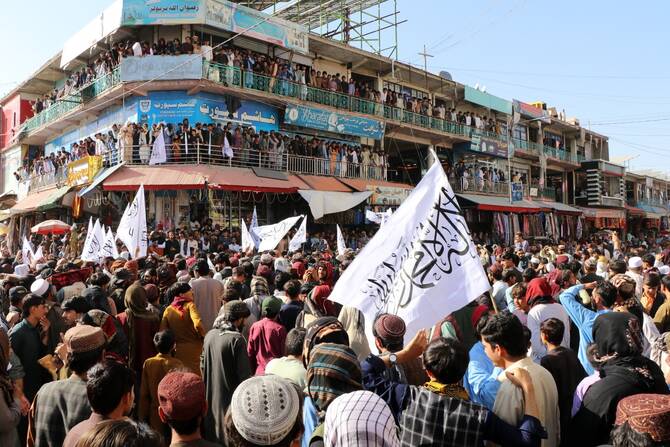
The Taliban begin their fifth year in power in Afghanistan with no sign of major change on the horizon. Schools and colleges remain closed to girls and women, as do workplaces, with the familiar excuse that a special framework for female education is still being prepared. The root cause of these restrictions is nothing other than the Taliban’s supreme leader’s arbitrary decision, even though most of the Taliban leadership in Kabul agree that there should be no such ban. The concentration of power in the hands of one individual makes any flexibility on this critical issue all but impossible. While four years of lost education for Afghan girls might seem like a short period, in reality it represents millions of hours of lost learning in the life of a nation — a nation that cherishes knowledge, but has been deprived of it due to regional and global political rivalries.
Ever since taking control of the country, the Taliban have consistently sought recognition. So far, only Russia recognizes them as a legitimate government. Although there are a host of preconditions for their recognition, the major obstacle remains their denial of women’s legitimate rights. Such irrational stubbornness does no good to the Taliban themselves, let alone the millions of Afghan girls whose dreams of becoming doctors, engineers, and teachers are being crushed. I wish the Taliban understood that it is not merely their recognition at stake. It affects the fate of 40 million Afghans who aspire to live a normal and respectable life like people in the rest of the world. Being isolated from the world comes at a cost to the country’s economic, social, and political life.
The present rulers of Afghanistan must acknowledge that the institutions, civil, and military infrastructure, and development gains they now benefit from were achieved through two decades of close cooperation with the international community. Afghanistan cannot afford to be a pariah state in an age defined by economic and political interdependence.
Being isolated from the world comes at a cost
Dr. Ajmal Shams
Afghanistan’s economy suffered severe shocks after the government collapsed in 2021 and most foreign aid was cut. Hundreds of thousands of people lost their jobs, undermining livelihoods, deepening poverty, and forcing small, medium, and large businesses into complete or partial shutdown. Large numbers of people left for neighboring states, other countries in the region, and even to western Europe and North America. Although economic hardship was the prime reason, many left out of fear for their lives because of their political affiliations, engagement with the international community, or their roles in the former government. In the wake of this large‑scale migration, the country lost much of the technical and managerial expertise that had been built over years of capacity‑building efforts by Afghanistan’s international partners.
The Taliban administration has been calling for the return of Afghans ever since they came to power. Just days ago, the group’s Defense Minister, Mullah Yaqoob, reiterated their general amnesty and urged members not to resort to reprisals and to forget the past. He also called for friendly relations with foreign countries that were once their adversaries. Although such a forward‑looking policy is a welcome gesture, how much can this rhetoric be trusted given their track record? Social media regularly report members of the former Afghan National Army and other political opponents being mercilessly executed by Taliban soldiers. These extrajudicial killings may or may not be happening on the orders of the administration, but the question remains: Can they control them?
Engagement with the Taliban administration has remained a contentious issue ever since their return to power. Some argue that the group should be completely isolated because of its ban on women’s rights to education and work. Others believe engagement is essential for maintaining humanitarian access and for preserving the hope that the administration might eventually listen to the Afghan population and the broader international community’s demands for change, openness, and a form of governance compatible with today’s interconnected world. The bottom line is that no patriotic Afghan would want Afghanistan to become another North Korea.
Afghanistan cannot afford to become a pariah state
Dr. Ajmal Shams
The government of Qatar has played a crucial and constructive role by providing a channel of communication between the Taliban administration and the rest of the world. Last year, negotiations facilitated by Qatar helped secure the release of a US citizen held by the Taliban.
Meanwhile, countries in the western hemisphere — particularly the US, Canada, UK, Germany, France, and others such as Japan — must not forget the 40 million Afghans. Political dynamics may shift from time to time, but Afghanistan’s geopolitical significance demands sustained engagement, continued support for its people, and a commitment to keeping the country as an essential element of foreign policy.
BY: Dr. Ajmal Shams is Vice President of the Afghanistan Social Democratic Party. He served as a Deputy Minister in the former Government of Afghanistan.
Disclaimer: Views expressed by writers in this section are their own and do not necessarily reflect The Times Union‘ point of view