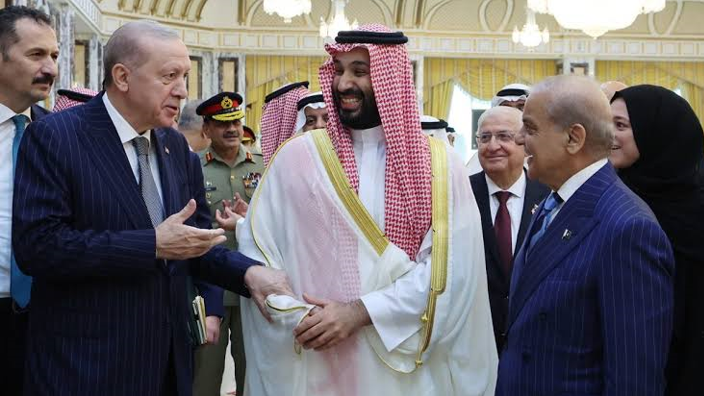
- Islamabad Summit to Focus on Collective Defence, Regional Security and Institutional Framework; Yemen Conflict and Threats to Saudi Arabia Expected to Feature on Agenda
ISLAMABAD: Pakistan is hosting a two-day high-level meeting of the Strategic Political and Defence Committee (SPDC), the principal decision-making body of the Makkah Defence Alliance, bringing together senior political and military leadership from Pakistan, Saudi Arabia and Türkiye to advance trilateral defence cooperation and address emerging regional security challenges.
The third session of the SPDC is being held in Islamabad amid heightened regional tensions, with the security situation in Yemen and continuing threats to Saudi Arabia expected to feature prominently in discussions.
The Pakistani authorities have announced a public holiday in Islamabad and special movement restrictions to facilitate the high-level diplomatic and defence gathering. A local holiday has also been declared in Rawalpindi.
The meeting is expected to focus on finalising standard operating procedures (SOPs), developing an implementation mechanism and establishing effective coordination among the political, defence and military institutions of the three allied countries.
Foreign and Defence Ministers to Discuss Regional Security Challenges
Pakistan’s Defence Minister Khawaja Asif confirmed that the foreign and defence ministers of Pakistan, Saudi Arabia and Türkiye would participate in the meeting.
Referring to the security situation south of Saudi Arabia, particularly the conflict involving Yemen’s Houthi movement, Asif said the continuing regional instability would naturally form part of the discussions.
He described the meeting as highly important, emphasising the collective security commitments established under the trilateral defence agreement.
“Any threat to Saudi Arabia is a threat to Pakistan and Turkiye according to the pact, which is absolutely clear,” the defence minister stated.
Saudi Arabia has faced repeated security threats from Yemen’s Ansar Allah movement, commonly known as the Houthis, including attacks targeting cities, energy infrastructure and maritime shipping amid the prolonged Yemeni conflict.
Makkah Joint Defence Agreement Establishes Collective Security Framework
The three countries signed the Makkah Joint Defence Agreement on August 7, establishing a framework for strengthened military and strategic cooperation.
Under the agreement, an armed attack against any one of the three member states is to be considered an attack against all, requiring the other members to provide assistance through available means, including military support.
The Strategic Political and Defence Committee serves as the alliance’s highest decision-making forum, bringing together the foreign ministers, defence ministers and chiefs of defence staff of the three countries.
To strengthen institutional coordination, a permanent secretariat has been established in Riyadh. Pakistan’s retired Lieutenant General Nauman Mahmood has been appointed as its first Secretary-General for a three-year term.
A trilateral working committee comprising officials from the member countries is also operational.
Türkiye’s ratification of the agreement completed the accession process for all three participating countries, paving the way for further institutional development and practical cooperation.
Islamabad Meeting to Advance Operational Mechanisms
Despite the agreement’s formal establishment, the alliance’s operational and institutional framework remains under development.
Defence Minister Khawaja Asif said regular high-level consultations would be necessary during the initial phase to establish the mechanisms required for effective implementation.
He indicated that frequent meetings would help the three countries finalise the necessary arrangements over the coming months.
The alliance has yet to publicly establish detailed provisions concerning its military doctrine, force composition, command structures and procedures for responding collectively to an armed attack.
An earlier emergency meeting of the SPDC, held in Riyadh on October 5, called for practical implementation of the collective defence commitments, including arrangements for the rapid deployment of agreed forces and military capabilities, subject to the national laws of the participating countries.
Wider Middle East Tensions Add Strategic Importance
The establishment of the Makkah Defence Alliance comes at a time of heightened geopolitical tensions across the Middle East, particularly involving Iran, Israel and the United States.
The three member states share an interest in strengthening regional stability, protecting their national security and enhancing collective deterrence.
However, their respective diplomatic and strategic priorities also make it important to establish a clearly defined defensive framework that prevents the alliance from becoming involved in wider regional confrontations.
Asked about the possibility of a direct Iranian attack on Saudi Arabia, Asif declined to comment specifically but highlighted the security challenges posed by wider regional developments, including the possibility of Israeli military aggression.
He stressed the importance of regional countries strengthening cooperation and maintaining a united approach to security challenges.
Pakistan Seeks Balance Between Defence Cooperation and Regional Diplomacy
Pakistan’s participation in the alliance also reflects its broader diplomatic efforts to maintain constructive relations with neighbouring Iran while strengthening strategic partnerships with Saudi Arabia and Türkiye.
Islamabad has continued to support diplomatic engagement between Tehran and other regional and international stakeholders, seeking to prevent further escalation and encourage peaceful solutions.
A trilateral engagement involving representatives of Pakistan, Saudi Arabia and Türkiye, alongside Iranian officials in Tehran, reflected Islamabad’s efforts to maintain communication channels and promote regional understanding.
Pakistan has also played an important diplomatic role in efforts to facilitate an understanding between Washington and Tehran. Defence Minister Asif described Islamabad’s contribution as highly constructive, while acknowledging that the broader peace process remained fragile.
He emphasised that regional stability required sustained diplomatic engagement and a willingness among all parties to pursue peaceful solutions.
Existing Defence Cooperation to Complement Trilateral Framework
Security sources have indicated that Pakistan’s recent military cooperation with Saudi Arabia, including arrangements involving JF-17 aircraft, drones and HQ-9 air defence systems, was based on bilateral agreements established before the formation of the trilateral alliance.
These existing defence arrangements are expected to complement the broader framework of cooperation among the three countries.
Türkiye, meanwhile, has emphasised the defensive nature of the agreement and maintained a cautious approach towards direct involvement in combat operations in Yemen.
A New Chapter in Pakistan-Saudi Arabia-Türkiye Strategic Partnership
The Islamabad meeting represents an important step towards translating the Makkah Joint Defence Agreement into a practical framework for collective security, military coordination and strategic cooperation.
For Pakistan, Saudi Arabia and Türkiye, the alliance offers an opportunity to strengthen defence partnerships, improve institutional coordination and contribute to regional stability through collective preparedness.
As discussions continue in Islamabad, the three countries face the important task of defining the alliance’s operational structure while ensuring that its defensive objectives remain consistent with regional peace, sovereignty and international stability.
BY: The Times Union