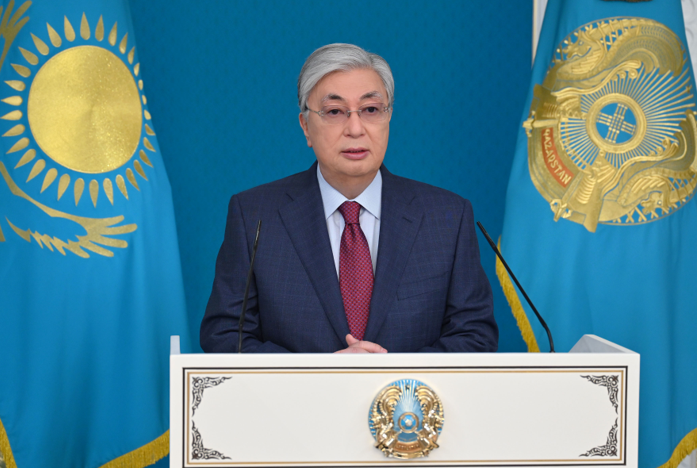
President of the Republic of Kazakhstan, His Excellency Mr. Kassym-Jomart Tokayev, in his address to the people of Kazakhstan, has outlined a comprehensive vision for the country’s future, placing economic transformation, technological advancement, infrastructure development and public welfare at the centre of national priorities.
From my perspective as a Pakistani writer and observer of international affairs, the address reflects an important development principle: the strength of a nation is measured not only by its natural resources, geographical advantages or economic indicators, but also by its ability to translate these assets into opportunities, prosperity and a better quality of life for its people.
President Tokayev’s emphasis on building a stronger, more diversified and technologically advanced Kazakhstan provides a framework for long-term development. His address also highlights the importance of effective governance, responsible investment, national unity and institutional accountability in achieving sustainable progress.
Economic Transformation Must Improve People’s Lives
One of the most important messages in President Tokayev’s address is that economic development must produce tangible benefits for ordinary citizens. Growth becomes meaningful when it creates employment, strengthens purchasing power, improves public services and expands opportunities for younger generations.
The proposed Halyqtyq Qurylys (People’s Construction) programme, alongside investment in roads, railways, hospitals, schools, housing and public utilities, reflects an approach that connects infrastructure development with social and economic progress.
In my opinion, the success of this vision will depend on the quality of implementation. Infrastructure projects should be completed transparently, within realistic timelines and according to high standards. Public investment must also encourage private-sector participation, create sustainable employment and strengthen the economic capacity of Kazakhstan’s regions.
The ultimate objective should be to ensure that the benefits of national development reach communities across the country rather than remaining concentrated in major urban centres.
Energy Security: The Foundation of Industrial and Technological Growth
President Tokayev’s focus on electricity generation and energy security deserves particular attention. Modern industries, artificial intelligence, digital infrastructure and advanced manufacturing all require reliable and affordable energy supplies.
His stated objective of achieving a sustainable electricity surplus by 2029 demonstrates the importance attached to meeting Kazakhstan’s future energy needs. The address also highlights the modernisation of power plants and transmission networks, the development of renewable energy and the expansion of nuclear power generation.
From an economic perspective, these priorities are closely connected. Without adequate electricity, even well-financed industrial and technological projects may struggle to operate efficiently.
Kazakhstan’s natural resources provide opportunities to strengthen its energy sector, but long-term success will require careful planning, technical expertise, environmental responsibility and investment in a skilled domestic workforce.
I believe energy security should be treated as a strategic foundation for Kazakhstan’s industrial development, digital transformation and economic independence.
Digitalisation and Artificial Intelligence Can Open New Horizons
Another significant aspect of the President’s address is the commitment to building a people-centred digital economy.
The expansion of computing infrastructure, data centres, digital public services and artificial intelligence applications could help Kazakhstan improve productivity, modernise public administration and develop new areas of economic activity.
The proposed application of advanced technologies in agriculture is particularly noteworthy. AI-supported farming, improved irrigation management and modern agricultural machinery could help farmers increase productivity while using natural resources more efficiently.
However, digital transformation must extend beyond technological infrastructure. It should also provide practical benefits for businesses, students, farmers, professionals and citizens in rural communities.
In my view, the real measure of digital progress is whether technology makes public services more accessible, creates new employment opportunities, supports entrepreneurship and enables people to participate more effectively in the modern economy.
Kazakhstan’s investment in digital capabilities could become an important source of future competitiveness if innovation is accompanied by education, professional training and practical applications.
Kazakhstan’s Geographic Position Offers Major Trade Opportunities
President Tokayev’s ambition to strengthen Kazakhstan’s position as a Eurasian transport and logistics hub is another important element of the country’s development strategy.
Situated between major markets in Europe and Asia, Kazakhstan has considerable potential to benefit from international trade corridors, railway connections, road infrastructure and cargo-handling facilities.
Nevertheless, geographical location alone does not guarantee commercial success. Efficient border procedures, dependable transport services, competitive logistics costs and modern infrastructure are essential to attracting international businesses.
The development of transport corridors can also encourage industrial investment, warehousing, food processing and other value-added activities along major trade routes.
As a Pakistani observer, I see potential opportunities for greater economic engagement between Pakistan and Kazakhstan through trade, logistics, agricultural cooperation, industrial partnerships and business-to-business exchanges.
Both countries can explore ways to strengthen commercial connectivity and encourage their private sectors to identify practical areas of mutual interest. Such cooperation could complement broader regional efforts to improve economic integration and market access.
Agriculture and Water Management Are Strategic Priorities
The President’s emphasis on agricultural modernisation recognises that the sector plays a crucial role in food security, rural employment and economic diversification.
Kazakhstan’s agricultural resources offer opportunities to expand food production, improve processing capacity and develop competitive agricultural exports. However, achieving these objectives requires reliable financing, modern machinery, efficient storage and improved access to domestic and international markets.
Water management is equally important. Responsible use of water resources, investment in efficient irrigation and the reduction of distribution losses will be essential to sustainable agricultural expansion.
I believe Kazakhstan can strengthen its agricultural sector by combining technological innovation with practical support for farmers, scientific research and responsible resource management.
Greater cooperation between agricultural institutions, universities and private enterprises could also encourage the exchange of knowledge and technologies that improve productivity and strengthen food security.
Business Confidence and Institutional Accountability Matter
President Tokayev’s call for a more effective public administration and a better business environment addresses an essential requirement for sustainable economic development.
Entrepreneurs and investors need predictable regulations, transparent procedures, access to financing and confidence that their legitimate commercial interests will receive appropriate legal protection.
Reducing unnecessary bureaucracy, improving public-sector efficiency and strengthening accountability could encourage businesses to invest in production, technology and job creation.
At the same time, major infrastructure programmes require careful financial management. Public funds must be allocated transparently, projects should be evaluated according to their economic and social value, and government institutions must be held accountable for delivering results.
In my assessment, effective governance is not separate from economic development; it is one of its principal foundations.
Kazakhstan’s development agenda will be strengthened if ambitious targets are supported by clear responsibilities, measurable indicators and regular public reporting on progress.
Human Capital and Social Welfare Must Remain at the Centre
A country’s long-term prosperity depends on the capabilities, health and opportunities of its people. President Tokayev’s emphasis on education, healthcare, housing and public infrastructure therefore deserves recognition as a central part of the national development agenda.
Investment in schools, universities, medical facilities and vocational training can help prepare Kazakhstan’s younger generation for a changing global economy.
As technology transforms industries and employment, education systems must equip students with scientific knowledge, digital skills, critical thinking and practical professional abilities.
Equally important is ensuring that economic reforms improve access to essential services and create opportunities across different regions and communities.
In my view, the strongest measure of progress will be the extent to which Kazakhstan’s development programmes improve household welfare, strengthen social mobility and provide younger generations with greater confidence in their future.
A Vision with Relevance for Regional Cooperation
President Tokayev’s address also has significance beyond Kazakhstan’s borders. Its emphasis on transport connectivity, energy security, digitalisation, agriculture and industrial development reflects challenges and opportunities shared by many countries across Central Asia and South Asia.
For Pakistan, stronger engagement with Kazakhstan could offer opportunities in agricultural trade, pharmaceuticals, industrial cooperation, education, tourism and regional connectivity.
Both countries have an interest in exploring practical initiatives that connect businesses, encourage investment and facilitate exchanges between educational and research institutions.
Such cooperation should be based on commercially viable projects, transparent arrangements and a shared commitment to long-term economic benefits.
Strengthening Pakistan–Kazakhstan relations would also complement wider efforts to improve regional connectivity and encourage constructive economic partnerships across Asia.
Conclusion: Turning Vision into Lasting Progress
President Kassym-Jomart Tokayev’s address presents an ambitious vision for a Kazakhstan that is economically stronger, technologically advanced, better connected and more responsive to the needs of its citizens.
Its central message is that national development requires more than the expansion of infrastructure or the growth of economic indicators. It requires effective institutions, responsible investment, skilled people, reliable energy, modern industries and policies that translate national resources into public benefit.
In my opinion, Kazakhstan’s opportunities are considerable, particularly in energy, transport, agriculture, digital innovation and industrial diversification. The challenge will be to ensure that the announced priorities translate into completed projects, productive investment, new employment and measurable improvements in living standards.
The government’s ability to implement reforms transparently, manage public resources responsibly and maintain confidence among citizens and investors will be critical to achieving these objectives.
As a Pakistani writer, I believe that Kazakhstan’s development experience also offers valuable subjects for regional dialogue and cooperation. Pakistan and Kazakhstan can strengthen their relationship by expanding trade, sharing expertise and identifying practical initiatives that support sustainable growth in both countries.
Ultimately, the true success of President Tokayev’s vision will be measured by the prosperity it creates, the opportunities it opens for future generations and the confidence it builds among the people of Kazakhstan. A stronger, more diversified and forward-looking Kazakhstan would not only benefit its own citizens but could also contribute to greater economic cooperation and connectivity across the wider region.
BY: Nadeem Faisal Baiga
Disclaimer:The article presented above is a compilation of information drawn from publicly available sources, including news reports, social media accounts, and other open-source materials. It is intended for informational and analytical purposes only. The views expressed are solely the writer’s opinion and do not reflect the position of The Times Union.