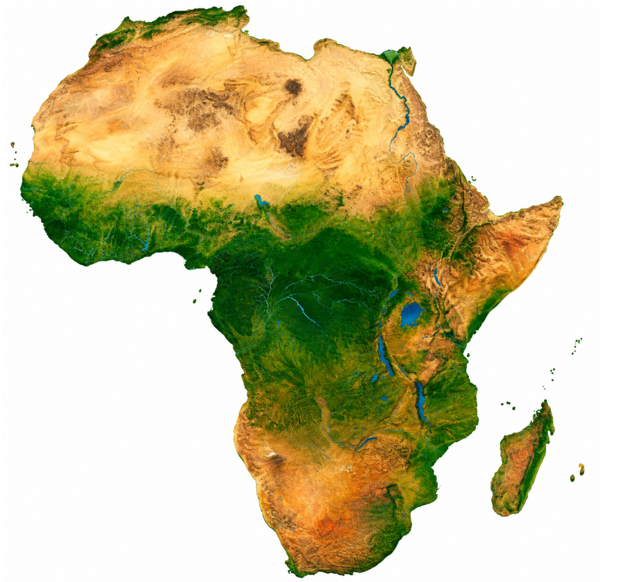
- As super El Niño develops alongside a positive Indian Ocean Dipole, Africa faces renewed concerns over extreme rainfall, flooding, droughts and the urgent need for climate preparedness
Across Africa, millions of people live with the uncertainty of what the upcoming El Niño may bring. For some, the concern is whether enough rain will fall to sustain crops and livestock. For others, it is whether rivers will overflow, homes will be submerged, and entire communities will be displaced. With El Niño strengthening in 2026, concerns are growing about what the coming months may bring, particularly for countries already struggling with recurrent droughts, floods, and food insecurity.
Africa remains one of the clearest examples of global climate inequality. Despite contributing only, a small share of historical greenhouse gas emissions, the continent continues to bear a disproportionate burden of climate related disasters. Its vulnerability is further compounded by large atmospheric and oceanic processes originating thousands of kilometers beyond their borders, yet capable of influencing rainfall patterns and livelihoods across the continent.
The World Meteorological Organization (WMO), in its latest update issued on October 8, 2026, has warned that the current El Niño event is expected to intensify toward December 2026. WMO Secretary-General Celeste Saulo stated that “El Niño is firmly established and strengthening rapidly,” adding that forecasts indicate a near-100% likelihood of its persistence through February 2027, potentially making it one of the strongest events since at least 1950.
El Niño is a naturally occurring climate phenomenon associated with unusually warm sea surface temperatures in the central and eastern equatorial Pacific Ocean. Although these temperature changes occur far from Africa, their influences extend across the globe by altering atmospheric circulation, rainfall distribution and temperature patterns.
However, El Niño does not affect every African region in the same way.
Parts of Southern Africa has historically experienced reduced rainfall, risk of agricultural drought, water shortages, and crop failure during El Niño events. Meanwhile, certain parts of East Africa face the opposite challenge, usually above-average rainfall and destructive flooding. The Sahel regions also experience rainfall variability associated with large-scale climate patterns, although its response to El Niño is more complex and depends on the season and other atmospheric conditions.
The impacts of El Niño will not be uniform across Africa, and these regional differences remind us that climate risks cannot be understood through a single continental forecast. Each region requires careful scientific assessment, but the underlying concern remains the same, how prepared are African countries to anticipate and manage these extreme climate events.
Another important phenomenon is the Indian Ocean Dipole (IOD), particularly its positive phase, known as the +IOD. This phase occurs when the western Indian Ocean becomes warmer relative to the eastern Indian Ocean, near Indonesia. The resulting temperature differences influence atmospheric circulation and moisture movement, often favoring increased rainfall over parts of East Africa.
The possibility of these two climate drivers acting together makes the current situation quite significant.
When +IOD and El Niño coincide, their combined effect increases the likelihood of exceptionally wet conditions across parts of the Horn of Africa. However, the strength and geographical distribution of these impacts vary between events, making continuous monitoring and regional forecasting essential.
Somalia is especially vulnerable to these shifts.
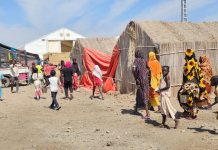
Since the mid-twentieth century, Somalia has experienced repeated episodes of both rainfall deficit and excessive rainfall, which resulted in prolonged droughts, water scarcity, and devastating floods, often affecting communities whose livelihoods depend on pastoralism and rain-fed agriculture. Yet, when heavy rainfall arrives, communities already struggling with the effects of droughts can suddenly find themselves exposed to flooding.
The events of 2023 showed this vulnerability. Following a period of severe drought, exceptionally heavy rainfall associated with El Nino and +IOD contributed to widespread flooding across parts of Somalia and the neighboring countries. Agricultural lands were inundated, rivers overflowed, infrastructure was damaged and thousands of families were displaced.
When these climate drivers interact, the resulting rainfall anomalies can become more pronounced. However, these climate extremes do not occur in isolation. A prolonged drought can weaken livelihoods and reduce community’s ability to cope with subsequent flooding. Similarly, destructive floods can damage agricultural productions, contaminate groundwater and create additional challenges for communities already facing food insecurity.
Nevertheless, it is important to recognize that neither El Niño nor +IOD guarantees flooding. Their effects depend on several factors, including the intensity and duration of the events, regional atmospheric conditions and local geographical characteristics.
Hence, such forecasts should not be interpreted as predictions of inevitable disasters. Rather, they provide an opportunity to prepare before potentially alarming conditions develop. The challenge is not the lack of warnings; it is what happens after those warnings are issued.
According to the IGAD Climate Prediction and Applications Centre (ICPAC), the October–December 2026 outlook indicates a 90% probability of enhanced rainfall across southern Ethiopia, central and southern Somalia, and northeastern Kenya. This does not necessarily mean flooding will occur, but it highlights the importance of monitoring rainfall conditions and preparing communities in potentially exposed areas.
For Somalia, the challenge is not simply predicting whether rainfall will increase or decrease. It is understanding where, when, and how severely climate extremes may affect communities.
For too long, disaster management in many vulnerable regions across Africa has been dominated by emergency response after communities have already suffered losses, rather than by effective anticipatory planning. Humanitarian assistance remains essential, but responding after a disaster occurs cannot be the only strategy.
One of the most important lessons from Africa’s recurring climate disasters is that scientific information must lead to practical decisions. Satellite observations, seasonal climate models, rainfall monitoring, drought indices and geographical information systems can help identify vulnerable areas and support better planning months before climate hazards develop into disasters.
For countries such as Somalia, strengthening these capabilities could make a meaningful difference. Climate resilience requires investing in reliable early warning systems, identifying drought and flood-prone districts, improving climate information services and community based early warning systems.
Equally important is ensuring that scientific forecasts are translated into practical anticipatory action. An early warning has limited value if the information does not reach the communities most at risk or if the authorities do not have the necessary resources to protect livelihoods, prepare infrastructure, manage water resources, and reduce potential losses before disasters occur.
Climate preparedness must extend beyond research institutions and meteorological agencies. It required coordination among government institutions, disaster management authorities, humanitarian organizations and local communities. El Niño 2026 is another reminder that climate variability is not only an environmental issue, but also closely connected to food security, economic stability, public health, and sustainable development.
Africa also needs greater investment in its own climate research capabilities. Much of the continent, including Somalia, continues to face challenges related to limited long-term observations, inadequate monitoring infrastructure and gaps in locally relevant climate information.
Addressing these limitations is essential not only for understanding past climate patterns but also for improving future risk assessments and strengthening national resilience.
While we cannot prevent natural climate phenomena such as El Niño, however through scientific understanding, effective planning and timely action, we can reduce their consequences for vulnerable populations.
Africa cannot continue to measure its climate resilience by how quickly humanitarian assistance arrives after a disaster. True resilience must be measured by how effectively we anticipate risks and prevent foreseeable hazards from becoming humanitarian crises.
The question is no longer whether Africa will experience another climate extreme, but how prepared we are to act before the next warning becomes a humanitarian crisis.
BY: Writer Asma Haghi Abdullahi
Doctoral Researcher in Meteorology and Climate Science | Advancing Research in Weather, Climate, and Environmental Science
Disclaimer:The article presented above is a compilation of information drawn from publicly available sources, including news reports, social media accounts, and other open-source materials. It is intended for informational and analytical purposes only. The views expressed are solely the writer’s opinion and do not reflect the position of The Times Union.