- Plurality of respondents who back premier say they would favor a unity government if Oct. 27 vote ends in stalemate, while plurality of those opposed to him would want a minority government
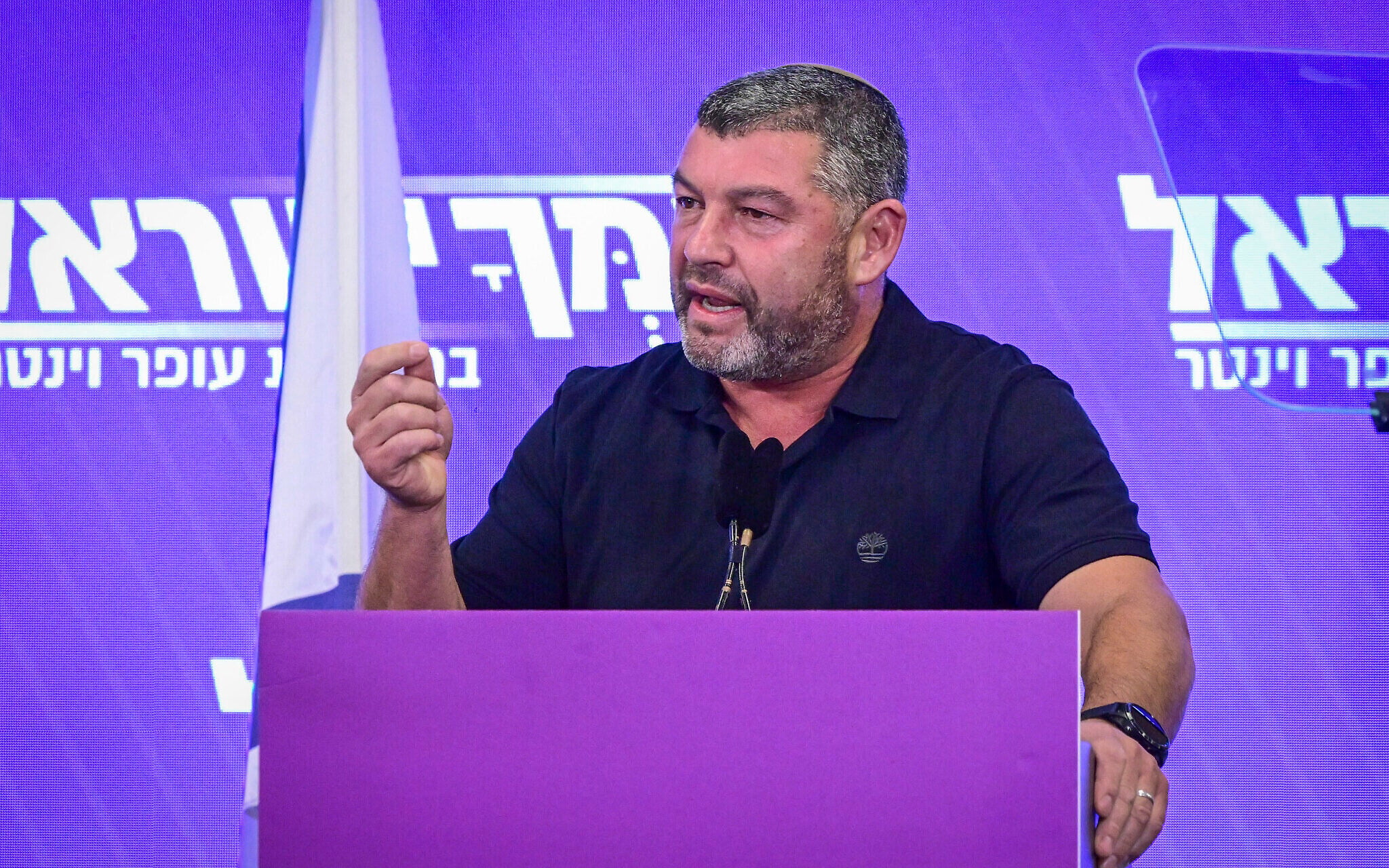
The People of Israel party, led by right-wing ex-general Ofer Winter, would fail to enter parliament if elections were held today, leaving Prime Minister Benjamin Netanyahu’s bloc with just 51 seats, according to a poll published Thursday by The Times of Israel’s Hebrew sister site, Zman Yisrael.
The poll showed Netanyahu’s Zionist opponents receiving a cumulative 55 seats, one fewer than in last week’s Zman Yisrael poll, and six short of a majority in the 120-seat Knesset.
The deadlock left the balance of power in the hands of the two Arab-majority parties, who were forecast to win a cumulative 14 seats. However, some of the parties in the Zionist anti-Netanyahu bloc have said they would not form a government that relies on Arab support.
In case neither Netanyahu’s supporters nor his Zionist opponents secure a majority in the October 27 election, 31.4% of all respondents supported holding new elections, followed by 29.6% who supported forming a unity government, 27% who supported forming a minority government and 12% who said they don’t know.
A minority government would have to rely on the support of parties outside the ruling coalition to stay in power.
Among respondents opposed to Netanyahu, a plurality of 39.79% supported forming a minority government, followed by 25.95% who supported new elections, 18.34% who supported forming a unity government and 15.92% who said they don’t know.
Among respondents who support Netanyahu, a plurality of 45.02% supported forming a unity government, followed by 38.86% who supported holding new elections, 9.48% who supported forming a minority government and 15.92% who said they don’t know.
The Zman Yisrael poll showed traditionalist Arab-majority party Ra’am, which won six seats, could help the Zionist anti-Netanyahu bloc clinch a majority in the Knesset without relying on the more strictly anti-Zionist Joint List, which won eight seats. Both of the Arab-majority parties received one seat more than in last week’s poll.
Within the Zionist anti-Netanyahu bloc, former IDF chief Gadi Eisenkot’s centrist Yashar party retained its lead with 24 seats, making it the largest party overall. In last week’s poll, Yashar had run neck-and-neck with Netanyahu’s Likud at 23 seats.
Behind Yashar in the so-called “change bloc” were right-wing former premier Naftali Bennett’s B’Yachad, which won 14 seats, down from 15 last week; MK Avigdor Liberman’s hawkish-secularist Yisrael Beytenu, which won nine seats, down from 10 last week; and former deputy IDF chief Yair Golan’s left-leaning Democrats party, which held steady at eight seats.
In Netanyahu’s bloc, the premier’s own Likud party won 22 seats, down from 23 last week; the Sephardic ultra-Orthodox Shas won 10 seats, up from nine last week; Shas’s Ashkenazi counterpart United Torah Judaism held steady at nine seats; National Security Minister Itamar Ben Gvir’s Otzma Yehudit won seven seats, up from six last week; and Finance Minister Bezalel Smotrich’s Religious Zionism held steady at four seats.
Winter’s People of Israel party won the support of 3% of respondents, just under the electoral threshold of 3.25%, which equates to four seats. Behind People of Israel were former minister Yoaz Hendel’s HaMiluimnikim (The Reservists) and former IDF chief Benny Gantz’s Blue and White, which received 2.2% and 2%, respectively.
The poll was conducted on Wednesday and Thursday by Yossi Tatika of Tatika Research & Media in collaboration with the Adgenda panel, and surveyed 500 respondents with a margin of error of ±4.4%.
The three parties that polled under the electoral threshold have called for a government without Haredi or Arab parties, and said they were willing to form a government with Netanyahu, despite railing against his government’s bid to codify the Haredi exemption from military service.
People of Israel debuted in the Zman Yisrael poll last month at six seats, sinking Religious Zionism under the electoral threshold, as the two parties vied for support from right-wing, religious voters disenchanted by the government’s failure to draft Haredi men.
Religious Zionism has since managed to crack the threshold after joining up with extremist former Likud MK Moshe Feiglin, head of the small Zehut party.
In turn, People of Israel has dipped below the threshold, as Netanyahu — seeking to prop up Religious Zionism — launched repeated verbal attacks against Winter, accusing him of planning to bolt to the opposition.
Netanyahu bashes Winter, Eisenkot at Likud campaign launch
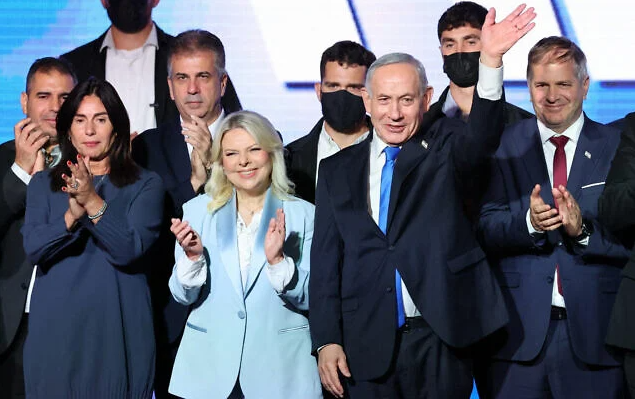
Without naming Winter or his party, Netanyahu said at the Likud campaign kick-off in Tel Aviv Thursday night that voters must not cast ballots “for a party that won’t cross the electoral threshold, or that will hand votes over to Liberman and bring down the right-wing bloc.”
People of Israel hit back with a statement that “the first part isn’t true and the second part won’t come to pass,” paraphrasing Netanyahu’s famous 2013 response to an Arab lawmaker who had said to a Jewish Likud minister, “we were here before you and will remain after you.”
Tel Aviv, September 2, 2026.
During the Likud rally, Netanyahu also accused Eisenkot of seeking to form a “weak, left-wing government.”
In a play on the name of Eisenkot’s party, which means “straight” in Hebrew, Netanyahu said: “These elections are between right and left. There’s no straight — it’s a bluff.”
Netanyahu and the Likud “are the only ones who can guarantee Israel’s security,” said the premier, who has come under fire for his failure to prevent the Hamas onslaught of October 7, 2023, and his years-long policy of lobbying Qatar to give Hamas millions of dollars in cash monthly until the attack.
He went on to list Israeli military operations that have taken place in Iran, Lebanon, Syria and the Gaza Strip since 2023. “The mission must be completed, we must bring down the Iranian regime and totally destroy Hezbollah and Hamas,” he said.
He also accused his rivals of wanting to make “territorial concessions,” and pointed to Israeli troops in Lebanon, Syria and Gaza as evidence that “we take land instead of giving it.”
The premier repeated his refrain that he “has changed the face of the Middle East,” and vowed to change it yet again, without offering specifics.
AFP and TOI contributed to this report.