- Major parties registering on Tuesday feature few women candidates in realistic spots; Shas adds IDF reservist; Sukkot slides on Religious Zionism list; Blue and White makes last-ditch survival effort
Israel’s upcoming election officially took shape on Tuesday night, as the last of 38 parties submitted their candidate slates for the October 27 vote.
The parties registering their lists ahead of Tuesday’s 10 p.m. deadline ranged from the ruling Likud party to Blue and White, the centrist faction widely expected to fall short of entering the Knesset. Also submitting on Tuesday evening were the Haredi Shas and United Torah Judaism parties, the far-right Religious Zionism, and the Joint List comprising three mostly Arab factions.
But while the candidate lists featured a smattering of new names and last-moment recruits, there were no eleventh-hour mergers. Despite heavy speculation that some parties would unite, the flurry of party registrations this week ended with the electoral landscape largely unchanged, and still deadlocked between supporters and opponents of Prime Minister Benjamin Netanyahu.
Perhaps the most surprising element of the lists concerned who was absent: Likud’s slate included just four women among its top 30 candidates. Shas and United Torah Judaism, as in every election, submitted lists with zero female politicians. Religious Zionism, expected to win six seats or fewer, had one woman in its top six. The Joint List, polling at seven, placed its top female candidate in the eighth spot.
That was in contrast with the leading opposition parties, which submitted their slates on Monday. While all the parties are led by men, the anti-Netanyahu Yashar, B’Yachad and Democrats slates each feature five women in their top 10. The pro-Netanyahu People of Israel party also features three women in its top five.
The registrants also included a bevy of parties with no hope of being among the dozen or so that will make it into the Knesset. These ranged from breakaway factions led by former lawmakers, to those like the Garden of Eden party, which appears to be led by a Messianic Jew named Yeshua Ben David, and another, Sharshar, whose chair came to the registration wearing a crown and robe and introducing himself as a king.
Shas adds IDF reservist in bid to moderate image
Shas chairman Aryeh Deri retained the top spot in his Sephardi ultra-Orthodox party’s slate. But a notable addition was Maj. (res.) Dror Amos, chairman of the Haifa Religious Council, in sixth, putting a reservist in place to represent the party in the Knesset.
A number of Shas lawmakers, past and present, have served in the army. But Amos’s inclusion was significant as the latest attempt by the party to trumpet military service, after it staunchly opposed efforts in the outgoing government to draft Haredi men.
Deri was followed by MK Yinon Azoulay, who was promoted to second place from seventh on the party’s previous Knesset slate.
The rest of the roster largely comprised veteran Shas lawmakers, including former religious services minister Michael Malkieli, MK Yoav Ben-Tzur and MK Haim Biton. Another newcomer was Yosef Elnatanov, a representative of Israel’s Bukharan Jewish community, in 11th.
Polls project that Shas will win seven or eight seats, down from its current 11.
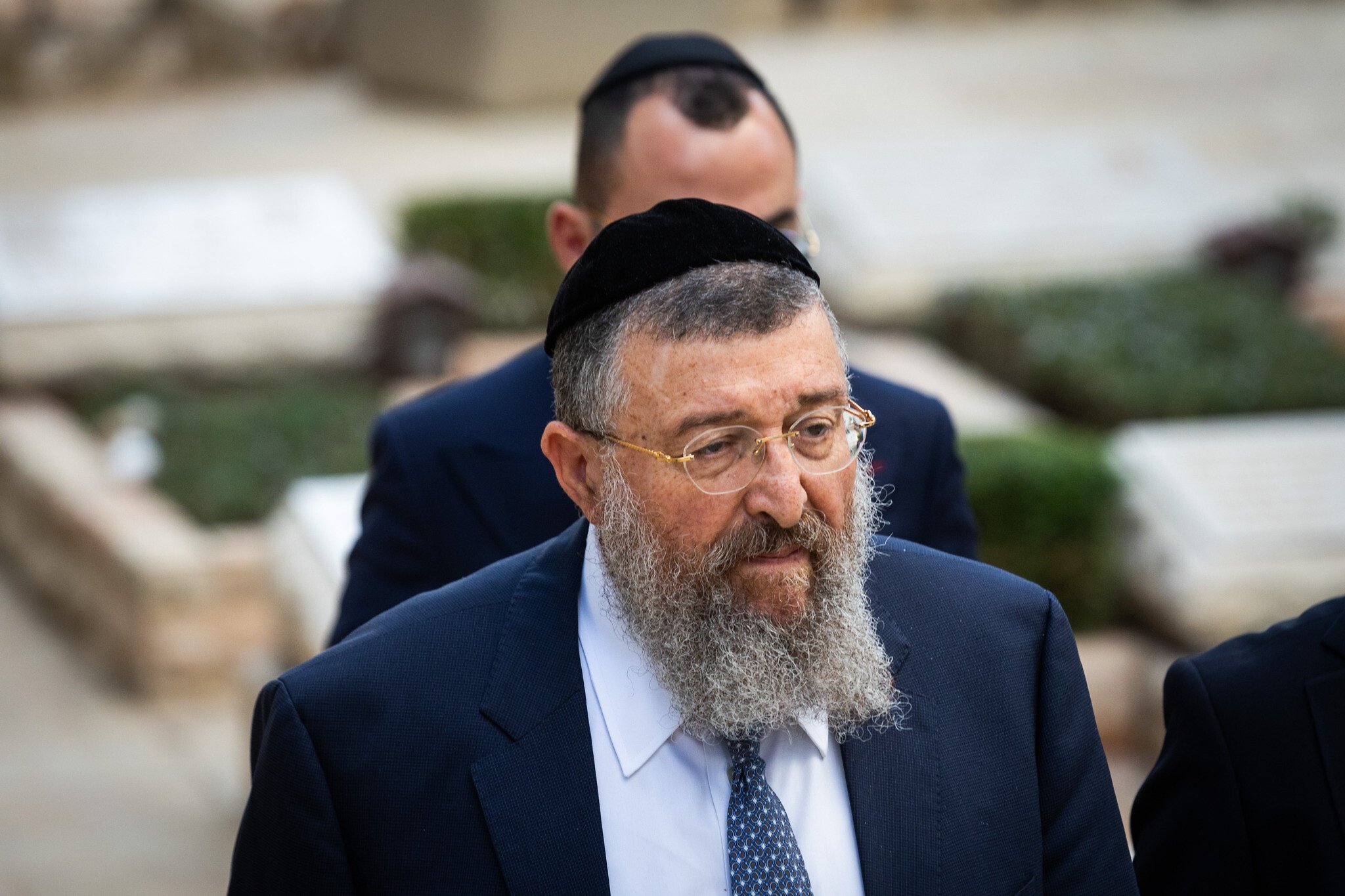
Ben-Tzur’s inclusion in the fourth spot came despite an apparent effort by Deri to push him off the slate. According to Haaretz, Deri sought to remove the veteran lawmaker but was overruled by Shas’s Council of Torah Sages, led by former chief rabbi Yitzhak Yosef.
“This is a blow to Deri,” a source familiar with the matter told the news outlet.
Last month, Deri and Yosef held a reconciliation meeting after it was reported that the rabbi instructed his students not to vote for Shas and called for the downfall of the right-wing bloc. The two subsequently reached an agreement giving Yosef greater influence over decision-making in the party alongside Deri.
Yaakov Asher leads UTJ after Gafni, Maklev pushed out
The ultra-Orthodox United Torah Judaism alliance submitted a slate marked by a dramatic shakeup in its Degel HaTorah faction, with longtime lawmakers Moshe Gafni and Uri Maklev both left off the ticket after the party failed to pass legislation broadly exempting Haredi men from military service.
MK Yaakov Asher replaced Gafni as Degel HaTorah chairman and will head the joint slate. No major changes were made within Agudat Yisrael, the second faction of the Ashkenazi ultra-Orthodox alliance, which is led by Housing Minister Yitzhak Goldknopf.
UTJ is projected to win around eight seats.
Religious Zionism boosts Strock, Rothman, demotes Sukkot
The far-right Religious Zionism party, which according to polls has been hovering on the threshold of entering the Knesset, recently announced a merger with far-right ex-lawmaker Moshe Feiglin, which has raised it to around five or six seats in recent surveys. Efforts to merge with other far-right parties fell flat.

December 3, 2025.
The Religious Zionism slate published on Tuesday night was headed by Finance Minister Bezalel Smotrich, the party chair, followed by Settlements and National Missions Minister Orit Strock and MK Simcha Rothman, chairman of the Knesset Constitution, Law and Justice Committee.
Tzvika Mor, former leader of the right-wing Tikva Forum for hostage families, took the fourth spot, followed by Itamar Eitam, a reservist brigade commander and co-founder of a reservists’ activist organization.
Zvi Sukkot, an incumbent MK, was placed the sixth spot — and is considered unlikely to enter the Knesset. The effective ouster may be related to several recent controversial incidents involving Sukkot, including his smashing of a Palestinian memorial during an IDF-escorted visit to the West Bank village of Madama.
The announcement listed only Religious Zionism’s candidates and did not include those from Feiglin’s Zehut party. Under the merger agreement between the parties, Feiglin is expected to take second place on the combined slate, with additional spots reserved farther down the list for representatives of his party.
Blue and White makes last-ditch effort to stay in Knesset
Benny Gantz’s centrist Blue and White submitted a heavily revamped slate, after a string of defections left the former defense minister scrambling to rebuild his party just days before the deadline.
Gantz will remain at the top of the slate, followed by incumbent MK Pnina Tamano-Shata, former Beit Shemesh mayor Aliza Bloch, reservist commander and longtime political operative Roy Konkol, reservists’ rights activist Rotem Avidar Tzalik and incumbent MK Alon Schuster.
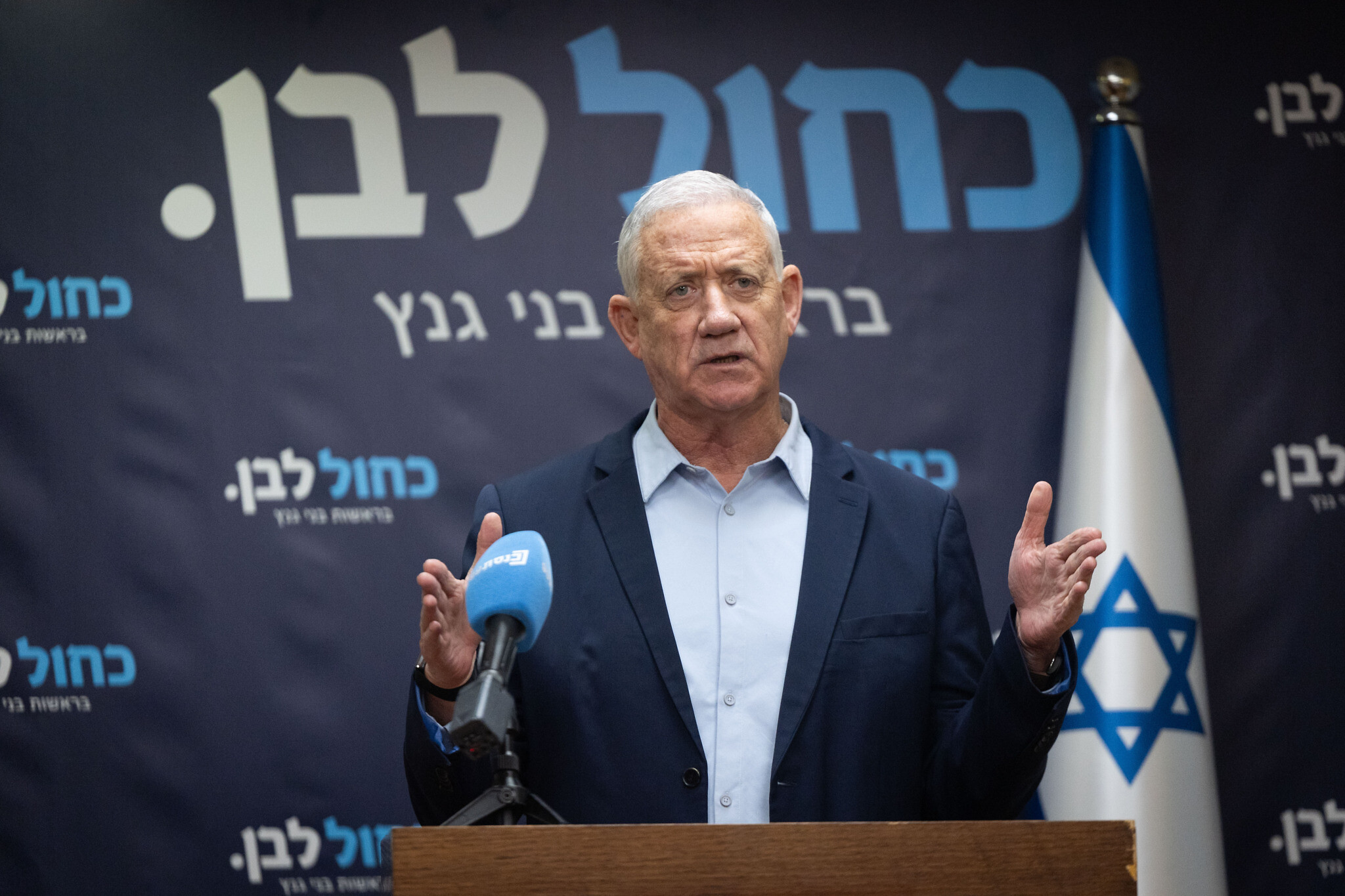
Jerusalem, February 16, 2026.
Bloch only joined Blue and White on Monday, after briefly signing on with the Unity party founded by ex-Likud ministers Gilad Erdan and Yuli Edelstein, which dropped out of the race last week amid poor polling.
The slate bears little resemblance to the Blue and White faction elected to the current Knesset, which has bled lawmakers over the past year, shrinking from eight MKs to just three. Several former members have since joined Gadi Eisenkot’s Yashar, while MK Eitan Ginzburg defected to Naftali Bennett’s B’Yachad.
Despite the last-minute effort to replenish its ranks, Blue and White faces an uphill battle to return to the Knesset, with the party emphatically failing to clear the 3.25 percent electoral threshold in all recent polls.
Joint list returns, hoping to boost Arab representation
Hadash, Ta’al and Balad also submitted their combined slate, formally reviving the Joint List after years of divisions among the predominantly Arab parties.
Hadash chairman Yousef Jabareen took the top spot, followed by longtime Ta’al leader MK Ahmad Tibi and Balad chairman Sami Abou Shahadeh. Hadash’s Faten Ghattas was placed fourth, followed by Balad’s Bakr Awawdeh and Hadash MK Ofer Cassif. Former Hadash MK Youssef Atauna placed seventh. Eighth is Maha Karkabi Sabbah, a professor at Ben Gurion University.
According to recent polling, the Joint List is projected to win seven to nine seats in next month’s elections.
The slate underwent a last-minute change ahead of Tuesday’s deadline, when Hadash replaced Jafar Farah in the fourth spot with Ghattas, a longtime party activist and senior official at the Israel Cancer Association. Hadash removed Farah following an internal examination of allegations of sexual harassment made against him by several women.
The three parties agreed last month to reunite after weeks of negotiations and a dispute over Ta’al’s representation on the joint slate. Under the compromise, Hadash received five of the top 10 spots, Balad three and Ta’al two, with Hadash and Ta’al also agreeing to rotate candidates in the sixth and ninth positions.
The alliance marks the return of the Joint List after Balad split from Hadash-Ta’al ahead of the 2022 election and failed to cross the electoral threshold.
It does not include the Islamist Ra’am party, which submitted a separate slate including Jewish candidate Yoav Segalovitz, or the fledgling Jewish-Arab Makom LeKulanu party, which withdrew from the race shortly before Tuesday’s deadline due to low polling numbers.
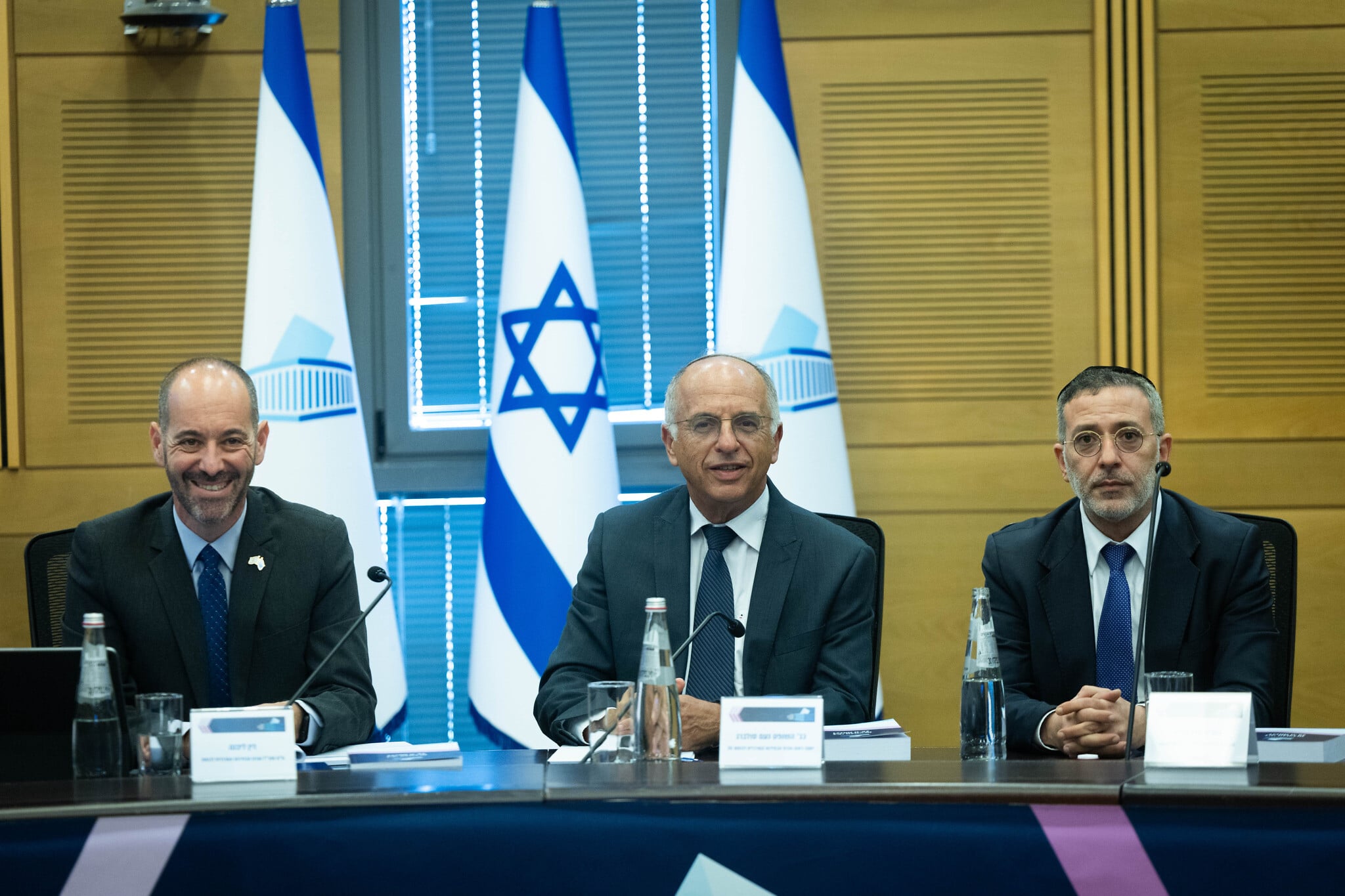
Acting Director-General of the Central Elections Committee, Attorney Din Livne, and
committee members attend the registration of political party lists ahead of the
upcoming election at the Knesset in Jerusalem, September 7, 2026.
Here is a complete list of the 38 parties running, apparently in their order of registration, according to Hebrew media reports.
- B’Yachad, led by Naftali Bennett
- Yashar, led by Gadi Eisenkot
- Sharshar, for Love and National Unity
- Partnership for Everyone
- The Pirates
- People of Israel, led by Ofer Winter
- Israel First, led by Sharren Haskel
- Garden of Eden
- Women’s Voice
- Together We Will Succeed
- Yisrael Beytenu, led by Avigdor Liberman
- Just Law
- Shema
- Otzma Yehudit, led by Itamar Ben Gvir
- New Order
- The Reservists-Economic party, led by Yoaz Hendel
- The Democrats, led by Yair Golan
- Ra’am, led by Mansour Abbas
- Shas, led by Aryeh Deri
- The Haredi Public
- You and Me, the Israeli People’s party
- Eternal Covenant
- Fixing the Electoral and Governing System
- The Biblical Bloc
- Social Security
- Dawn’s Light, a Party for Everyone
- Personal Security
- The Color Black, Guarding the World of Torah
- Likud, led by Benjamin Netanyahu
- Blue and White, led by Benny Gantz
- Religious Zionism-Zehut, led by Bezalel Smotrich
- The Ahi Movement
- The House of Israel Junction
- Redemption
- The Joint List, led by Yousef Jabareen
- The Hakhel Party, a pan-Haredi party
- United Torah Judaism, led by Yaakov Asher
- Noam
BY: Stav Levaton, Ariela Karmel and Emanuel Fabian