- Death toll nears 1,000 as thousands remain unaccounted for; families wait desperately for news while rescuers battle mud, debris and collapsed tunnels
KATHMANDU: The devastating floods and landslides that swept across Nepal’s northern border region have taken another deeply painful turn, with a second Israeli citizen confirmed missing as rescue teams continue a desperate search for survivors nearly a week after the disaster.
Israel’s Foreign Ministry on Monday identified the missing woman as Katerina “Katya” Sakovich, a 41-year-old Israeli citizen who also holds Belarusian nationality.
The ministry said Israel’s consul in Kathmandu and its Department for Israelis in Distress Abroad were maintaining continuous contact with Sakovich’s family and working closely with Nepalese authorities and local officials in efforts to determine her whereabouts.
Sakovich, who had been living in Milan in recent years, was travelling in Nepal as part of a journey to Mount Kailash in Tibet. According to Israel’s Kan public broadcaster, she was last seen near the Rasuwagadhi-Gyirong border crossing around the time the catastrophic floods struck.
She had initially been listed among the missing as a Belarusian citizen. Her family later contacted Israel’s Foreign Ministry in Jerusalem seeking assistance in the search.
There is still no information about another Israeli citizen, a 60-year-old man, who was reported missing last week. His identity has not been made public.
The human toll of the catastrophe continues to rise. Nepal’s disaster authority said Monday that at least 903 people have died in Nepal and Tibet in China, while 4,247 people remain missing.
Among those missing are 592 foreign nationals, including tourists who travelled to Nepal’s mountains for trekking and Hindu pilgrims heading towards the sacred Mount Kailash.
Desperate Race to Find Trapped Workers
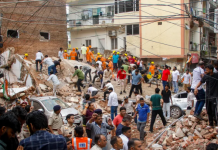
Rescue operations have become increasingly urgent as teams battle through extremely dangerous conditions to reach approximately 100 hydropower workers believed to be trapped inside several tunnels.
Rescuers from Nepal, China, India and South Korea have been digging, drilling and blasting through enormous quantities of mud and debris in a race against time.
Three bodies have so far been recovered from two tunnels, while thick mud has blocked potential routes to those still trapped.
An Indian Army officer serving with a specialist tunnel-rescue team described the conditions as “sludge” but said he remained hopeful that survivors could still be found.
“I’m still hopeful that there are six survivors inside,” he told AFP.
Families Left Waiting in Agony
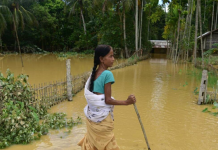
Across the disaster zone, entire communities have disappeared beneath floodwaters and landslides, leaving thousands of families homeless and countless others waiting anxiously for information about missing loved ones.
“This is an unfolding disaster,” said Abiodun Banire, a United Nations children’s fund official, warning that the humanitarian needs of the tens of thousands affected were enormous.
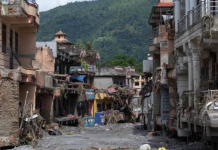
Roads have been swept away, power facilities destroyed and dozens of bridges reduced to rubble, further isolating devastated communities and making rescue and relief operations extremely difficult.
Yet amid the grief, there have also been rare moments of hope.
A six-year-old girl was rescued from the mud four days after the disaster struck and reunited with her parents after police found her crying for her mother.
“Her body was trapped in mud, but her head was outside,” Nepalese Armed Police spokesman Netra Bahadur Karki said. The child was taken to hospital, where she was reported to be out of danger and recovering with her family.
Bodies Await Identification as Nepal Faces Overwhelming Needs
The disaster has placed extraordinary pressure on Nepal’s already limited resources. With mortuaries overflowing, authorities have begun burying some recovered bodies after collecting DNA samples so that families may later be able to identify and reclaim their loved ones.
Nepal has appealed urgently for international assistance, saying it needs more than 1,000 freezer units to preserve bodies as identification efforts continue.
For grieving families, the wait has become unbearable. Relatives desperate for news of missing loved ones are gathering at community centres and watching images of recovered bodies in the hope of recognising someone they have lost.
The disaster was triggered by a glacial collapse, according to the US Geological Survey. Although the precise cause of the collapse remains unclear, scientists have repeatedly warned that rising global temperatures are accelerating glacier melt and increasing the risk of catastrophic events in the Himalayas.
The world’s highest mountain range is experiencing increasingly rapid ice loss as temperatures rise, raising concerns about the vulnerability of communities living downstream.
Nepal, already facing significant economic pressures, has received pledges of humanitarian assistance from foreign governments. But the scale of destruction is immense, with Kathmandu warning that rebuilding shattered roads, bridges, power infrastructure and communities could ultimately cost billions of dollars.
For thousands of families still waiting for answers, however, the immediate concern is far more personal: finding those who are missing, bringing the dead home and holding on to hope as rescue teams continue their race against time.
BY: The Times Union