- Rapper-turned-premier’s fast-paced governance, anti-corruption drive and unconventional leadership style draw both praise and criticism
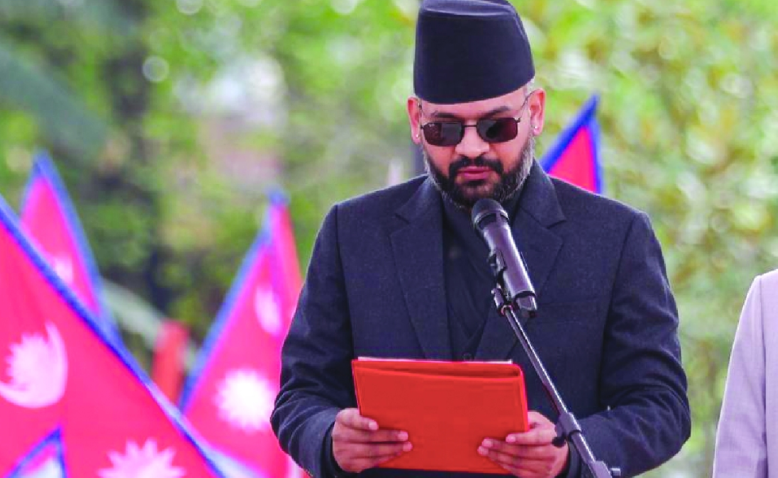
KATHMANDU: One hundred days after assuming office on a promise of sweeping reforms, Nepal’s 36-year-old rapper-turned-Prime Minister Balendra Shah has reshaped the country’s political landscape while maintaining an unusually low public profile.
The former mayor of Kathmandu, popularly known as “Balen,” reached the milestone on Sunday after moving swiftly to implement his agenda since taking power.
Just one day after taking office, authorities arrested former prime minister KP Sharma Oli and his former interior minister following recommendations by an inquiry commission investigating the deadly September 2025 uprising that led to Oli’s ouster. Both men were later released without charge as investigations continue.
Political observers say the move set the tone for Shah’s administration—decisive and symbolically powerful, yet often legally contested and marked by a willingness to bypass traditional institutional processes.
Unlike his predecessors, Shah has largely avoided the public spotlight, relying heavily on social media for communication and even delivering his post-election victory address in the form of a rap song. He has also delegated high-level visits to neighboring India and China—typically the first foreign destinations for Nepali prime ministers—to his foreign minister.
“In three months, we know very little about the man we elected as prime minister,” journalist Pranaya Rana said. “He needs to be more accessible and open.”
Ambitious Reform Agenda
Shah’s overwhelming victory in the March 5 general election surprised many political analysts. The election was Nepal’s first since the youth-led anti-corruption movement that toppled Oli’s government and reflected widespread public frustration over corruption, unemployment and the country’s entrenched political establishment.
His administration introduced a 100-point reform agenda aimed at improving governance, strengthening anti-corruption efforts, enhancing public services and accelerating digital transformation.
According to government figures, around 70 initiatives have already been implemented, with the remaining measures currently underway.
In a rare public appearance at a meeting of the ruling Rastriya Swatantra Party in June, Shah declared that his government was moving “on an expressway” toward reform.
“The brakes will only be applied when we reach our destination,” he said.
The government has also unveiled a 2.1 trillion rupee ($13.8 billion) national budget prioritizing infrastructure development, technological advancement, healthcare and education while seeking to stabilize the economy.
“The nation is standing at a decisive crossroads of comprehensive economic reform,” Finance Minister Swarnim Wagle said while presenting the budget.
Praise and Criticism
Supporters argue that Shah’s administration has brought a new sense of urgency and efficiency to governance.
“First of all, it has changed the style of working—it started delivering from day one, unlike previous governments,” journalist Sudheer Sharma said. “It appears to be highly action-oriented.”
However, critics contend that the rapid pace of reforms has raised concerns about transparency, institutional integrity and adherence to democratic procedures.
The opposition CPN-UML party described the government’s performance as “weak, immature and controversial” in a statement issued on Friday.
Despite enjoying a parliamentary majority, Shah’s administration has frequently relied on ordinances to implement reforms, prompting fears that constitutional checks and balances could be weakened.
“Work has certainly been done, but there seems to be a different understanding of how it should be carried out,” political researcher Anusha Khanal said. “We have to remain vigilant.”
One controversial ordinance allows the constitutional council, chaired by the prime minister, to make key decisions—including judicial appointments—through a simple majority, intensifying concerns among legal experts and opposition groups.
Debates over possible constitutional amendments and proposals to restructure Nepal’s federal system have also triggered political resistance.
Yujan Rajbhandari, a 23-year-old participant in the 2025 anti-corruption protests, said the current administration emerged from a popular movement and must remain accountable to its supporters.
“We have great expectations from this government,” he said. “It is positive that they are focused on results, but if those results are not achieved through due process, they may not be sustainable.”
The government has also faced criticism over efforts to remove squatter settlements, with opponents arguing that such measures require broader consultation and safeguards for vulnerable communities.
“The first 100 days are usually when a government enjoys the greatest public goodwill,” Rana said. “From this point onward, criticism may intensify, including from the very people who supported the movement for change.”
BY: The Times Union