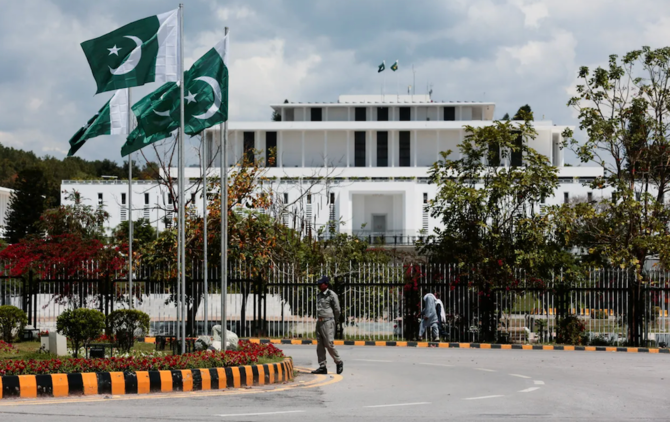
It would not be an exaggeration to say that Pakistan pulled the proverbial rabbit out of a hat when it achieved a ceasefire less than 90 minutes before the deadline set by US President Donald Trump. It gave peace a chance and averted a brutal attack on Iran, which would have impacted 93 million ordinary Iranians while the leadership of the Revolutionary Guard hides the party lifestyle and lavish spending of their nieces and grandnieces in Los Angeles.
For the past two days I’ve heard little except that the ceasefire is fragile and that there have been violations. Frankly, I am surprised that people are surprised: everyone knows that starting a war is easy but stopping it is difficult. And it is absolutely not out of character for both the Revolutionary Guard and this Israeli government to exploit any loopholes or grey areas they find. Indeed, just hours after the truce was announced, Iran fired more drones and missiles toward its Gulf neighbors and Israel indiscriminately targeted civilian areas in Lebanon under the pretext of eliminating Hezbollah targets.
Of course, while my heart breaks for every innocent life lost and every home destroyed in Lebanon, successive Lebanese governments that failed to address the Hezbollah issue should shoulder part of the blame. Direct talks with Israel as soon as possible, which both sides have now agreed to, and announcing that army and security forces will begin reinforcing the full imposition of government authority with weapons only in the hands of the state, as Prime Minister Nawaf Salam did on Thursday, may be too little too late. However, all hopes are that the negotiations are successful, that talks in Pakistan do include Lebanon, and that Iran agrees to cut ties with terrorist organizations so that Israel no longer has a justification to continue its barbaric assault.
While my heart breaks for every innocent life lost and every home destroyed in Lebanon, successive Lebanese governments that failed to address the Hezbollah issue should shoulder part of the blame.
Faisal J. Abbas | Editor in Chief
Many also wonder what the likely outcome of the Islamabad talks is: the honest answer is that you would need a crystal ball or a fortune teller. Such negotiations are never easy: US Senator George Mitchell once described the 1998 Good Friday agreement that brought peace to Northern Ireland as “700 days of failure and one day of success.” What I can safely argue is that the Iranians, despite victory propaganda directed internally, would not come to the negotiating table unless they knew they were backed into a corner: this time the regime’s very survival is at stake.
Equally, the US would not send such a high-profile delegation, including Vice President J.D. Vance, Jared Kushner and Steve Witkoff, if they did not believe serious progress could be achieved. At the end of the day, whether the Iranian regime stays or not is immaterial as long as it is toothless and unable to inflict harm on the region via proxies, ballistic missiles, drones, and its nuclear program.
I do hope, for the sake of the innocent Iranian people and the wider region, that Iran’s negotiators are reasonable and do not insist on showstoppers such as the right to enrich uranium: if Tehran had given that up it could have arguably prevented five weeks of destruction.
The US would not send such a high-profile delegation if they did not believe serious progress could be achieved.
Faisal J. Abbas | Editor in Chief
Hopefully, that Trump says the US military will remain in the region until a serious agreement is achieved should be enough of a signal to Tehran that there will be no messing about this time.
As for Saudi and Gulf interests, clearly any talk of Iran controlling access to the Strait of Hormuz is a no go, especially since it is not only a regional issue but would be a breach of international law. Saudi Arabia, Turkiye and Egypt showed full confidence in Pakistan when all their foreign ministers met in Islamabad a few days ago. And there are constant calls between Riyadh and Islamabad, and Riyadh and Washington, on leadership and ministerial levels.
Should we expect a miracle? I don’t want to be an optimist, but rather a realist: nobody can predict the outcome of negotiations, particularly when the stakes are so high and all parties are concerned with saving face. But at the same time, who would have guessed a few months ago that Pakistan — which for a long time, rightly or wrongly, was perceived as a source of trouble — would broker one of the most complicated ceasefires in modern history? Let us wish for the best.
BY: Faisal J. Abbas is the editor in chief of Arab News. X: @FaisalJAbbas
Disclaimer: Views expressed by writers in this section are their own and do not necessarily reflect The Times Union‘ point of view