- Coffee Festival Inauguration and High-Level Talks Signal New Phase in Bilateral Partnership
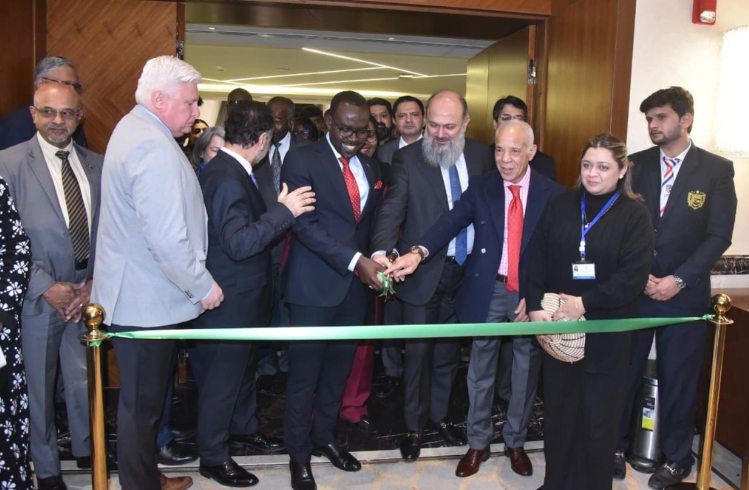
ISLAMABAD, Pakistan – In a landmark move to deepen economic collaboration, Pakistan and Rwanda have committed to significantly enhancing bilateral trade and investment linkages. The pledge came during the inauguration of the Rwanda Coffee Festival in Islamabad by Pakistan’s Federal Minister for Commerce, Mr. Jam Kamal Khan, and subsequent high-level ministerial talks.
Minister Khan, alongside Mr. Prudence Sebahizi, Rwanda’s Minister of Trade and Industry, outlined a comprehensive vision for partnership, emphasizing direct supply chains, diversified exports, and leveraging mutual strengths to access wider regional markets. The discussions, attended by Mr. Rana Ihsaan Afzal Khan, Coordinator to the PM for Commerce, marked a strategic step toward tangible economic cooperation.
Unlocking Mutual Potential in Key Sectors:
Addressing the festival, Minister Jam Kamal Khan highlighted the significant, yet underutilized, trade potential between the two nations. “As agro-based economies, Pakistan and Rwanda possess strong complementarities, especially in a world where food security is paramount,” he stated.
The Minister pointed to Rwanda’s opportunity in Pakistan’s burgeoning consumer market. Noting Pakistan’s annual tea imports of nearly USD 3 billion and rapidly growing coffee consumption, he emphasized that Rwanda’s premium coffee, competitive pricing, and geographic proximity offer a strategic advantage. “Pakistan, with its 250-million-strong market, can serve as a gateway for Rwandan coffee to Central Asia and Western China,” he added.
On Pakistan’s export potential, Minister Khan showcased strengths in rice, textiles, pharmaceuticals, surgical instruments, sports goods, agricultural machinery, and home appliances, noting that tractor exports to African markets have already commenced.
Building Institutional Frameworks for Sustainable Trade:
A key outcome of the bilateral meeting was the progress on a Memorandum of Understanding on Trade and Economic Cooperation. Both ministers expressed confidence that the agreement would be finalized shortly, establishing a robust framework for collaboration in trade, investment, manufacturing, and logistics.
Critical to this partnership is the establishment of direct Pakistan-Rwanda supply chains. The ministers discussed ongoing talks with maritime authorities to drastically reduce current shipping times—which can extend to 45 days—thereby lowering costs and improving efficiency.
A Gateway to Continental Markets:
Minister Prudence Sebahizi underscored the mutual benefits of the partnership, describing Pakistan as a major potential market for Rwandan exports, including specialty coffee, spices, and value-added products. He simultaneously presented Rwanda as an ideal entry point for Pakistani businesses into the African continent.
“Under the African Continental Free Trade Area (AfCFTA), Rwanda serves as a trade and distribution hub, offering access to a unified market of over 1.4 billion people,” Minister Sebahizi stated. He welcomed growing interest from Pakistani investors and confirmed the re-export of Pakistani rice from Rwanda to other African nations.
A Forward-Looking Partnership:
The dialogue extended to future collaboration in light engineering, cosmetics, mining, IT, digitalization, and artificial intelligence. Both sides agreed that joint ventures, regular business delegations, and sustained private-sector engagement are essential to convert shared vision into measurable outcomes.
Concluding the engagements, Minister Jam Kamal Khan expressed optimism for a prosperous, long-term partnership based on mutual benefit. Both nations committed to maintaining close coordination and fostering deeper business-to-business ties in the coming months, setting a clear agenda for a strengthened economic relationship.
BY: The Times Union