- Amid severe crackdown, Tehran resident whose brother was among thousands killed by regime says many in Iran see ‘strike targeting all leaders’ as their last hope
Still mourning the killing of his brother by government forces days earlier, a Tehran resident and fellow demonstrator painted a desperate and gruesome picture of conditions on the ground in Iran this week, with activists facing ongoing threats even as many still hope for foreign intervention, in a rare correspondence with Israeli media.
“The city smells of blood and death. Everyone carries grief in their hearts,” Ali, a pseudonym, told the Times of Israel on Monday.
Speaking as demonstrations appeared to have been halted by a brutal crackdown that saw thousands massacred by regime forces, Ali said protesters were hoping that both the United States and Israel would come to their aid by launching military action to assist in overthrowing the Islamic Republic.
“People are filled with rage,” he said. “They are simply waiting for a US and Israeli attack to put an end to this regime.”
A Tehran native who works in the city, Ali provided a written account in Farsi on condition of anonymity, as communication with foreign media, especially Israeli, poses a security risk.
The Times of Israel was able to reach Ali through Shervin Savadkoohi, an Iranian political exile and monarchist activist living in the United Kingdom, who has been working to get Iranians’ stories out amid regime efforts to quash accounts of what is happening inside the country.
While it was impossible to independently confirm his identity or accounts, Ali provided The Times of Israel with graphic images showing his deceased brother in a body bag and later being laid to rest, as well as hospital and police documents related to the incident.
Providing graphic photos of the incident, he recounted how, on January 9, he and his brothers were leading protesters when regime forces attacked the crowds: “My two brothers and I were on the front lines, leading others so people would stay motivated and not retreat. I, and one of my brothers, were hit by shotgun pellets, and my other brother was shot with live ammunition, later dying from severe bleeding.”
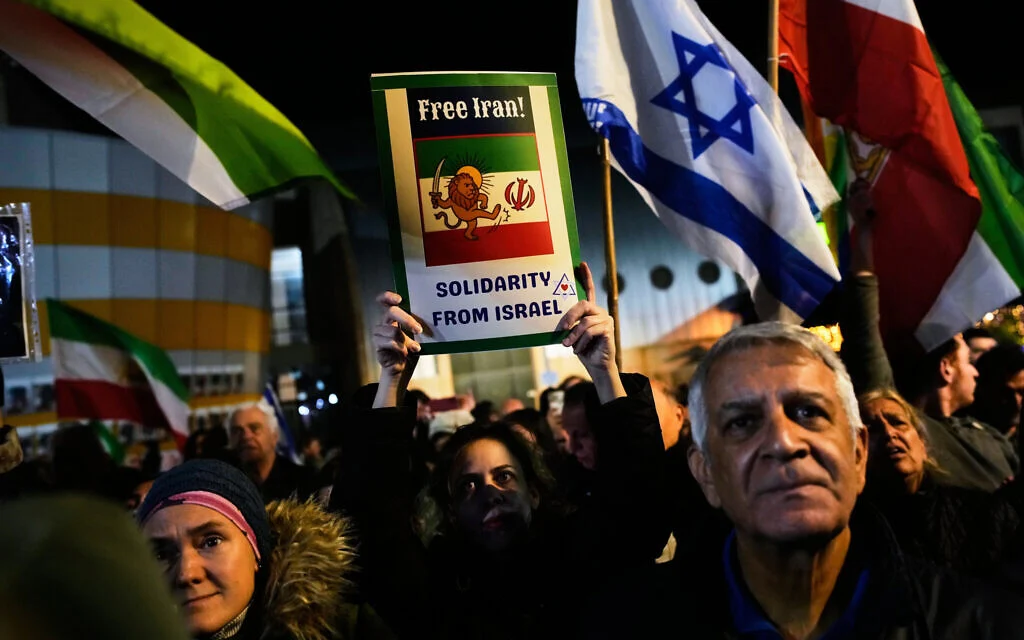
Demonstrators wave Israeli flags and pre-revolution Iran flags during a rally in support of Iran’s anti-government protests in Holon, January 14, 2026. (AP/Ohad Zwigenberg)
Still mourning the killing of his brother by government forces days earlier, a Tehran resident and fellow demonstrator painted a desperate and gruesome picture of conditions on the ground in Iran this week, with activists facing ongoing threats even as many still hope for foreign intervention, in a rare correspondence with Israeli media.
“The city smells of blood and death. Everyone carries grief in their hearts,” Ali, a pseudonym, told the Times of Israel on Monday.
Speaking as demonstrations appeared to have been halted by a brutal crackdown that saw thousands massacred by regime forces, Ali said protesters were hoping that both the United States and Israel would come to their aid by launching military action to assist in overthrowing the Islamic Republic.Promoted: Hadassah, Please GiveKeep
A Tehran native who works in the city, Ali provided a written account in Farsi on condition of anonymity, as communication with foreign media, especially Israeli, poses a security risk.
Get The Times of Israel’s Daily Editionby email and never miss our top storiesNewsletter email addressGet it
By signing up, you agree to the terms
The Times of Israel was able to reach Ali through Shervin Savadkoohi, an Iranian political exile and monarchist activist living in the United Kingdom, who has been working to get Iranians’ stories out amid regime efforts to quash accounts of what is happening inside the country.
While it was impossible to independently confirm his identity or accounts, Ali provided The Times of Israel with graphic images showing his deceased brother in a body bag and later being laid to rest, as well as hospital and police documents related to the incident.
Providing graphic photos of the incident, he recounted how, on January 9, he and his brothers were leading protesters when regime forces attacked the crowds: “My two brothers and I were on the front lines, leading others so people would stay motivated and not retreat. I, and one of my brothers, were hit by shotgun pellets, and my other brother was shot with live ammunition, later dying from severe bleeding.”
Advertisement
“He sacrificed his life for the homeland,” he said.
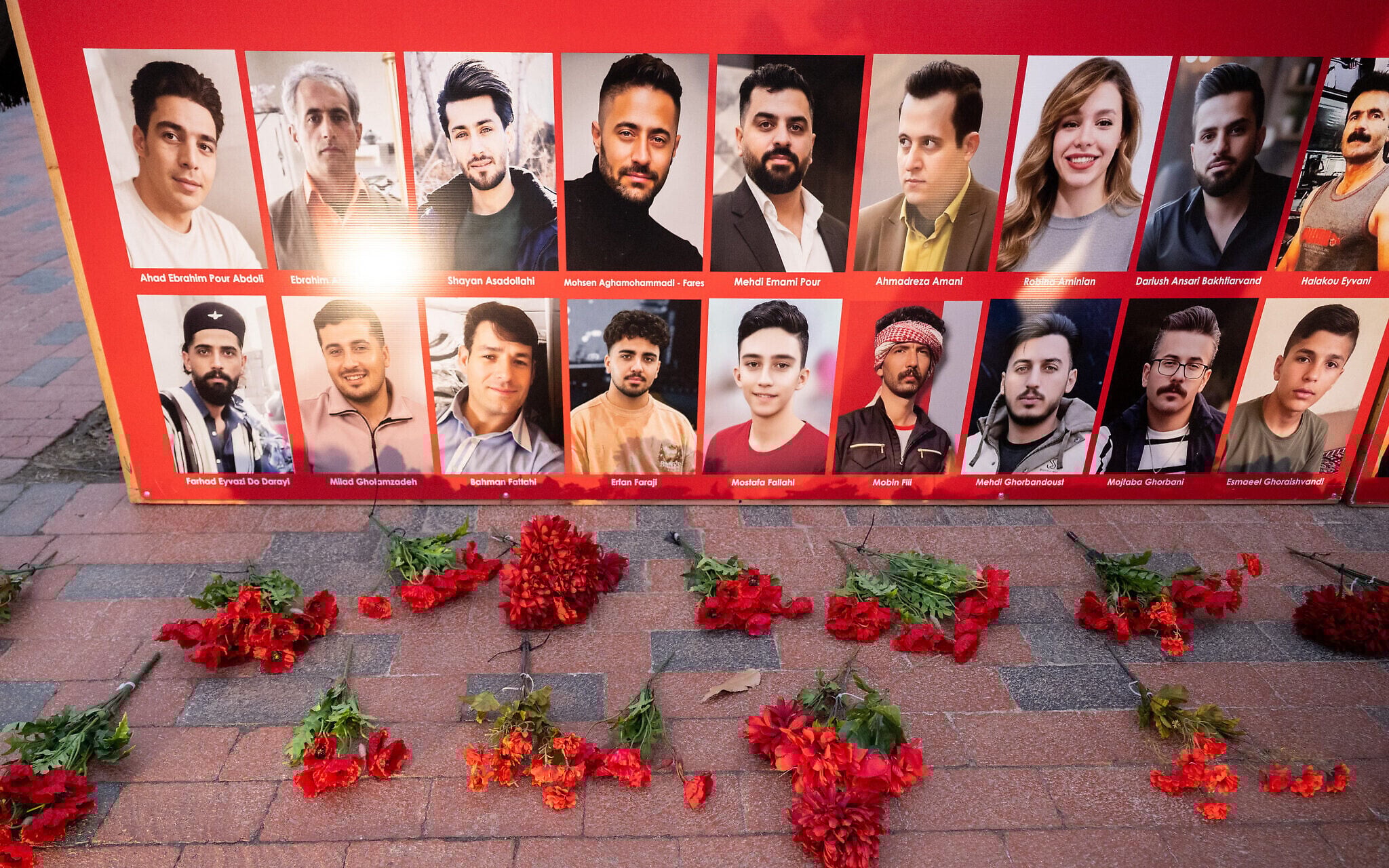
the recent protests in Iran, during a rally and vigil in their honor by Iranian Americans,
outside the White House in Washington, January 16, 2026.
The protests began in late December as merchants went on strike over the plummeting value of the rial, with the country’s economy struggling to weather heavy international sanctions and leaders seen as unresponsive to people’s needs.
Within days, the demonstrations had spread across the country, bringing tens of thousands to the streets, many of whom began calling for an end to the Islamist regime ruling the country since the 1979 revolution that deposed Shah Reza Pahlavi, whose son urged on the protests from abroad.
Ali said the regime’s move to shut down internet access had made it difficult for protesters to organize, but demonstrations continued to take place spontaneously, with “braver individuals” guiding the rest of the crowd.
“All communication channels were blocked on the [first] nights of the protests — we didn’t even have access to phone calls,” he recalled.
A long-time opponent of the Islamic Republic, Ali said he also took part in the 2009, 2017, 2019, and 2022 protests, but described the current unrest as “unprecedented.”
The regime’s response, which was largely shielded from international view by the internet shutdown, also seemed to be unprecedented, though reliable figures for the number of those injured, killed, or detained during the protests remain elusive.
Over the weekend, Iran’s supreme leader Ayatollah Ali Khamenei stated that the protests have left “several thousand” dead. A report put together by Iranian doctors and cited by the Sunday Times put the death toll in the suppressed demonstrations at about 16,500.
Ali said he believed that “around 30,000 people have been killed.”
Though the protests appeared to have suppressed by early last week, the crackdown appears to be continuing.
On Monday, Iran’s police chief issued an ultimatum to protesters who participated in the recent “riots,” demanding they hand themselves in within three days or face the full force of the law.
Iranian security officials have put the number of people arrested at around 3,000, while rights groups have given estimates as high as 20,000.
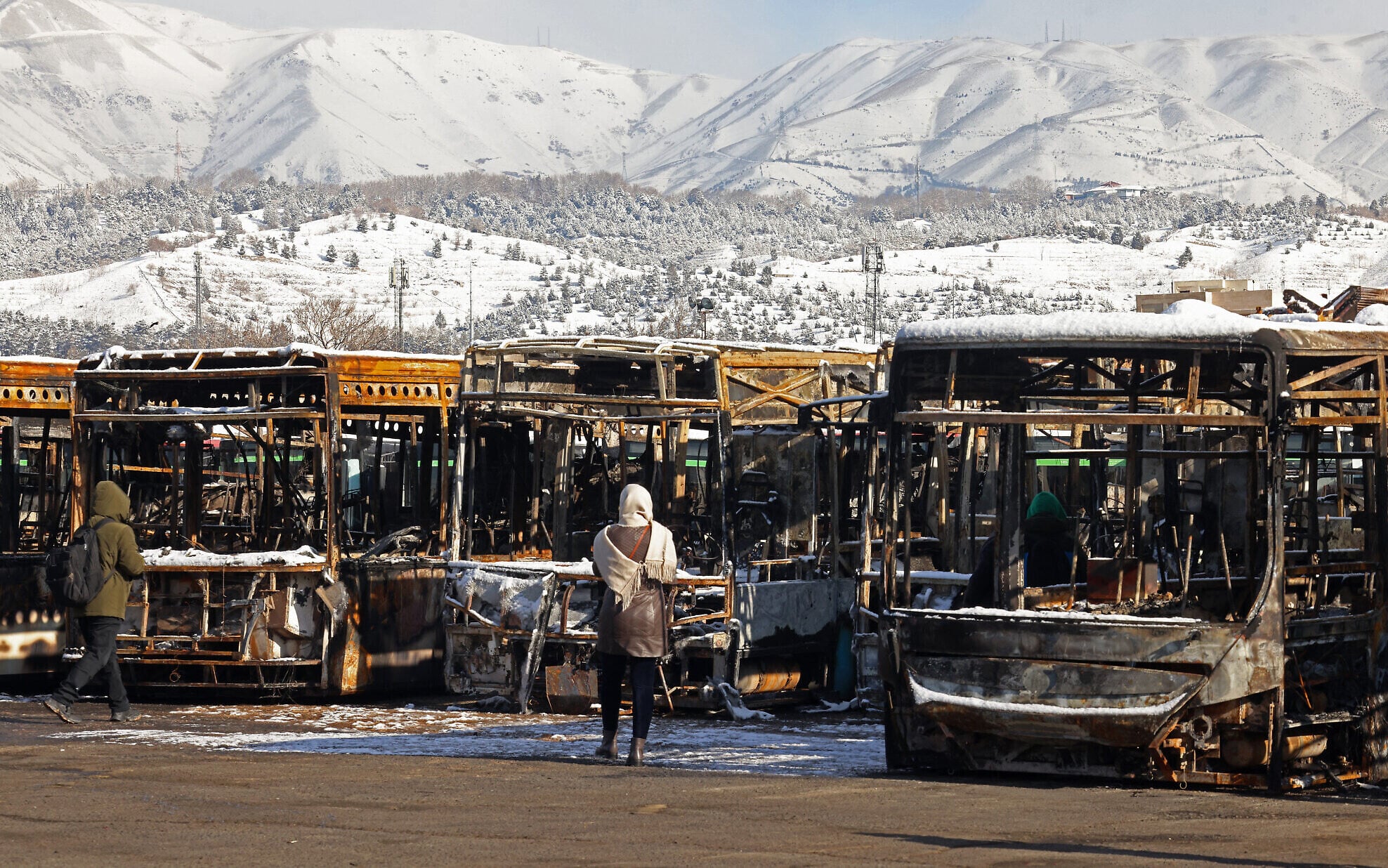
representatives walking past the parked buses that were burnt at a depot during
recent public protests, in Tehran, Iran, on January 21, 2026.
A Wednesday report cited Iranian doctors alleging that Iranian security forces were deliberately firing at protesters’ heads and eyes to cause them debilitating injuries, with over 400 eye wounds said to be documented at a Tehran hospital.
Asked if protesters believe the regime can fall even amid the crackdown, Ali said that the tens of thousands who have taken to the street would need outside help. “Everyone is waiting for a savior, because this regime will not fall even with a million-person uprising — it will only produce more victims.”
In light of this, “We view the United States and Israel as saviors,” he continued, saying that “A military strike targeting all leaders and all government centers” was their best hope at effecting regime change.
“Even the so-called ’12-day patriots’ are waiting for an attack,” he continued, seeming to refer to those who rallied around the flag during Israel’s June campaign against Iran’s nuclear and missile programs, which the US eventually joined.
The antigovernment protests have renewed calls inside and outside Iran for the return of the country’s exiled crown prince Reza Pahlavi, whose father was ousted from power in 1979, but gauging the extent of support is difficult. Ali threw his support behind him, saying, “Whether inside or outside the country, we must rely on a single option — only Pahlavi.”
Answering what he believes motivated the current protests, Ali listed numerous grievances, including “The lack of economic stability, freedom, gender equality, and the dictatorship ruling the country, and the inequality in welfare and comfort between [upper-class] families and us, ordinary people.”
Personally, he said he was driven to the street by “The economy and the poverty of my people; the uncertainty of my child’s future; water shortages; and revenge for the blood of our fellow citizens.”
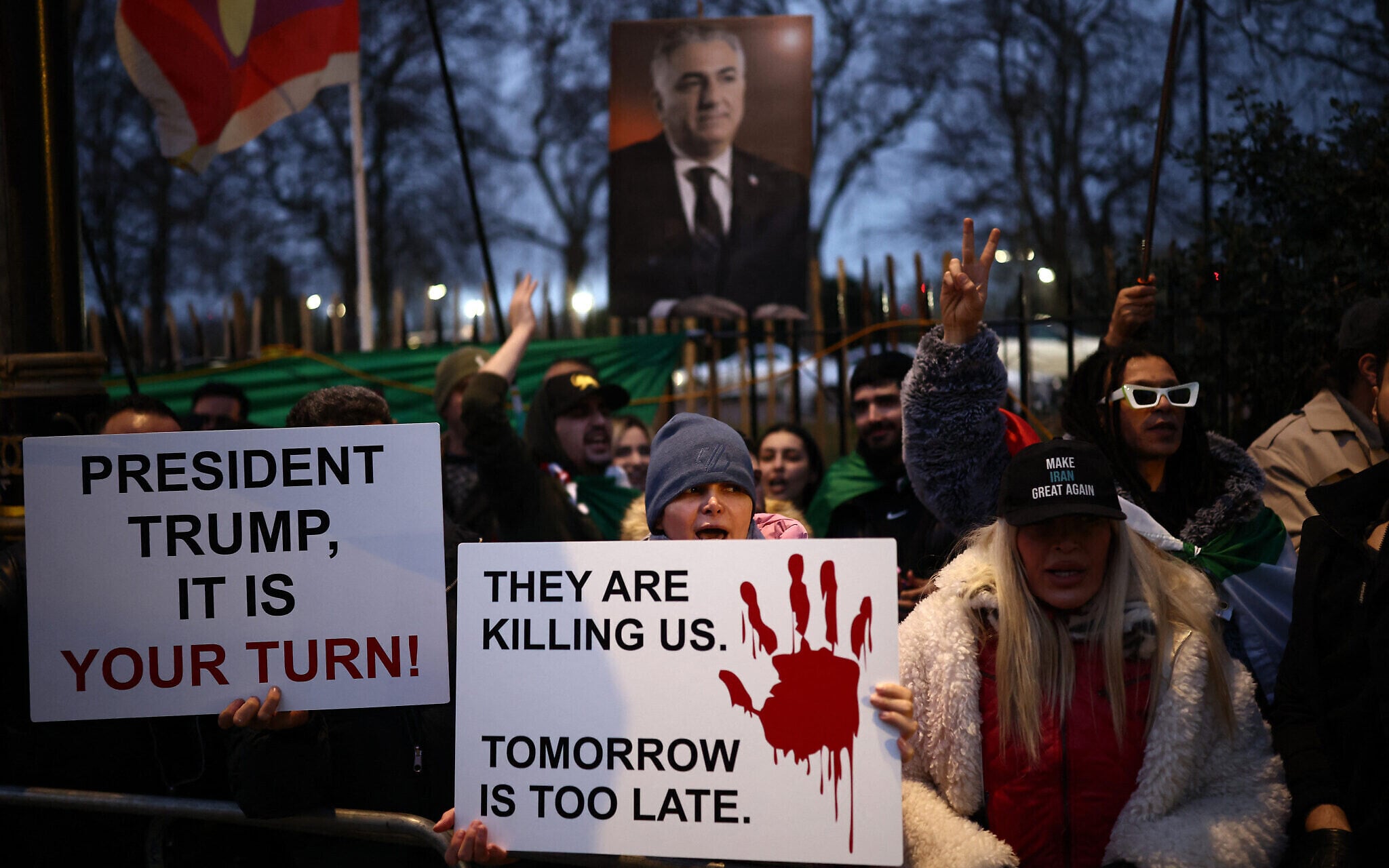
While contacting Iranians on the ground has been nearly impossible since the January 9 internet shutdown by the regime, reports indicate that Ali is not alone in hoping for foreign intervention. Those hopes have also been a focus of Iranian exiles and dissident groups who have protested outside Iranian embassies in solidarity with their former countrymen.
“The people of Iran would like to see a Venezuela-style operation, even if it seems like a strange demand for Iran,” one former protester who had left Iran in recent days was quoted as telling The Atlantic magazine.
Ahead of the regime’s blackout, one Iranian journalist showed greater skepticism about foreign assistance, telling the Atlantic Council think tank that while “There is zero possibility of reform within this regime…history also shows that the [United States], the UK, and Israel don’t prioritize the Iranian people either—only their own interests. This is what makes me afraid of what’s coming.”
Asked about support for Pahlavi, whose father had been backed by the US, she said, “he has some supporters because there is no strong domestic opposition, as those voices have been crushed domestically over the years. But I struggle to believe in someone backed by foreign powers, tied to a monarchy, and unable to form a coalition.”
Another Iranian told the think tank that people “believe anything after this regime will be better. We want a complete separation of religion and state. This deck of cards needs to be reshuffled.”
However, neither Washington nor Jerusalem, referred to by the regime as “Big Satan” and “Little Satan,” appears likely to intervene at this stage.
US President Donald Trump initially threatened to get involved to protect protesters, encouraging Iranians last week to continue taking to the streets, assuring them that “help is on its way.”
Media buzzed with reports that an American strike was imminent, but last week, Trump indicated that he had canceled any plans to attack after Iran’s ostensible decision to call off the planned execution of 800 protesters, even as reports put the number killed in the regime’s bloody crackdown in the thousands.
While Prime Minister Benjamin Netanyahu has called for the downfall of the regime and offered strength to the Iranian people, Israel has stopped short of issuing or even indicating any threat of attack.
Ali remains hopeful that the US and Iran will get involved, but others in Iran have expressed feeling betrayed by Trump after he backed away.
“Iranians feel that they were played, that [Trump] fooled them, deceived them,” a protester told Time Magazine this week.
Another went further, telling the magazine that “Trump is also responsible for the death” of thousands of protesters who were victims of the crackdown, because many of the protesters took to the streets when they saw his post that the US is locked and loaded.”
A resident of Tehran told The Guardian on Sunday that Iranians were expecting the regime to step up repressive actions against the protesters now that Trump was no longer focused on Iran.
“As soon as Trump’s attention moves elsewhere, the executions will start,” they said.
Another resident told the news outlet: “The protests have come to a pause, people are waiting to see what Trump will do.”
Ali said Iranians were more united behind resisting the regime than ever. He pointed to “unified leadership under Prince Reza Pahlavi,” claiming that “people are becoming united, regime supporters are growing tired of the government,” and “the so-called grey middle group is awakening.”
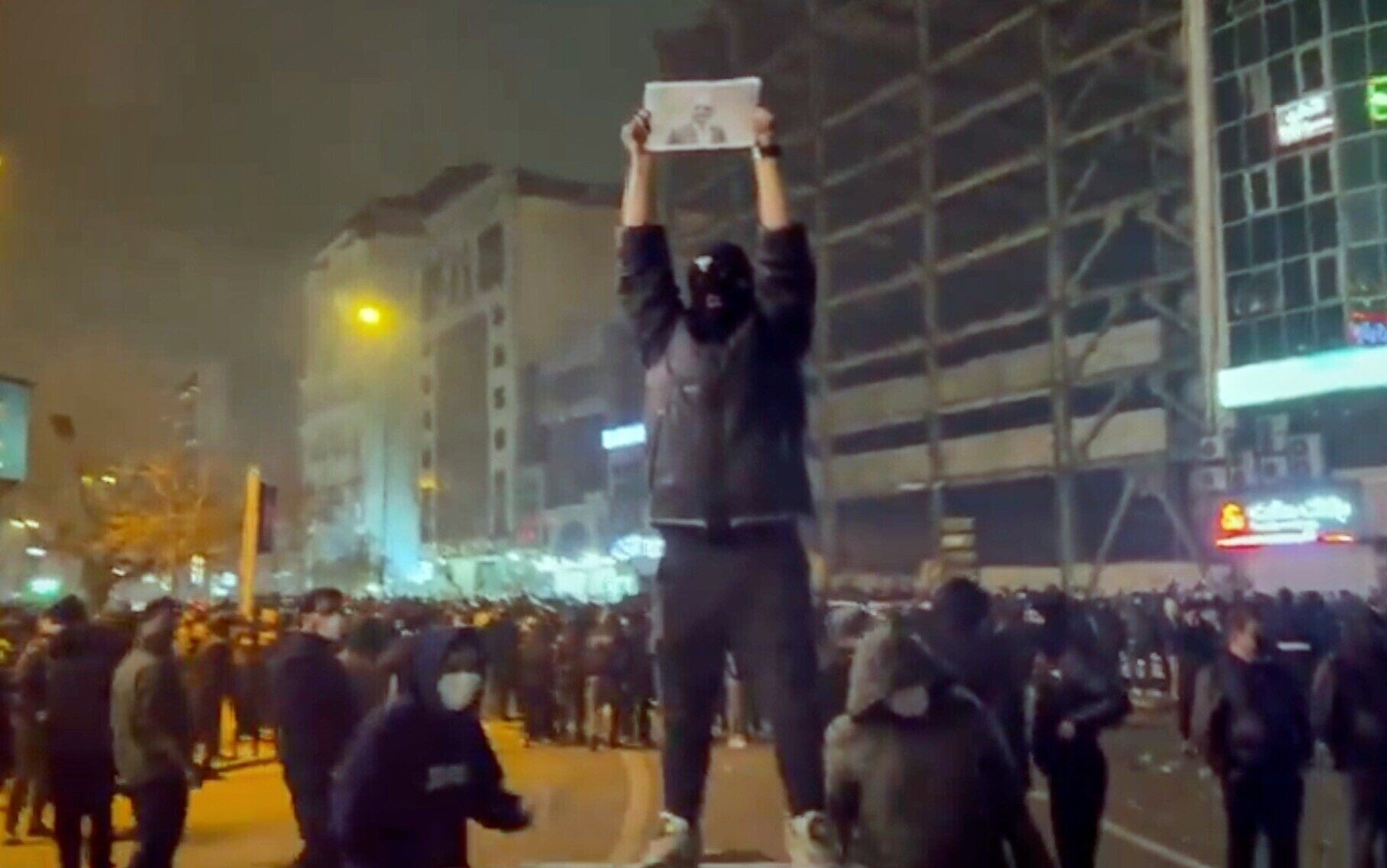
“Fear and anger coexist in everyone — fear that their loved ones may be killed,” he lamented.
Asked if he had any final message for those observing the unrest from abroad, he stated: “Tomorrow is too late for help — act now.”
BY: Nava Freiberg