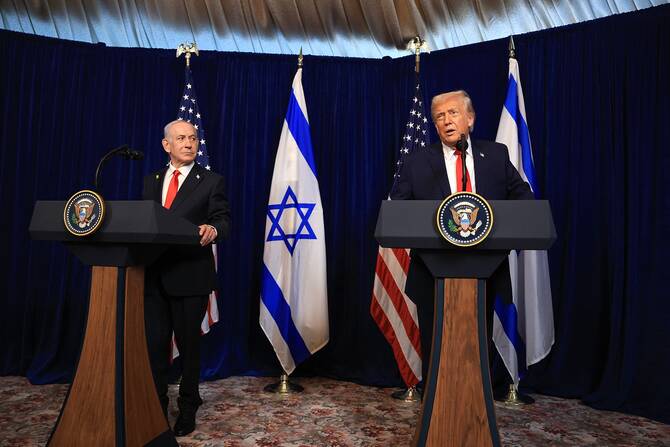
Critics from all sides will have much to say about this week’s unveiling by President Donald Trump of his much-touted “Board of Peace,” of which he is chairman. The board is an international transitional body that will provide oversight and supervision for Gaza’s governance under Trump’s peace plan, which was signed and adopted late last year and has created a fragile ceasefire between Hamas and Israel.
Trump’s White House also showcased several related bodies, including the Executive Board, a National Committee for the Administration of Gaza and the head of the International Stabilization Force. Seasoned diplomat Nickolay Mladenov has been appointed high representative for Gaza, serving as the on-the-ground link between the Board of Peace and the National Committee for the Administration of Gaza.
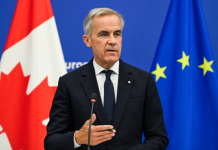
The Board of Peace is expected to include approximately 10 leaders from Arab and Western countries. Tony Blair, Canada’s Mark Carney and US Secretary of State Marco Rubio are among the members, with invitations also extended to the leaders of Jordan, Egypt, Turkiye, Argentina and others.
The charter of the Board of Peace establishes a US-led, invitation-only intergovernmental body with a wide peace-building mandate, very strong powers for its chairman and membership and voting rules that heavily privilege states able to pay or contribute at scale.
Resolving the Gaza crisis is only one of its responsibilities. Critics believe Trump aims to eclipse the UN and its Security Council in conflict resolution. Although the UNSC gave Trump’s board a mandate linked to Gaza, the charter itself does not mention Gaza and instead frames a broad global outreach.
The board’s charter establishes a US-led, invitation-only intergovernmental body with a wide peace-building mandate
Osama Al-Sharif
But while those invited to the top board have yet to decide whether to join, it is the membership of the National Committee for the Administration of Gaza — the interim government of Gaza composed of Palestinian technocrats — that has rattled Israeli Prime Minister Benjamin Netanyahu. He claimed he was not consulted on the list of Palestinian members, a claim rejected by US officials.
In reality, Netanyahu was taken aback by the White House’s invitation of Turkish President Recep Tayyip Erdogan to the main board, along with the naming of a Qatari diplomat and Turkish Foreign Minister Hakan Fidan to the Executive Board. Netanyahu accuses both Turkiye and Qatar of supporting Hamas. Other executive members include Trump’s special envoy Steve Witkoff, his son-in-law Jared Kushner, World Bank President Ajay Banga and business leaders.
The National Committee for the Administration of Gaza, the third tier in the Board of Peace’s governance structure for the Strip, will be tasked with handling day-to-day operations. It comprises 15 Palestinian technocrats led by Dr. Ali Shaath, a former undersecretary in the Palestinian Authority. Mladenov, as high representative, will liaise between the Gaza body and the Executive Board. The committee convened in Cairo this week and announced it was ready to assume its responsibilities and oversee specific sectors, including the economy, health and security.
US Maj. Gen. Jasper Jeffers has been appointed commander of the International Stabilization Force, meaning he will lead security operations, support comprehensive demilitarization and enable the safe delivery of humanitarian aid into Gaza. However, there is not yet an official list of countries that have committed to sending troops under the International Stabilization Force banner.
With this week’s announcements, the Gaza peace plan enters its second phase, under which Hamas is due to begin to disarm and Israel to make further withdrawals from the enclave. Tel Aviv will no longer be involved in logistical operations such as aid delivery and will be required to observe the ceasefire.
Trump’s intricate structure for Gaza and his personal involvement in executing his plan mean he is now the main stakeholder. It will be nearly impossible for Netanyahu to veto the composition of the Board of Peace, the Executive Board or the transitional Palestinian government.
And yet Netanyahu has tried to delay entering phase two of the plan, claiming that Hamas must disarm first and insisting that the Palestinian group hand over the body of the last Israeli captive. Witkoff has brushed aside these claims, saying there is no reason not to move to the second phase.
Netanyahu was taken aback by the White House’s invitation of Turkish President Erdogan to the main board
Osama Al-Sharif
But what Netanyahu has come to realize is that Trump has effectively stripped him of any cards he once held relating to Gaza. The future of Gazans is no longer in the hands of Netanyahu and his extremist government. Also, forced displacement and permanent occupation of Gaza are no longer on the table.
But all this does not mean we know how things will turn out for the people of Gaza. Forcing Israel to open the crossing points and allow the delivery of much-needed aid will be the board’s first faceoff with Netanyahu. But the most important test will be forcing Israel to start its withdrawal from Gaza — it currently controls more than 50 percent of the enclave.
The downside to all this is that Trump has given his Board of Peace a universal mandate that extends beyond Gaza. Leaders who were invited will have to carefully consider whether to get involved in Trump’s grand scheme to sidestep the UN and the international bodies that underpin the current world order.
But if Trump wants to give his new board solid credibility, he will want his Gaza plan to succeed. That means ending the humanitarian crisis there and pushing back the Israelis. It also means giving the Palestinians the chance to run their own affairs while providing them with the means to rebuild Gaza and restore a sense of normality.
The fact that several Arab and Muslim countries are represented on the board and its bodies should provide some assurances of a fair approach to the plight of Gazans. But it is also important to ask about the endgame concerning Gaza, the West Bank and East Jerusalem. One should be wary of the fact that, while all eyes are focused on Gaza, Israel is accelerating its confiscation of West Bank territory for illegal settlements and imposing collective punishment on millions of Palestinians there.
The endgame should be to give the Palestinians the right to self-determination, end the occupation and establish a Palestinian state.
BY: Osama Al-Sharif is a journalist and political commentator based in Amman.
Disclaimer: Views expressed by writers in this section are their own and do not necessarily reflect The Times Union‘ point of view