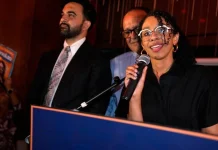
- New York mayor is quick to call out discrimination against Jews, but only when Israel is not involved, exemplifying a dilemma that US Jews face in politics, courts and education
NEW YORK — After an arsonist torched a synagogue in Mississippi over the weekend, New York City Mayor Zohran Mamdani was quick to call out the incident as antisemitic.
Mamdani also condemned recent incidents of graffiti in New York — a swastika on a Jewish school and “fuck Jews” scrawled on a sidewalk — as antisemitism.
And after a high-level appointee was found to have peddled an antisemitic trope about “money hungry Jews” in an old social media post, Mamdani immediately accepted her resignation and said he would not have hired her had he known about the comment.
When Israel and anti-Zionism are in the mix, though, Mamdani is less forthcoming.
Following a pro-Hamas protest at a synagogue last week, Mamdani said that “chants in support of a terrorist organization have no place in our city,” but did not mention antisemitism, even as his leftist allies did, like US Representative Alexandria Ocasio-Cortez, who called the demonstration “disgusting and antisemitic.” Mamdani was also criticized for his slow response to the protest.
Mamdani’s comments on a similar protest outside a Manhattan synagogue in November sparked a firestorm of criticism when he spoke out against both the protesters, and the synagogue, which he said had violated international law due to an event’s connection to West Bank settlements.
And after the Anti-Defamation League found that some of his appointees had made anti-Zionist statements, including that “Zionism is racism,” calling Zionism a “genocidal ideology,” and stating that Zionists are worse than Nazis, Mamdani defended the rhetoric.
“We must distinguish between antisemitism and criticism of the Israeli government,” he said.
Mamdani’s differing responses to the incidents, and his unwillingness to connect anti-Zionism with discrimination, exemplify the fault line between anti-Zionism and antisemitism that has implications for American Jews in fields ranging from the legal system to education and New York City politics.
Zionism is understood in the Jewish community as the support for Jewish self-determination in at least part of the Holy Land, where Jews originated and have lived, in varying numbers, for thousands of years. The term does not require support for the Israeli government or rule out a Palestinian state. The vast majority of Jews believe in Zionism, even though the term has become a derogatory slur on much of the American left and parts of the right.
While antisemitism is understood as discrimination against Jews, anti-Zionism is often treated as political, and not a prejudice, even if many Jews experience anti-Zionist rhetoric and activities as discrimination.
Religious beliefs and ethnic identities are protected under civil rights law, while political views are not.
Anti-Zionism can theoretically be separated from antisemitism, and anti-Zionists argue their position is political, not a hatred of Jews or Judaism. Mamdani has endorsed this view, telling a crowd in 2021, “Anti-Zionism is not antisemitism, and in the anti-Zionist movement that I believe in and belong to, there is no room for antisemitism.”
In practice, though, anti-Zionism often veers into or contributes to discrimination against Jews. Societies that have embraced anti-Zionism, such as Iran and the Soviet Union, have become largely inhospitable to communal Jewish life. The killers who allegedly murdered Jews in Washington, DC, and Australia last year said they were targeting “Zionists,” not Jews.
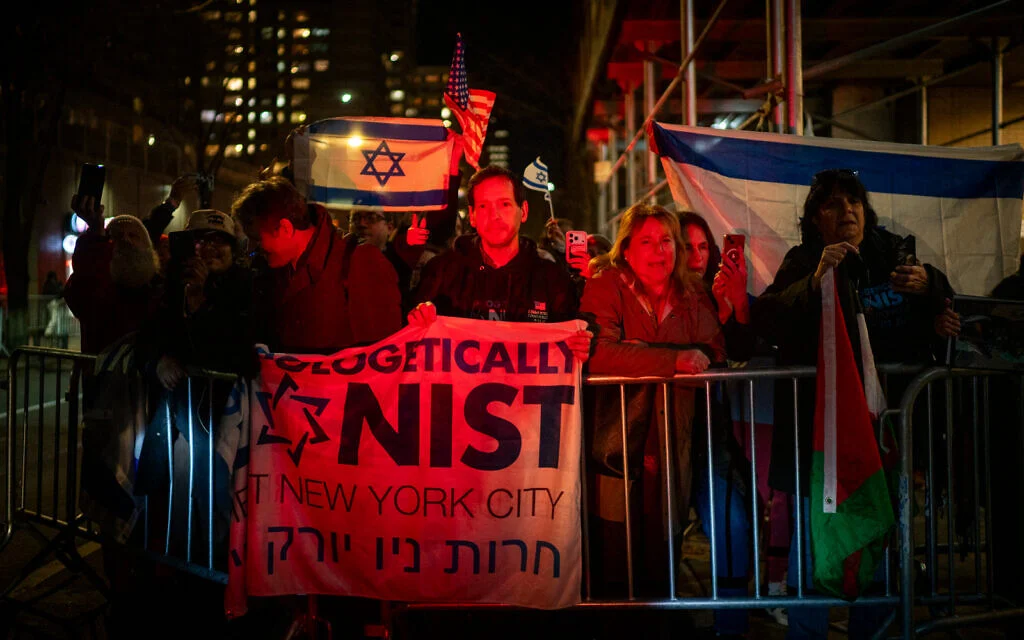
That dynamic has played out at the recent synagogue protests in New York. At both demonstrations, the activists said they were targeting events linked to West Bank settlements, but the protesters repeatedly engaged in outright discrimination, calling Jewish passersby rapists, pedophiles, “Epstein pieces of shit,” and chanting for Hamas, a group dedicated to the genocide of Jews.
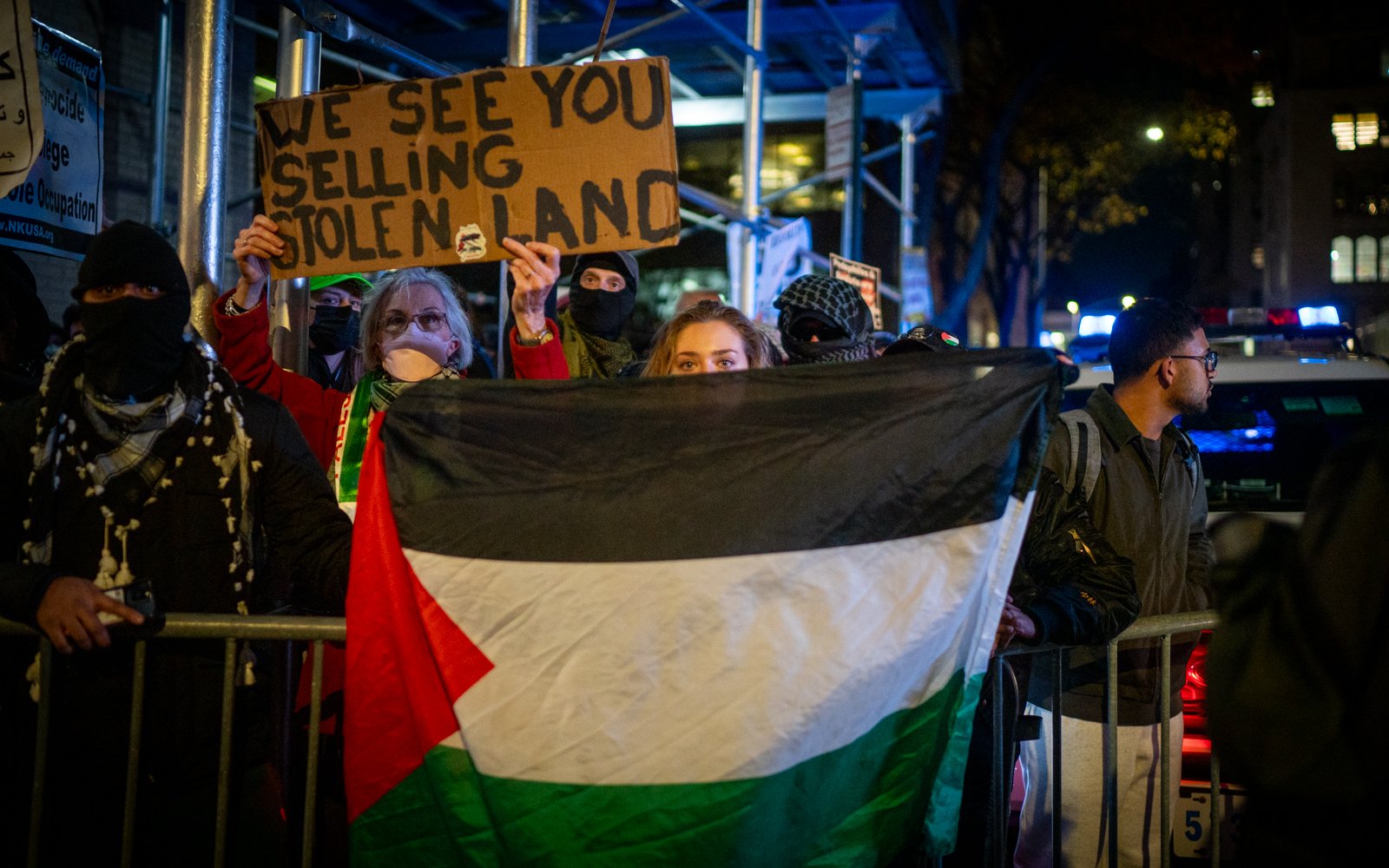
The protest last week took place in a quiet residential neighborhood, forcing Jewish families to listen to chants of “We don’t want no Zionists here,” a rejection of their presence in their homes, late into the night.
Saying that Zionists are “worse than Nazis,” as Mamdani’s appointee did, is discriminatory toward most Jews and damaging to the Jewish community, not a political argument or criticism of the Netanyahu government.
Jewish leaders have singled out Mamdani’s anti-Zionism as an issue, along with his refusal to recognize Israel’s right to exist as a Jewish state.
There aren’t any easy answers to the anti-Zionism/antisemitism fault line for the Jewish community, a dilemma that has come to the fore since the October 2023 Hamas invasion of Israel, and with Mamdani’s ascendance in New York City, home to the largest Jewish Diaspora community. The Jewish community is still grappling with how to handle anti-Zionism and when it is discriminatory, and how Jews and non-Jews respond and understand the issue has real-world implications.
In the courts, Jewish legal advocates have argued that Zionism is integral to Judaism in cases related to alleged discrimination on campuses and in the workplace, a strategy that has met with varying success.
A growing movement is pushing the Jewish community to confront anti-Zionism head-on as its own hate movement. The activists argue that anti-Zionism is the third, largely unrecognized incarnation of anti-Jewish discrimination, following anti-Judaism, targeting the Jewish religion, and antisemitism targeting Jews as a race. The framework explains Mamdani’s willingness to condemn “classic” antisemitism, such as swastikas, but reluctance to link anti-Zionism with discrimination. Other Jewish leaders have said a shift in paradigm will only make things confusing.
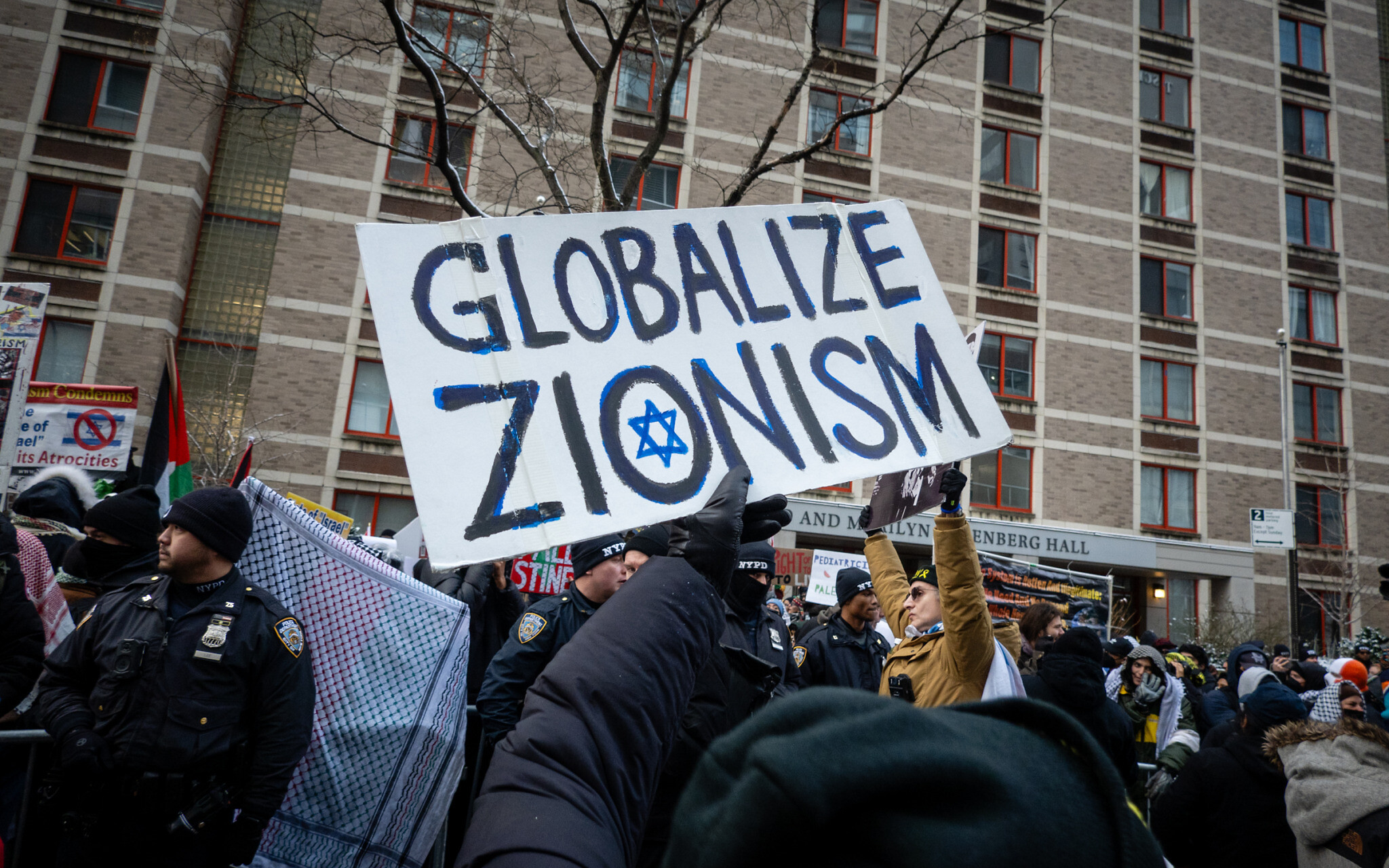
New York City, January 6, 2025.
The schism could have political implications under the Mamdani administration. On his first day in office, Mamdani revoked the International Holocaust Remembrance Alliance (IHRA) definition of antisemitism as a framework for city government. The definition does not mention Zionism, but states that denying Jews the right to self-determination is antisemitic. Mamdani has not yet said which definition of antisemitism his administration will use.The city government’s handling of anti-Zionism could have an impact on the ground, for example, if public school teachers are allowed to teach anti-Zionist material, as some educators are pushing for, or whether Israel-related attacks on Jews are considered hate crimes, resulting in a stiffer penalty and greater deterrence.
Antisemites are aware of the legal distinctions. In 2023, authorities in New York City who were investigating a series of attacks on Jews reported that, while plotting the assaults, the perpetrators told each other in a group chat, “Remember, don’t chant out Jews, it’s the Zionists.” The attackers argued the assault was political, but their antisemitism was betrayed by the chat, with a prosecutor saying, “The veil of ‘anti-Zionism’ is pathetically thin in this case.”
In one of the assaults, the assailants chased down and beat a Jewish man at an anti-Israel protest, stripping his Israeli flag and burning it at the head of the protest. The demonstration was led by Within Our Lifetime, a group that is now linked to City Hall through Mamdani’s chief counsel, Ramzi Kassem.
Jews are targeted in hate crimes more than all other groups combined in New York City, a problem Mamdani has acknowledged and repeatedly pledged to oppose.
The protest last week in Queens was the first significant anti-Israel demonstration since Mamdani took office and was seen as a test for the new mayor. The police were at the scene in force and kept the protesters apart from neighborhood residents and away from the synagogue entrance, in contrast to the November demonstration in Manhattan, where the activists gathered right next to the synagogue’s door. While some Jewish New Yorkers were dissatisfied with Mamdani’s statement, the NYPD’s handling of the protest should provide some reassurance.
How his administration defines and understands antisemitism going forward, though, remains to be seen.
BY: Luke Tress