For some time, debate in the UK over immigration has been increasingly reduced to accusations. Too often, those who raise concerns about immigration levels or integration are dismissed as “racist” or “fascist,” as though questioning government policy was a moral failing.
While racism undoubtedly exists in this debate and beyond — and should be challenged wherever it appears — the casual use of such labels risks shutting down legitimate discussion rather than improving it.
The UK is a liberal democracy built on diversity. People are free to hold and express conflicting views without fear of retribution — you can criticize the country’s leaders, and most Britons do.
There is a history of media content, fact and fiction, that mocks, questions and criticizes the people who run the country and even the royal family — it is what Britishness is about. Freedom of expression and the rule of law are among the values most British people hold dear and they have underpinned centuries of social change and growing inclusivity.
The UK remains a country shaped by immigration and most people largely seem to accept and welcome that. But it is also clear that immigration has become an important trigger for a general anxiety over the future of British society.
The casual use of derogatory labels risks shutting down legitimate discussion rather than improving it
Peter Harrison
Many believe that newcomers should be expected to respect British laws and values, learn the language and have some understanding of the culture they are joining. These views are not inherently racist — indeed, some might argue they are not far removed from the “you play by my rules as long as you live under my roof” philosophy of parents with unruly children.
Nonetheless, those who ask these questions are increasingly treated as such. And that is where the bonds of British society can start to unravel.
When concerns are dismissed rather than addressed, people draw the conclusion that they are not being listened to.
This tension is not new. Research conducted in 2017-18 by Leeds Beckett University found that many young people believed multiculturalism in the UK and Europe had stalled following the 9/11 attacks. Indeed, many Muslims said at the time that they felt under threat from angry Britons wanting revenge — this is a fear that has replayed itself after numerous other incidents.
And the decades of conflict that followed 9/11 altered public attitudes, increasing skepticism toward unfamiliar cultures and religions.
Whether people agree with these views or not, they do form part of the social reality in which politics now operates.
But there are many pieces of misinformation that should be corrected: local British councils are not adopting Shariah law and no British towns have been told they cannot celebrate Christmas.
Brexit is often cited as evidence of a turn toward intolerance. The argument for Brexit did cite immigration as one of the apparent problems that needed to be tackled. Others have argued it reflected a wider sense of disconnection — a belief that national identity, community cohesion and democratic accountability were being eroded without public consent.
Outlining this solely as an outpouring of racism overlooks the complexity of the vote and risks repeating the same mistake.
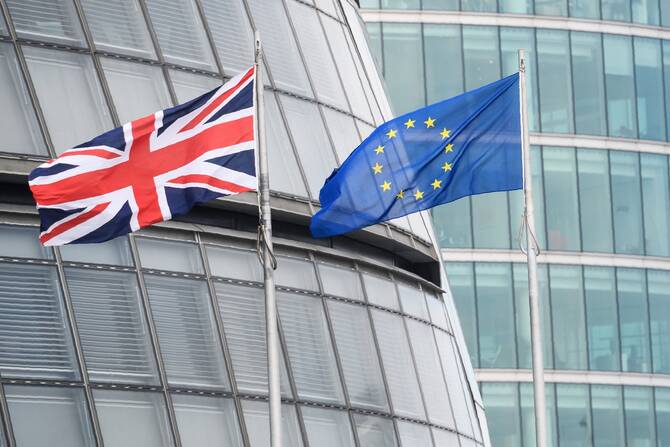
Traditional British and English symbols have become part of this confusion. The Union Flag and St. George’s Cross are viewed by some as expressions of patriotism and by others as signals of exclusion. The two flags are unique in that they have been associated through the years with extreme right-wing groups and football thugs — a gradual move that left many others hesitant to be associated with them.
When concerns are dismissed rather than addressed, people draw the conclusion that they are not being listened to
Peter Harrison
The former leader of the Labour Party, Neil Kinnock, once argued that progressives should not surrender national symbols to extremists but reclaim them as expressions of shared civic identity. That argument remains relevant today, as both flags have been hoisted up lampposts and flagpoles across England, some say as a celebration of their nation, while others claim the motive is more sinister, marking territory and letting it be known — “this is England.”
When people who feel unsettled by cultural change are told their concerns are illegitimate or morally suspect, they do not disappear. They separate themselves from the mainstream, often gravitating toward parties or movements that promise to take them seriously.
History has shown us that populist politics thrives not only on grievance, but on the perception that mainstream institutions no longer listen. But likening Britain’s disenfranchised with the Nazis at the Nuremberg rallies of the 1930s is likely to turn a large amount of people away from your views, rather than attract them.
None of the concerns raised today about British culture being under threat require people to indulge in prejudice or excuse genuinely racist rhetoric.
Boundaries matter. But so does a willingness to distinguish between hostility and unease, between hatred and uncertainty. A politics that relies on ridicule and dismissal is unlikely to persuade anyone and may instead deepen the divisions it claims to oppose.
If the UK is serious about defending its values, then inclusivity must mean more than tolerance for differences. It must also include patience, civility and a readiness to engage with uncomfortable questions.
Few wars have ended without some level of conversation and compromise. Listening is not surrender, but refusing to do so may carry consequences far more damaging than engaging in debate and discussion.
BY: Peter Harrison is a senior editor at Arab News in the Dubai office. He has covered the Middle East for more than 15 years.
Disclaimer: Views expressed by writers in this section are their own and do not necessarily reflect The Times Union‘ point of view