The 2026 global election landscape will be dominated by the US midterms, which could reconfigure Donald Trump’s remaining presidency. However, beyond that major ballot in November, a series of key polls across the world will also help reshape international relations and the economic outlook.
Little wonder that markets are already looking ahead to these eye-catching events.
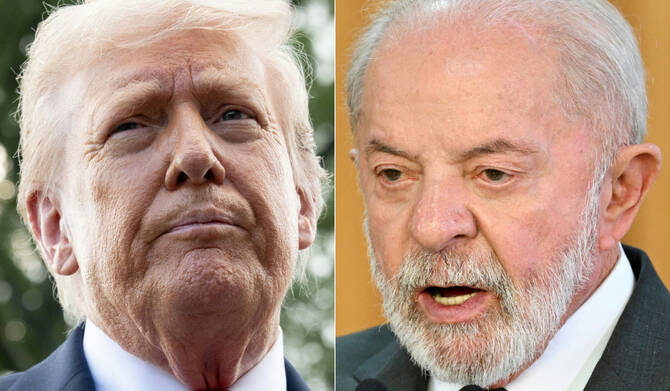
Across the next 12 months, these ballots will be held across time zones and geographies. This includes Bangladesh in February, Hungary in April, Colombia in May, Ethiopia in June, Russia in September, plus Brazil in October. One of the key questions will be whether several longstanding incumbents, including Brazil’s President Luiz Inacio Lula da Silva and Israeli Prime Minister Benjamin Netanyahu, can win new mandates.
Lula, now 80, is seeking a fourth term. It has been widely tipped that Tarcisio de Freitas, the conservative Sao Paulo governor, will challenge him. However, this has been made more uncertain by former populist leader Jair Bolsonaro, sometimes called the “Trump of the tropics,” who recently endorsed one of his sons, Flavio Bolsonaro, potentially fragmenting the political right against Lula. After this news, Brazilian markets fell significantly, with stocks having their worst day since 2021.
Another ballot that much of the world will be watching closely is in Israel, where Netanyahu, the nation’s longest-serving prime minister, will attempt to defy political gravity again with a further election win. The ballot must come no later than October, but is widely expected to be called sooner.
Netanyahu has experienced a tumultuous past few years in power, particularly since the October 2023 Hamas terror attacks, which followed the worst intelligence failure in the country for decades. Since then, the Israeli leader has launched a series of offensives, including in Gaza, which have rallied domestic support despite the resulting international controversy.
The outcome of many of these ballots remains unclear.
Andrew Hammond
While few would bet against Netanyahu winning again, several opposition leaders are in talks to establish a united front against him. The result could be another nailbiter with not only significant domestic implications for Israel, but also even bigger foreign policy consequences at a time when the wider region is unstable.
In Asia, perhaps the most pivotal election will be in Bangladesh, expected in February. This will be the first ballot since the removal from power of former Prime Minister Sheikh Hasina and her Awami League in 2024, replaced since then by an interim administration.
The primary opposition group during the Hasina prime ministership was the Bangladesh Nationalist Party. However, while it was the early favorite to win, some polls indicate that the once-banned Islamic party, Bangladesh Jamaat-e-Islami, may be closing in.
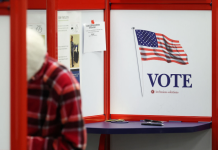
Yet, the election with the biggest consequences globally may be the US midterm ballot. This will likely be a referendum on Trump’s second presidency since January 2025.
In the past 15 midterm elections, the party of the incumbent president has won seats in the House of Representatives only two times. The average loss during this same period has been 24 seats, a timely reminder the current Republican seven-seat margin in the house is at risk. If Democrats retake the house and/or the Senate, the likely outcome will be political gridlock in domestic policy during the final two full years that Trump is constitutionally permitted in the White House in 2027 and 2028.
If this electoral gridlock does occur, it may well result in Trump — like several other reelected presidents of recent decades — increasingly turning to foreign policy. Presidents have more latitude to act independently of Congress in international affairs, and the legacy they are generally keen to build usually includes key overseas achievements.
For instance, Richard Nixon, a president sometimes cited by Trump as a role model, scored a string of international successes, including his landmark meeting with Chairman Mao Zedong in China, and his signing two agreements with Moscow to limit nuclear weapons. More recently, George W. Bush sought to spread his self-proclaimed freedom presidential agenda after the 2001 terrorist attacks in New York City and Washington, not least with the toppling of the regimes of Saddam Hussein in Iraq and the Taliban in Afghanistan.
This scenario of Trump doubling down on foreign policy would be especially likely if he sees significant potential foreign policy opportunities on the horizon, beyond Venezuela. This might even include having a new attempt at engaging North Korean leader Kim Jong Un, as he did between 2017 and 2021. The goal now, as then, would be to try to deescalate tensions in the world’s last Cold War-era frontier through the prize of verifiable and comprehensive Korean denuclearization.
Amid the uncertainty that 2026 brings, the outcome of many of these high-profile ballots remains unclear. However, whatever their eventual result, what is certain is that they will shape not only domestic politics but also the wider global landscape into the 2030s.
BY: Andrew Hammond is an associate at LSE IDEAS at the London School of Economics.
Disclaimer: Views expressed by writers in this section are their own and do not necessarily reflect The Times Union‘ point of view