- The spectacular fall of the Venezuelan dictator fits into a series of hard blows dealt to the so-called “axis of resistance,” self-proclaimed by authoritarian regimes that justify internal repression by a narrative of liberation and struggle on the international scene.
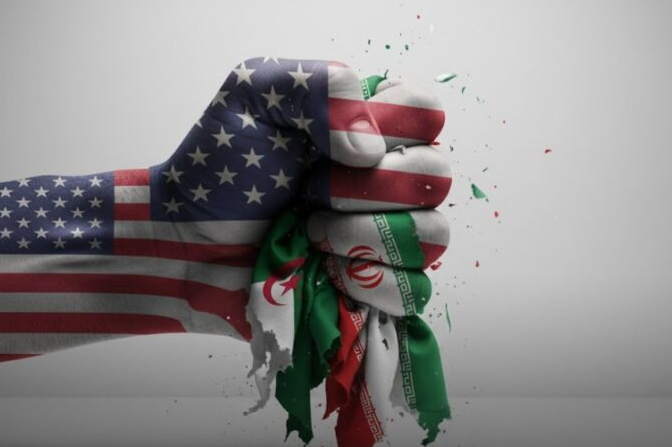
The capture of Nicolás Maduro by American forces constitutes a major shock for countries claiming to be “anti-imperialist” such as Algeria and Iran, as well as for their weakened proxy, Hezbollah in Lebanon. This spectacular fall of the Venezuelan dictator fits into a series of hard blows dealt to the so-called “axis of resistance,” self-proclaimed by authoritarian regimes that justify internal repression by a narrative of liberation and struggle on the international scene.
The informal Algiers–Tehran–Hezbollah–peripheral allies axis is today unraveling at a dizzying speed. The axis appears heterogeneous, but it remains ideologically coherent. It is above all a community of narratives, converging into a bloc which, for years, has continued to recycle anti-Western and anti-liberal rhetoric, claiming an authoritarian sovereigntism and practicing destabilizing regional interventionism. This logic is at work through Iran’s action in Iraq, in Syria, in Yemen and in Lebanon, as well as Algeria’s in the Sahara, in the Sahel and in Libya.
The roles within this axis complement and reinforce each other. Iran constitutes its ideological and logistical center, ensuring doctrinal coherence and strategic coordination. Hezbollah is its armed arm, responsible for regional military and security projection. Algeria provides diplomatic, narrative and logistical support, notably for the benefit of the Polisario separatists. Maduro, finally, played the role of extra-regional relay, offering this axis a projection toward Latin America.
On the ground, this convergence translates concretely: Iranian militiamen contributed to the repression of Venezuelan opponents; Hezbollah participated in the training of the Polisario — an organization now in the sights of the American Congress as a terrorist entity; and the Maduro regime offered ideological and narrative support to Algerian-Iranian positions in Latin American forums.
The whole forms a circle of authoritarian solidarity, united by a shared anti-Americanism — more discreet in Algiers, but assumed, frontal and violent in Iran, Hezbollah and Chavismo. The fall of Assad, the butcher of Syria, had resounding reverberations in Tehran, in Algiers and among the Polisario separatists. It strikes one of the pillars of this “front of refusal,” of this heterogeneous axis where Arab nationalism, Persian Shiite messianism, ideological Third-Worldism and state terrorism, as well as that of its proxies, mix.
Syria, since Hafez al-Assad, had long been presented as a symbol of “resistance” to the Western order. It nonetheless embodied an authoritarian regime, comparable to that of the generals in Algeria or the mullahs in Iran. In other words, this refusal of the West was never accompanied by a model of governance more democratic, more just or truly popular.
With the departure of Bashar al-Assad, the entire edifice patiently built by Tehran and its networks — Shiite, Alawite and even instrumentalized Sunnis— begins to crack and collapse. Algeria felt this particularly strongly, especially as Algerian soldiers and Polisario elements remain detained in Syria — tangible proof of an opaque ideological and security alliance with Iran, far removed from any claim of “neutrality.”
The second shock was the decimation by Israel of Hezbollah’s network. Beyond the erosion of its logistical and human capacities, Israel decapitated it, depriving it both of its political leaders and its operational chiefs. The time when Hezbollah paralyzed the Lebanese political scene, constituted an almost impunity-free threat for northern Israel and served as Iranian gendarme in Syria is forever tarnished Iran suffered this affront violently, but Algeria and the Polisario also lost, with the weakening of Hezbollah, a seasoned ally in guerrilla maneuvers and operational nuisance. Iranian presence and influence in Lebanon and Syria — especially since the arrival of Charaa in power — are now a thing of the past. And in the wake of this, it is Algiers (weakened on the Maghreb, Sahelian and European scenes) which suffers as much, if not more.
With the fall of Nicolás Maduro, it is the end of a peripheral but strategic ally, deeply anchored in Bolivarian culture and the anti-American romanticism of a certain Latin American left. Maduro breathed a pseudo anti-imperialist breath into an Algerian revolution that ended by devouring its own children, as well as into an Iranian revolution transformed into a nightmare for the Iranian people. He was also one of the last political supporters of a Polisario in agony, which may soon be designated a terrorist organization by the US Congress.The disappearance of Maduro marks the end of the illusion of a “global strategic depth” for this heterogeneous axis. We are witnessing the progressive collapse of the myth of impunity of allied authoritarian regimes, long protected by ideological narratives and artificial solidarities.
For Algeria, Maduro represented a weighty ally outside the African continent. Isolated on the Sahara question, Algiers found a form of diplomatic consolation in the UN gesticulations of countries prisoners of a hollow revolutionary rhetoric, disconnected from social and economic realities, but carried by the noisy charisma of figures like Maduro. His fall accentuates the isolation of a discourse that convinces only itself.
As for Iran — a country wounded by a clerical regime of another age, weakened by Israeli and American strikes, and by the collapse of its proxies in Lebanon and Syria — the loss of Maduro sounds the end of this geographical dispersion which maintained in Tehran the illusion of ideological universalism and planetary influence. Out of breath, the Iranian regime is now on the defensive. It no longer seeks to convince, but to survive, after having exhausted all levers: terrorism, martyrology, ideological proselytism, proxy logic and nuclear headlong rush.
In definitive terms, the end of Maduro marks that of wavering narratives — revolution, liberation, anti-imperialism, “Third-Worldism” — carried and instrumentalized by authoritarian and repressive regimes in Algeria, Iran and Venezuela. When these narratives produce queues for half a liter of oil or milk in Algeria, shortages of water and essential goods in Iran, or a population largely below the poverty line in an oil country like Venezuela, they cease to be promises and become siren songs in which no one believes anymore.
BY: Lahcen Haddad
Disclaimer: Views expressed by writers in this section are their own and do not necessarily reflect The Times Union‘ point of view