
- Specialists point to use of inappropriate, problematic data in latest IPC report, say methodological failures led to conclusion of malnutrition crisis not reflected on the ground
The United Nations’ famine monitoring organization issued its latest report on the humanitarian situation in Gaza on Friday, and once again made dire assertions about severe food insecurity in the territory.
It also stood by a determination it made in August that a full-blown famine had broken out in Gaza, despite hard data demonstrating that malnutrition levels never reached the famine threshold, and again failed to provide mortality data anywhere in the vicinity of famine levels.
Several analysts have argued that the new study repeats previous flaws and has failed to use appropriate data, and that this erroneous factual basis has again led the IPC to conclusions about the food security situation in Gaza that are not reflective of reality.
The IPC, or the Integrated Food Security Phase Classification organization, is a department of the UN’s Food and Agriculture Organization and is considered an authoritative monitor of malnutrition and famine around the world.
Its reports on Gaza have been cited by the International Court of Justice in the genocide suit filed by South Africa against Israel, and by the UN and human rights organizations as supposed evidence of Israeli genocide against Gazans during the war.
It has on several occasions predicted famine that never transpired, and even acknowledged one of those errors in June 2024.
In response to a request for comment by The Times of Israel, the IPC insisted that its analysts used the available data appropriately and in accordance with IPC guidelines.
The organization maintained its famine determinations were based on segmented data which it said showed famine levels had been breached, and claimed that non-trauma mortality data from Gaza used to evaluate famine was underestimated and that “trends” not “absolute numbers” also justified its famine determination.
The IPC uses three key factors for determining famine: household food consumption, evaluated through phone surveys; malnutrition, determined by physical measurements in malnutrition screenings; and mortality, using the crude death rate metric of two out of every 10,000 people dying from all causes other than traumatic injury.
In its latest report, covering October 16 to November 30, the IPC said that food security conditions in the Gaza Strip “remain critical” and classified the entire territory as being in the “Emergency” Phase 4 category — the second-highest of its five levels of food insecurity.
Inappropriate use of malnutrition data
The report once again cited malnutrition data from the Global Nutrition Cluster organization, which collects data from physical malnutrition screening studies performed on the ground in Gaza.
But the IPC report cited only the unweighted results of these studies, which are unreliable and cannot be used to obtain a true picture of the malnutrition situation, instead of using the readily available weighted results from Nutrition Cluster.
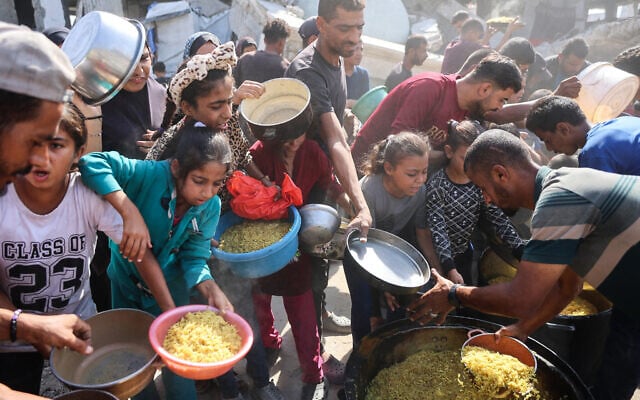
al Shafi’i Mosque, where families have taken shelter, in the Zeitoun neighborhood of
Gaza City, October 23, 2025.
The IPC report also failed to provide the aggregated data of the multiple studies Nutrition Cluster collected, which Nutrition Cluster itself provides in its publicly available bimonthly reports.
The aggregated, weighted findings from the Nutrition Cluster show that although malnutrition rates were high, they never breached famine thresholds even at the peak period of the humanitarian crisis in Gaza in July and August. This information was made public by Nutrition Cluster at the beginning of October.
The Nutrition Cluster data further shows that malnutrition rates have steadily declined since August, from a high of 11.8 percent that month in the Gaza Governorate to 5.4% at the beginning of December in the same district.
The IPC said in response that “The IPC Analysis Team looks at all nutrition data collected by different partners to calculate the overall prevalence, looking at the data sets individually alongside the contributing factors.”
It also said that its famine determination for July and August was based on data showing sharp rises in malnutrition between early and late July 2025, and that although the monthly data was below famine thresholds, data from the second half of the month suggested that famine levels had been breached, justifying its famine determination.
This analysis was based on a partial dataset however, which was subsequently updated in September by Nutrition Cluster and shows categorically that the highest rate of malnutrition in Gaza came in the Gaza Governorate in July and August, reaching a peak of 11.8%, when weighted and aggregated.
Marc Zlochin, an independent data analyst who has tracked the IPC’s problematic methodologies over a series of its reports, also pointed out two ongoing problems with the IPC data.
He noted that the malnutrition screenings continue to be performed in hospitals, clinics, and other health facilities in contravention of IPC’s own guidelines, which state that studies from such institutions cannot be used because they introduce self-selection bias, meaning that the respondents at such facilities are more likely to be suffering from malnutrition than the general population.
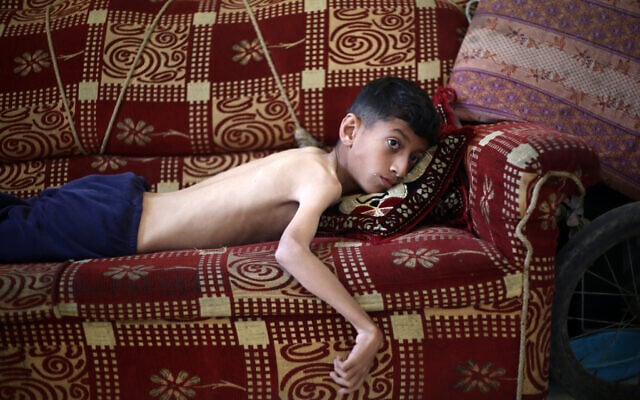
from malnutrition, lies on a couch at his family home in the Bureij refugee camp in
the central Gaza Strip on April 12, 2025.
Arnon Yafin, a data analyst and member of the Gaza Humanitarian Forum in Israel, which has advocated for greater humanitarian relief for Gaza, also questioned the veracity of the data itself.
He noted that among the malnutrition screening studies cited in the report for the Deir al-Balah region was one study that found a malnutrition rate of 1% and another that found a rate of 19%.
Some of the malnutrition studies cited by IPC even found higher rates of malnutrition for October and November than findings from July, at the height of the humanitarian crisis.
“Statistical noise cannot justify such discrepancies — it means the data is unreliable,” said Yafin.
He also pointed to the massive increase in the supply of humanitarian aid and commercial food deliveries in the months since a ceasefire went into effect on October 10. Israel’s COGAT agency and the US Civil-Military Coordination Center (CMCC) have stated that 600 to 800 aid trucks have entered the Gaza Strip every day since late October, 70% of which carried food aid, amounting to fully 500,000 metric tons of food entering the territory.
The IPC has previously said that Gaza needs 62,000 tons of food per month to meet the territory’s minimum daily caloric requirements, but the amount of food that has entered the Strip in the two and a half months since the ceasefire went into effect would appear to far exceed that figure.
“It’s not clear why the IPC is declaring Gaza to be in IPC Phase 4 emergency,” despite this massive influx of food, Yafin said.
He also pointed out that the major discourse among UN agencies and humanitarian organizations in November was not over food security, but rather concerns over sanitation, difficulties the Gazan population would face during the winter, and other issues.
“The report is not only methodologically flawed (which is common in hectic situations), the problem is that it does not reflect the reality in Gaza,” said Yafin.
Problems with data on non-trauma deaths
A further issue with the IPC report is the data on non-trauma deaths that it provided for the first time — meaning deaths not a result of military action — which should spike severely during a famine.
The organization said that figures for the Crude Death Rate in Gaza, which it usually uses to assess famine, were unavailable due to conditions on the ground and access problems, so it provided non-trauma mortality data from the Hamas-run Gaza health ministry.
According to the data provided, the average number of non-trauma deaths from January to June 2025 was 229, but that figure jumped to 482 in July and 576 in August, before dropping to 391 in September and jumping again to 438 in October.
But according to World Bank data, the crude death rate, or CDR, for the West Bank and Gaza in 2020 to 2022 was on average 0.1 deaths per 10,000 population, per day. Assuming a comparable rate in the West Bank and Gaza at the time, that would amount to some 20 people dying every day of all causes aside from military action.
This would mean more than 600 people dying of all non-trauma related reasons per month in both territories during a non-famine period, a higher number than cited by the IPC during the supposed actual famine it determined for July and August.
As previously pointed out, if the IPC’s determination of famine in Gaza between July 1 and August 15 was accurate, there should have been at least 4,728 deaths in that time period.
The numbers cited by the IPC found, however, that some 770 people died of non-trauma deaths in that period.
In response IPC claimed that Gaza’s health ministry figures “consistently underestimate total mortality,” although did not provide a source for those analyses.
Zlochin also pointed out that the data provided by IPC for under-5 non-trauma mortality actually showed a decrease in such deaths between January and the claimed famine in July and August, with figures for all of 2025 under the prewar baseline.
Zlochin speculated that the apparently low non-trauma mortality for 2025 cited by the IPC could be due to Hamas claiming natural and other non-trauma deaths as deaths caused by Israeli military action in order to inflate the casualty figures as part of its propaganda campaign against Israel.
He emphasized, however, that it was impossible to determine the actual nature of the data anomaly without full access to all available information.
The IPC itself said the data provided by the Gaza health ministry was “limited,” and claimed it “overlook[s] a substantial portion of non-traumatic mortality,” while adding that the focus of its analysis was on the trends in non-trauma mortality as an indicator of famine, not the absolute numbers.
It added that “there was clear evidence that thresholds for food consumption and acute malnutrition had been reached in Gaza Governorate,” and that analysts therefore “reasonably assessed from the broader evidence that the mortality threshold (third outcome) was also reached.”
This assessment was however made by the IPC’s own admission on deficient and unreliable data.
In an additional document that sought to grapple with criticism of its August famine determination, the IPC said its reports were designed “to prompt action and should therefore be considered effective, rather than inaccurate” if actions taken as a result of its warnings mitigate the projected disaster.
“What makes the Gaza case so troubling is not any single error or distortion, but an overarching pattern of sustained erosion of standards,” said Zlochin.
“Carefully specified rules and procedures that are applied strictly in other crises were repeatedly bent, ultimately making the results meaningless,” he added.
“That behaviour turns what is meant to be an evidence-based famine warning system into a cynical advocacy exercise, and once that line is crossed, its credibility is hard to recover.”
Humanitarian issues to address
Despite the manifold issues with the IPC report, Yafin said there was still merit in some of the work and conclusions it made, and that efforts to alleviate humanitarian suffering in Gaza should make note of some of the findings and act accordingly.
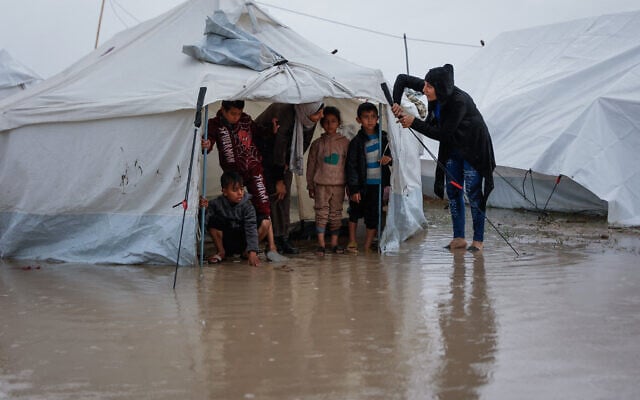
displaced Palestinians after heavy rains in the Zeitoun neighborhood of
Gaza City, December 11, 2025.
In particular, he pointed to problems raised by the report that “dietary diversity” in Gaza “remains poor,” and that vulnerable groups could not afford balanced diets.
Yafin said Israel could help ameliorate the issue by restricting the percentage of commercial imports into Gaza of ultra-processed and high-sugar foods, to ensure that imports of more nutritious foods are prioritized.
Yafin also noted the IPC’s concerns with ongoing poor sanitary conditions in Gaza, which he said Israel should work to combat. Such conditions increase health risks, including the spread of diarrhea, which can contribute to malnutrition in children.
The report also emphasized the need to provide Gazans with the means to protect them from winter weather, which could also exacerbate the spread of diseases and worsen malnutrition.
“We need to bear in mind that the humanitarian situation in Gaza is fragile and we need to make sure efforts to ameliorate the conditions there keep going,” urged Yafin.
BY: The Times Union – TOI