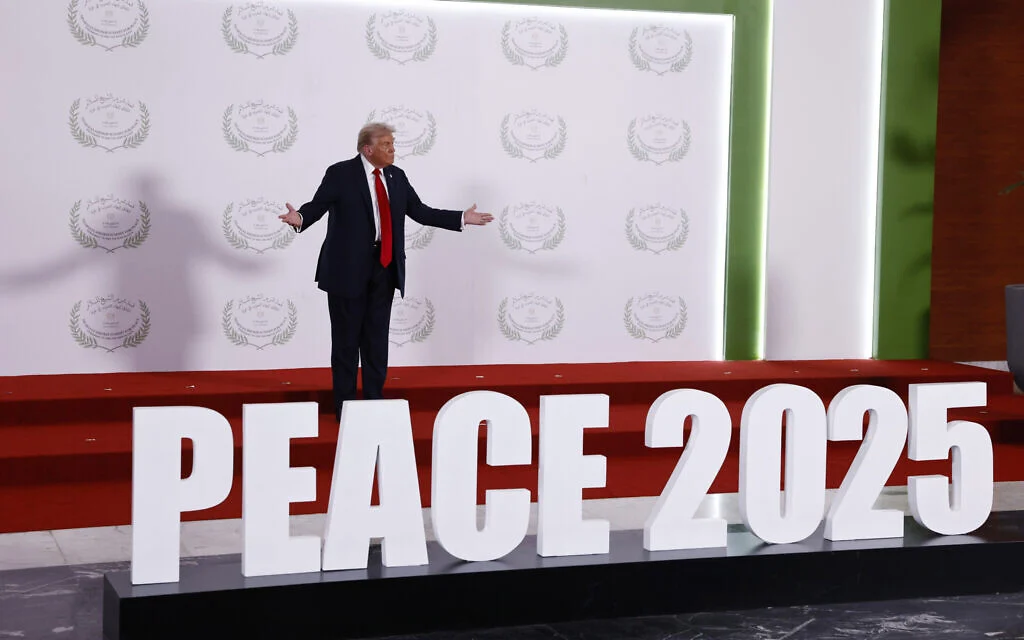
- US expects leaders of Egypt, Qatar, UAE, UK, Italy, Germany to sit on top panel overseeing Strip’s rebuild, but similar commitments to join ISF lacking amid questions about mandate
WASHINGTON — The US is telling interlocutors that it has secured commitments from Egypt, Qatar, the United Arab Emirates, the United Kingdom, Italy and Germany to have their leaders join US President Donald Trump on the Board of Peace that will oversee the postwar management of Gaza, four officials familiar with the matter told The Times of Israel.
Commitments from six countries — including prominent stakeholders in the Mideast and Europe — offer critical international buy-in to the Trump administration’s efforts to advance its Gaza peace plan out of the initial ceasefire phase.
However, willingness to sit on the Board of Peace does not mean further support from each country is guaranteed, according to a US official, an Israeli official and two Arab diplomats who spoke to The Times of Israel for this story on condition of anonymity.
Still, the US is hoping that broad, prominent membership in the Board of Peace will boost the initiative’s international legitimacy and increase the likelihood that countries will be willing to contribute funds, troops or other forms of support.
Accordingly, the US is aiming for roughly half a dozen more leaders to join the panel headed by Trump, including Saudi Arabia’s Crown Prince Mohammed bin Salman and Turkish President Recep Tayyip Erdogan.
The State Department, along with the foreign ministries of the aforementioned countries, did not respond to requests for comment.
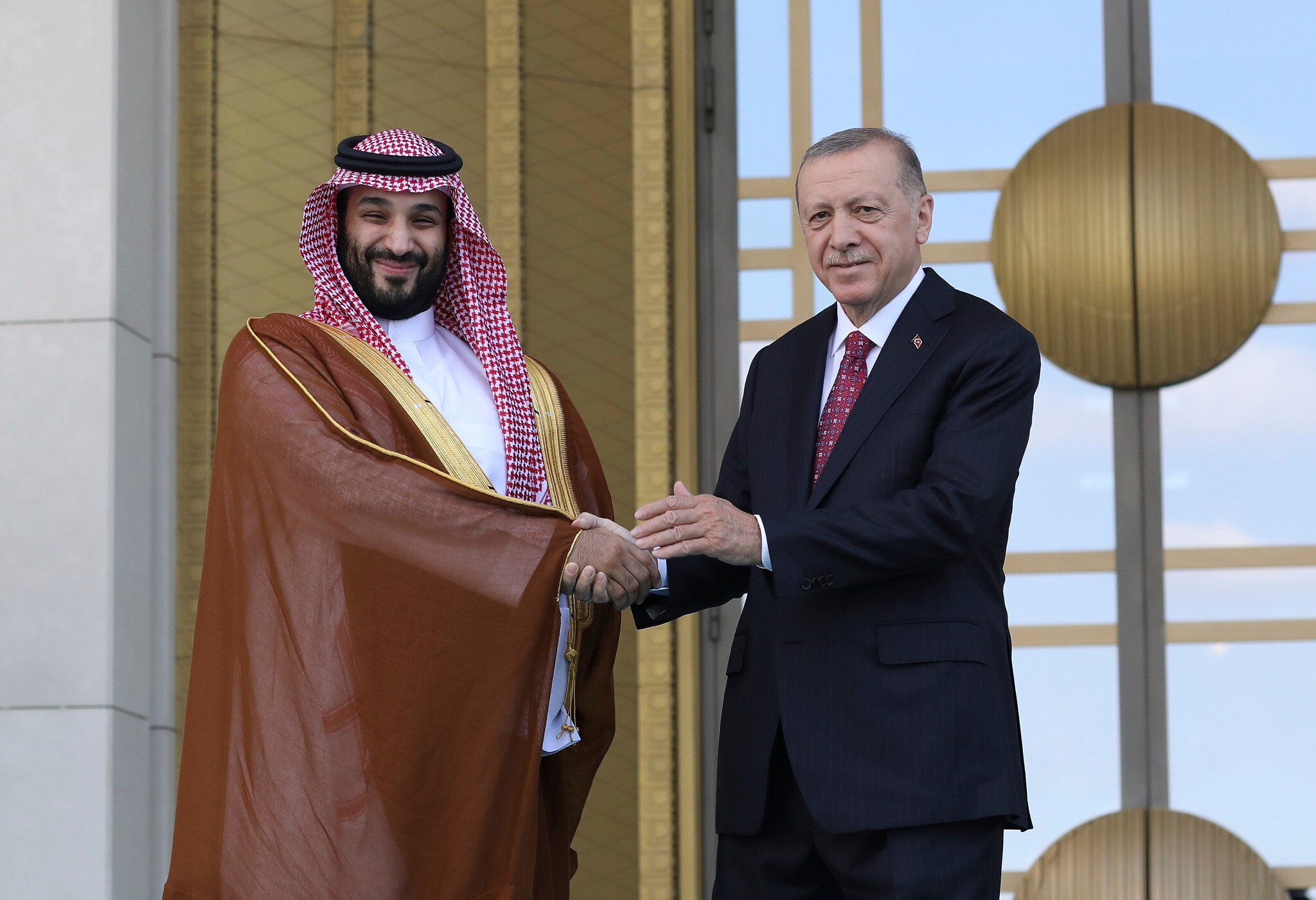
Mohammed bin Salman shake hands during a welcome ceremony in Ankara, Turkey,
June 22, 2022.
Eyes on Riyadh and Ankara
Trump even said publicly during bin Salman’s visit to Washington last month that he hopes the de facto Saudi leader will join him on the Board of Peace.
The four officials said Riyadh is still holding off on making such a decision until there is more clarity regarding the situation in Gaza, where Hamas has pledged to hold onto its weapons and Israeli forces have opened fire on or conducted strikes against Palestinians crossing the ceasefire line on a near-daily basis since a fragile ceasefire was signed on October 9.
While bin Salman would be a welcome addition to the Board of Peace, as far as Israel is concerned, Jerusalem continues to resist Turkish involvement in the postwar management of Gaza, particularly in the International Stabilization Force that the Trump plan envisions will phase out the IDF in the Strip.
The Israeli official said that he expects the US pressure in the coming weeks to intensify, with the aim of coaxing Jerusalem to lift its blanket veto on Turkish involvement in postwar Gaza and agree to a compromise where Erdogan sits on the Board of Peace or Ankara is involved in the command structure of the ISF, even if it doesn’t have boots on the ground in Gaza.
ISF mandate issues
Securing foreign troop commitments to the ISF has been a much more uphill battle than Board of Peace membership, as countries are still seeking more clarity regarding the force’s mandate, and there is also widespread unease regarding the war-like conditions on the ground in Gaza.
Washington sought to address some of those concerns at a conference that the US Central Command hosted in Doha on Tuesday, where it laid out its vision for the ISF to representatives from several dozen potential contributors.

air and ground operations in Gaza City, December 17, 2025.
It laid out five different ways in which countries can participate in the ISF: troops, law enforcement officers, logistical support, training of Palestinian police officers or funding.
While more clarity was provided regarding the ISF’s size, makeup and command structure, along with elements of its mandate, thornier issues related to Hamas disarmament remain unaddressed, the two Arab diplomats said.
The resolution that the US pushed through the UN Security Council states that the ISF will “ensure” the demilitarization of Gaza, but the US has told interlocutors that it is not expecting the force to at first deploy on the western half of the Gaza Strip currently under de facto Hamas control and referred to as the “red zone,” the four officials said.
Instead, the US wants to initially station the ISF along the Yellow Line boundary to which Israel withdrew at the start of the October ceasefire, leaving it in control of roughly 53 percent of the Strip, according to the four officials.
Washington has also told potential contributors that it doesn’t envision the ISF actively sparring with Hamas to take away its weapons, and instead expects the terror group to comply with a gradual disarmament plan.
However, the two Arab diplomats said that talks on such an agreement between Hamas and the Mideast mediators are still in very early stages, and that US engagement has been limited. Trump’s envoy Steve Witkoff had planned to meet with top Hamas negotiator Khalil al-Hayya last month, but that meeting was scrapped and has not since been rescheduled.
Rome is calling
Meanwhile, Italy has in recent days renewed its willingness to dispatch its Carabinieri and military forces to join the ISF, the US official said, confirming a report in the Repubblica Italian daily.
But like Azerbaijan and Indonesia, Rome is seeking more clarity regarding the ISF mandate before formally signing on, the US official said.
The US is aiming to hold a follow-up conference in Washington around the second week of January and to have outstanding questions addressed by then, but the two Arab diplomats and the Israeli official expressed heavy skepticism over the Trump administration’s desire to have the force deployed in that same month.
The US has already pushed off Trump’s announcement of the ceasefire’s second phase that was initially planned for mid to late December, with the president saying last week that it will take place sometime early next year.
Hamas slows search for Gvili
For its part, Israel has dismissed the notion of a gradual disarmament process, decreasing the likelihood that it will be willing to further pull back its forces from deep inside Gaza, the four officials said.
It is also pushing back on transitioning to the ceasefire’s second phase before the body of the last hostage, Ran Gvili, has been returned.
The two Arab diplomats said that Hamas and Palestinian Islamic Jihad’s search for Gvili has slowed in recent days against the backdrop of Israeli strikes in Gaza. An IDF strike over the weekend killed senior Hamas commander Raed Saad, in what Washington has privately recognized was a violation of the ceasefire, the US official said.

top Hamas official Raed Saad, December 13, 2025.
The two Arab diplomats said it wasn’t immediately clear whether the slowed search for Gvili was due to the difficult security conditions on the ground or Hamas’s response to the Israeli strikes.
Israel also isn’t thrilled about the idea of Qatar being on the Board of Peace, but the Israeli official said Jerusalem recognizes that it can’t be seen as blocking every aspect of Trump’s plan.
Moreover, the Board of Peace is largely symbolic, with real responsibility in managing and overseeing expected to be placed with a mid-tier executive committee staffed by Witkoff, fellow Trump aide Jared Kushner, former UK prime minister Tony Blair and former UN envoy to the Mideast Nickolay Mladenov — all of whom have productive working relationships with Israel’s leadership, the Israeli official said.
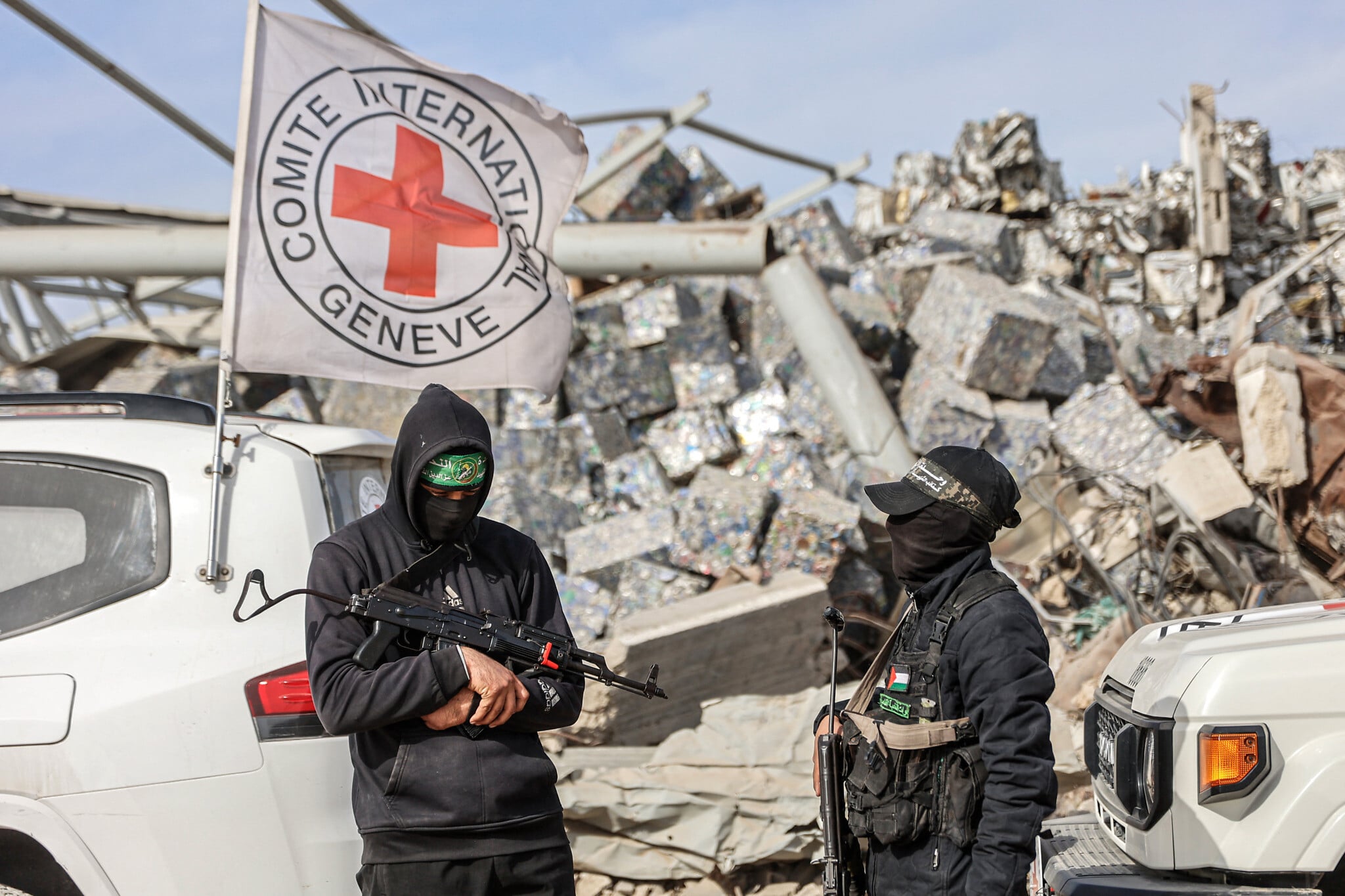
of the International Committee of the Red Cross (ICRC), search for the remains
of the last Israeli hostage, Ran Gvili, in the Zeitoun neighborhood of Gaza City
on December 8, 2025.
Also sitting on the executive committee will be a number of high-profile American business leaders, while Mladenov will be tasked with overseeing the Palestinian technocratic committee responsible for running the day-to-day affairs in the Strip, the Israeli official said.
A source familiar with the matter said that the US is also working to finalize the charter of the Board of Peace, at which point formal invitations will be extended, including to those who have already committed to joining.
BY: The Times Union – TOI