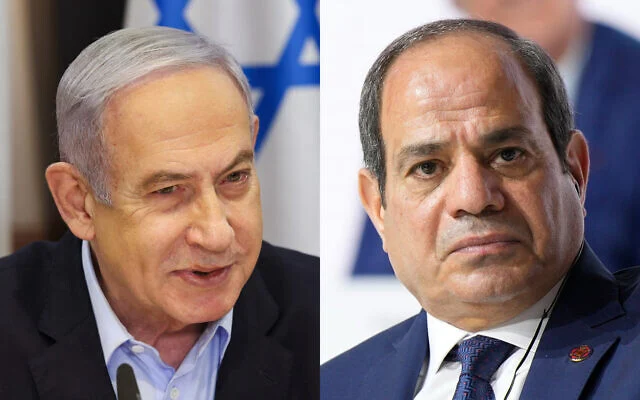
- Senior US source confirms to ToI that Israeli officials are working with American diplomats on preparations for trip, which would be PM’s first official state visit to Egypt in 15 years
Prime Minister Benjamin Netanyahu is planning to travel to Cairo to sign a multibillion-dollar agreement to supply natural gas to Egypt, The Times of Israel has learned.
Israeli officials have been working on the planned trip in recent days with senior US diplomats, according to a senior US diplomatic source familiar with the preparations, who confirmed details of the effort to The Times of Israel.
Netanyahu is expected to meet Egyptian President Abdel-Fattah el-Sissi and aims to frame the visit as historic, the source said. The prime minister is also looking to score a major diplomatic and media achievement ahead of elections in Israel and shift attention away from contentious domestic issues.
The Prime Minister’s Office told The Times of Israel that “the matter is not known to us.”
In recent weeks, some reports have said the US is seeking to hold a trilateral summit between US President Donald Trump, Netanyahu and Sissi during the premier’s expected visit to Florida later this month.
The Times of Israel has learned that Israel’s Ambassador to the US Yechiel Leiter is leading the efforts to organize the hoped-for Cairo summit. Leiter has assumed the role of Netanyahu’s key liaison with Washington and with Arab states, including Syria and Lebanon, after former strategic affairs minister Ron Dermer resigned from his post last month.
Netanyahu visited Egypt twice in the past during the rule of late Egyptian president Hosni Mubarak. His last official state visit was 15 years ago, in January 2011. Other trips were held secretly.
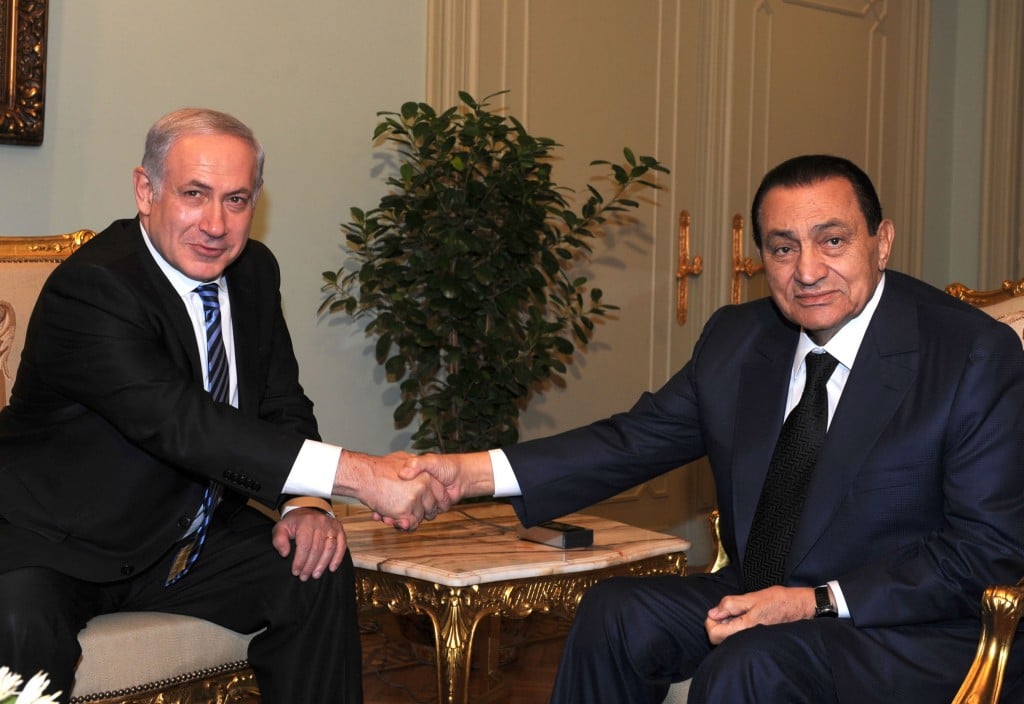
meet in Cairo, July 2010.
Ties between Israel and Egypt have been strained since the war in Gaza began with the Hamas-led attack on October 7, 2023, with no diplomatic contact between Cairo and Jerusalem for two years, except for ongoing security coordination, particularly between the Egyptian and Israeli intelligence services on the hostage issue.
There have also been disputes in recent months over the management of Rafah Border Crossing in the southern Gaza Strip, the question of taking in Gaza refugees, and potential Egyptian participation in the International Stabilization Force planned for Gaza. More recently, the relationship strained further due to smuggling attempts made from Egypt into Israel using drones.
The gas deal itself remains complicated despite clear economic incentives for both sides. The agreement is described as a long-term deal worth $35 billion, but Energy Minister Eli Cohen has expressed concern that such exports could deplete Israel’s natural gas reserves and harm domestic energy security, and has therefore delayed the transaction.
“I will not let Netanyahu sign an agreement until all details are ironed out, including the security disagreements we have with the Egyptians,” Cohen recently told The Times of Israel.
Netanyahu, for his part, is said to see the deal as a chance to demonstrate that he is strengthening and expanding Israel’s peace agreements with its neighboring countries after the war, and to argue that the agreement advances his long-held vision of leveraging Israel’s gas resources to secure long-term state revenues.
BY: Shalom Yerushalmi