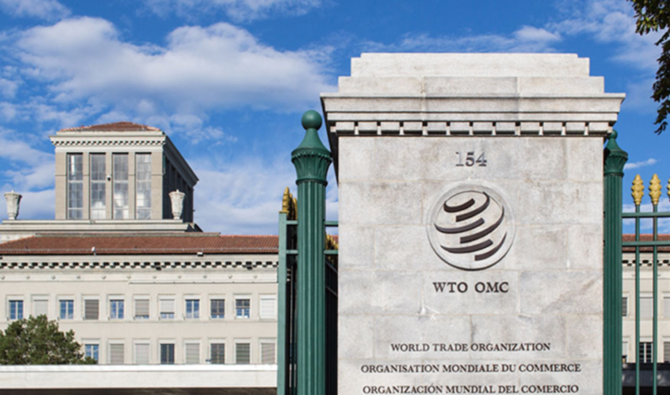
In 1999, thousands of activists descended on Seattle to protest a World Trade Organization gathering of finance and trade ministers. The “Battle in Seattle,” as it came to be known, was a shock for many Democrats, not least those who had grown up on the gospel of free trade. After all, it was a Democrat, President Bill Clinton, who had advocated “free and fair trade” and presided over the WTO’s creation, fulfilling the postwar aspiration to create a global trade organization to match the International Monetary Fund and the World Bank.
The Seattle protesters objected not only to trade globalization but also to the “Washington Consensus” — the economist John Williamson’s 1989 coinage for the 10 economic policy reforms that US policymakers wanted to apply to distressed Latin American countries. Many people (though not Williamson) quickly globalized the consensus, pushing it as the right medicine for economically troubled countries everywhere. In each case, the recipe was basically the same: fiscal discipline, market liberalization, privatization, deregulation and openness to global capital. Unfortunately, the result in each case was also the same: an austerity straitjacket that inflicted enormous economic pain on ordinary people in debtor countries around the world.
Given this track record, economists, activists and policymakers should take note of a recent publication from LSE Press, “The London Consensus: Economic Principles for the 21st Century.” Edited by the London School of Economics’ Tim Besley, Irene Bucelli and Andres Velasco (Chile’s finance minister from 2006 to 2010), the book includes 17 chapters authored by a global roster of economists, policy professionals and political scientists on a wide range of economic and political subjects.
Rather than try to summarize the full volume (which can be downloaded for free), I will stress its value to anyone interested in the future of capitalism in this century. The book’s five core principles are highly relevant to all global efforts to renovate or reinvent economic policymaking. First is the proposition that, “it’s not just the money: wellbeing is the key.” This is radical stuff coming from mainstream economists. Economics 101 proudly teaches that economists are concerned with increasing the “size of the pie,” principally through markets, whereas distributing the pie is a matter for politics.
This implied “separation of equity and efficiency” was a guiding principle of the Washington Consensus. The authors of the London Consensus, however, are willing to look beyond money as the measure of happiness. “Self-worth, respect, social status and public recognition,” the editors write, “matter a great deal too. They are intrinsically important and cannot simply be written off by a materialist conception of well-being.”
This intellectual shift builds on a body of Nobel Prize-winning work in behavioral economics and econometrics. Today, that work informs efforts to develop metrics beyond gross domestic product and unemployment, and to track a “well-being economy” rather than simply measuring growth. It was in this spirit that New Zealand Prime Minister Jacinda Ardern introduced a “well-being budget” in 2019 and that Wales passed its Well-being of Future Generations Act.
A corollary to this focus on well-being is another London Consensus principle: that governments must help build resilience against socioeconomic turbulence and instability. “Policymakers must put countering volatility of all kinds at the center of their concerns,” designing policies, such as social insurance, accordingly.
The Washington Consensus focused only on the dramatic disruptions caused by rapid and high inflation, which generally followed government injections of too much money into the economy. But the London Consensus recognizes that many other sources of volatility can upend individual lives, from the loss of a job, sickness or disability to outliving one’s retirement savings. All of these can create “serious consequences for health and well-being,” for which the market typically cannot or will not provide affordable insurance, so the government must step in.
The London Consensus also affirms that “there is no good economics without good politics” and that no economy or society can flourish without a “capable state.” These two principles are closely related. The classic joke about economists is that when confronted with the problem of how to open a can, they begin by saying, “assume a can opener.” The messy, often unpredictable business of politics is that can opener.
Instead of seeing politics as “the great constraint whereby survival-obsessed and special interest-influenced politicians keep benevolent technocrats from implementing the ‘right’ economic policy,” those same technocrats should think about politics as “the great enabler.” Good politics can lead to good economics, because politics pursues goals that include “status, respect and dignity,” not just monetary rewards.
Of course, once politically deft governments do succeed in enacting good economic and social policies, those policies must be implemented and sustained. This may sound obvious, but one must remember that implementation requires a capable state, which in turn requires honest institutions staffed with public servants who have the knowledge and resources to do their jobs.
This is a lesson for everyone. While the authors of the London Consensus focus on developing countries, the “Abundance Agenda” that is gaining traction in the US is similarly concerned with state capacity. The problem is not necessarily a lack of resources, considering that some poor countries still manage to educate their children, while others do not. Rather, it is about where and how governments decide to invest the resources they have and whether they are supported by global lenders and investors who understand the value of committed and talented public servants.
Moving from the Washington Consensus to the London Consensus reflects not just an economic but also a geopolitical shift. At a time when the US is rejecting principles in favor of raw power, a multinational group of economists in London is taking account of how real people live and feel. Let us hope they can move more countries from austerity to prosperity.
BY: Anne-Marie Slaughter, a former director of policy planning in the US State Department, is CEO of the think tank New America
Disclaimer: Views expressed by writers in this section are their own and do not necessarily reflect The Times Union‘ point of view