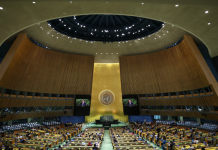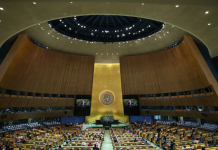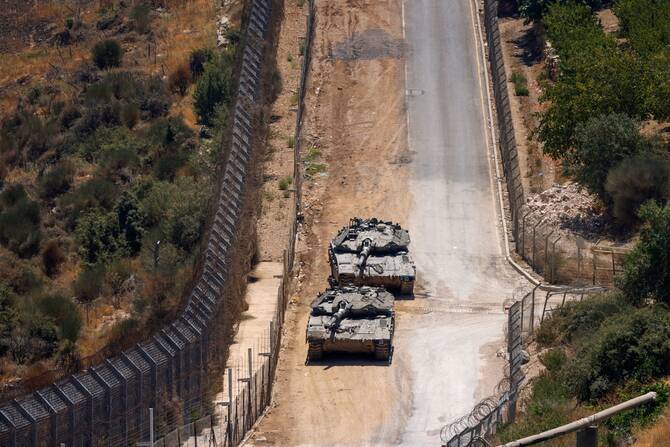
On Dec. 3, 2025, 123 countries at the UN reaffirmed their support for Syria and Syrian sovereignty over the Golan Heights. The resolution sponsored by Egypt requires Israel to return to the June 4, 1967, line and affirms the illegality of the forced land grab, settlement activities, and other hostile activities in the occupied Golan Heights.
This is a double slap for Israel and Prime Minister Benjamin Netanyahu — more correctly, a triple slap. The first slap is the fact that US recognition of the Golan Heights as part of Israel in March 2019 did not really allow Israel to have an international legitimate claim to this strategic area. The second slap is that the Israeli policy of creating a new status quo and forcing the world to deal with it is also failing. The third slap is the fact that Israel will not realize its dream and ambition of greater Israel. The world will not allow it.
We must take into consideration that the number of those who support Syrian sovereignty over the Golan Heights increased from 97 last year to 123 this year. This means that 26 countries changed their mind and supported Syria. This is either because US pressure is not as effective as it was before or because Washington is fed up with Israel and is not pressuring other states as before. President Donald Trump has warned Netanyahu not to interfere in Syria and is hoping for a long and prosperous relationship between the neighbors.
Any analyst can sense American fatigue with Israel. The US administration is obviously losing patience with Netanyahu and his racist and stubborn government. Trump is committed to peace or at least achieving some sort of stability or sustainable arrangement in the region. He realizes that the only stumbling block to his grand plan is Netanyahu.
The international community is not humoring Israel as before. Israel, since its creation, has had a clear strategy. It takes land by force through military means, creates a new status quo, then forces the international community to adopt it as the benchmark. Palestine was partitioned in 1947. The Arab state of Palestine was 42 percent of the total overall area of historic Palestine while 55 percent was granted to the state of Israel. However, after the 1967 war Israel imposed a new reality. Since then, all the resolutions, including the Arab peace initiative of 2000, have had to adapt to the new reality on the ground. They all asked Israel to return to the armistice line, which includes areas Israel won by force in the 1948 war. No resolution today asks Israel to go back to the original borders set by the UN partition of Palestine in 1947. However, obviously this trend has reached an end. The new resolution showed it. Israel no longer can grab land by force and coerce the world into dealing with it.
The third issue is the dream of greater Israel. Netanyahu spoke about coming closer to this vision. Throughout its history, every war for Israel has been an occasion to increase its area. Well, not this time. Trump, despite promising one of his biggest donors, Miriam Adelson, that he would allow Israel to annex the West Bank, has strongly pushed back against that. His vice president JD Vance said he was offended when the Knesset voted for annexation of the West Bank while he was visiting Israel. No one, not even Trump — the best friend Israel ever had, according to Netanyahu — is accepting the project of greater Israel.
Regional states, Western countries including the US, and the international community know that greater Israel means great trouble for everyone. It means a dose of grievances that will probably fuel a new wave of terrorism. It means a new wave of refugees that will destabilize neighboring countries and lead to social upheaval in European nations.
Syria affirmed that entering technical and security negotiations with Israel does not mean normalization or that it will relinquish its rights over the Golan Heights. Israel is in a tough spot and will have to withdraw and go back to the disengagement agreement of 1974. This means that its entire adventure in Syria has been useless. It did not gain any benefit and will have to withdraw for free.
Israeli forces faced resistance during their incursion in Beit Jinn. Six soldiers were wounded. Hence their presence in Syria will be costly. The freedom of operation they were aiming for will not be as low cost as they expect it to be. The world is more concerned with making the new Syria successful rather than catering to the whims of Netanyahu.
The other issue is the failure of Israel’s plan to nurture a secessionist movement inside Syria. Hikmat Al-Hajri, Israel’s main ally in Suwayda, is facing internal resistance from other Druze factions in the governate. It is unlikely that Israel will be able to repeat in Sweida the experience of the pro-Israel militia of Saad Hadad and, later, of Antoine Lahad that operated in southern Lebanon.
Israel will have to withdraw. It is asking for a demilitarized zone. However, if the area is demilitarized, it means that it is another playing field for non-state actors. If the Syrian army is not on the borders with Israel, who can make sure that militant groups will not operate there?
In a nutshell, Israel is facing more pushback against its incursion in Syria. Trump’s statement and the latest UN resolution are the biggest proof of the failure of Israel’s Syria policy.
BY: Writer Dr. Dania Koleilat Khatib is a specialist in US-Arab relations with a focus on lobbying. She is co-founder of the Research Center for Cooperation and Peace Building, a Lebanese nongovernmental organization focused on Track II.
Disclaimer: Views expressed by writers in this section are their own and do not necessarily reflect The Times Union‘ point of view