- I don’t need to teach Israeli kids about the Holocaust, but instead to help them make sense of a world where words like ‘genocide’ have been twisted and weaponized
When I was 15, I went on an exchange visit to Austria. I had been learning German with intensity, and a pen pal exchange was an ideal opportunity to gain fluency. I don’t even remember who matched me with my pen pal who lived in the picture-perfect city of Graz, but I remember her wooden-floored house, her parents hovering anxiously over every meal to make sure I didn’t mistakenly consume pork, and the awkwardness between us that never softened no matter how much I tried.
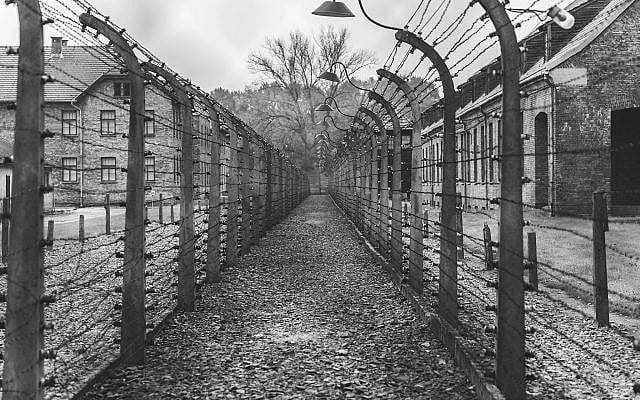
At that age, my Jewishness felt like nothing but a burden. I didn’t care what I ate; my parents did. I didn’t want to be marked as different. And yet halfway through the trip, an uncomfortable voice in my head began whispering: You’re in Austria. Go to a concentration camp.
Maybe it was survivor’s guilt. Maybe too many late-night documentaries with my dad. Maybe that marathon viewing of Holocaust that carved images into my teenage brain. Whatever the reason, I suddenly found myself needing to confront something I hadn’t chosen and didn’t fully understand.
But how does a shy 15-year-old girl tell her Catholic Austrian hosts that she needs to visit a concentration camp? And in German, no less?
In the end, I didn’t have to say a word. On my fourth day in Austria, my pen pal’s mother, in an act of grace I still think about, told me she was taking me to Mauthausen. And off we went — so I could “remember,” as if remembering were ever optional. As if I hadn’t already absorbed that memory into my bones. As if I wouldn’t pass it on to my children and now my grandson.
Decades later, I am a teacher of diplomacy studies to Israeli teens who are roughly the same age I was when I saw the crematoria of Mauthausen. Somehow, through twists of fate and job openings, I became the person who stands in front of classrooms explaining the United Nations, the International Criminal Court, and the vocabulary of “never again.”
To clarify: they don’t need me to teach them about the Holocaust; their history teachers do that. Nor are they required to beg their hosts to take them to a concentration camp; their schools take them to the Auschwitz site, accompanied by armed security guards and frantic teachers pleading with them never to walk off alone. They march somberly, wrap themselves in Israeli flags, light memorial candles and cry. They come home with “never again” ringing in their ears.
And then they walk into my class.
I teach them the art of debate and active listening, what being “off-clash.” means, the difference between position and interest.
They learn the UN’s origins, mission, and broken promises—then step into a simulation to play global actors.
They trace the Pyramid of Hate—that chilling slope from casual slights and acts of prejudice to mass murder.
In 12th grade, we discuss Nelson Mandela and leadership, South African apartheid and forgiveness. We leave out what’s happening in South Africa now. It’s easier that way.
But each time I say the words apartheid, genocide, UN, ICC, something in me clenches. I feel the ground tilt. I doubt myself. I doubt the world.
Because maybe I should be teaching them John Lennon’s Imagine instead — the fantasy of a world with no borders, no hate, no war. At least that world makes sense.
Instead, I’m teaching them about institutions that are cracked through with hypocrisy, about words that have been emptied, twisted, and weaponized, about systems that generate paperwork but not justice.
Where are we, really?
The UN is too busy issuing resolutions about Israel to address the real catastrophes: the Uyghurs, the Yazidis, Syria, Iraq — and now the horrors unfolding in Sudan. The original apartheid of Africa has faded from public memory; Google the word now and Israel is what comes up, as if the term itself were invented for us. As if it weren’t Afrikaans.
And genocide? Are we really going there? Because apparently genocide now comes in two flavors: interesting and boring. By 10th grade, they’ve already dissected ‘newsworthiness’ in journalism class—how some genocides trend, others don’t Interesting genocide is the one happening right here, or 50 years ago here, or in whatever configuration gets the most clicks. Nobody cares whether it is carefully documented or not. After all, the Holocaust was and vocal deniers still command attention.
Boring genocide is Sudan. Estimates are between 150,000 to 400,000 people butchered, raped, burned alive, or starved with the help of foreign funding — and silence. Sudan, it seems, is less compelling than a physics class. No flotilla, no protests and no angry UN resolutions.
How do I teach my students about real genocide when the very word has been twisted into a convenient weapon of global antisemitism? Where do I even begin?
Should I tell them about Sudan? Should I tell them entire hospitals were blown up — people, records, everything — leaving even the death toll a guess?
Because if I do, they will look at me and ask, “But why? How can this happen?”
And they will quote “Responsibility to Protect,” the very phrase printed on page 140 of our excellent textbook. We will match the horrific events in Sudan to the very definition of genocide that we have learned and we will conclude that yes, the world should intervene.
And I will shrug. Or I’ll say, “Guys, the world is a crazy, unfair, cruel place. I am teaching you about institutions that don’t function. Systems that produce words but not action. Except, perhaps, when claims are made against us.”
And then they will ask me why.
I’ll remember the grey walls, the cramped bunks and the narrow gas chambers of Mauthausen that I visited at the age of 15.
Memory is stubborn.
It may outlast resolutions, outlast twisted words.
The truth will out—
eventually.
About the Author
Ella Ben Emanuel teaches high school Diplomacy Studies and English in Tzur Hadassah and lives in Jerusalem. She’s a mother, grandmother, educator, writer, and occasional actress and comedian. With over a decade of teaching experience, she recently began publishing essays and fiction on Substack. Her writing explores education, identity, motherhood, and life in Israel, blending personal reflection with cultural insight and wit.